
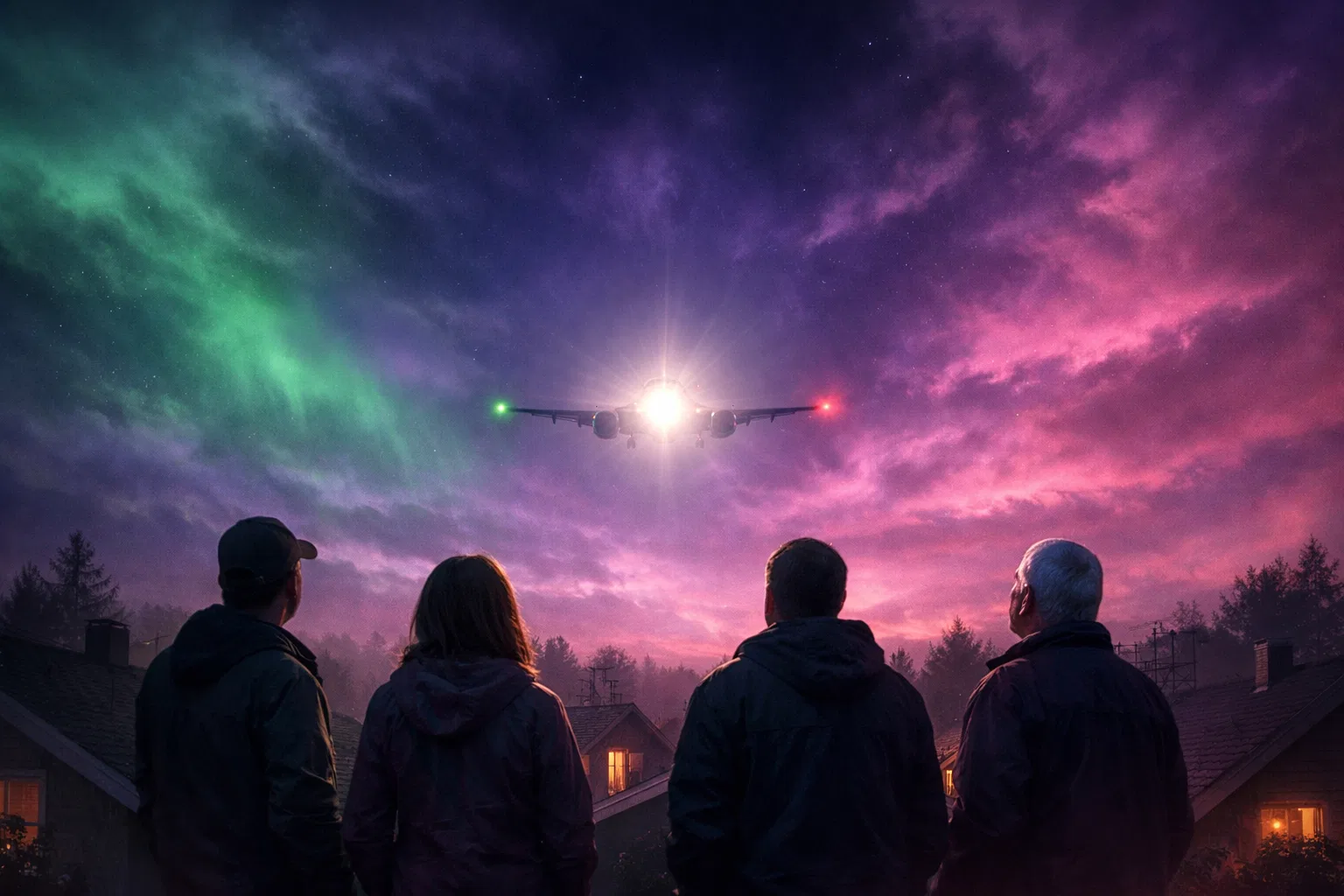
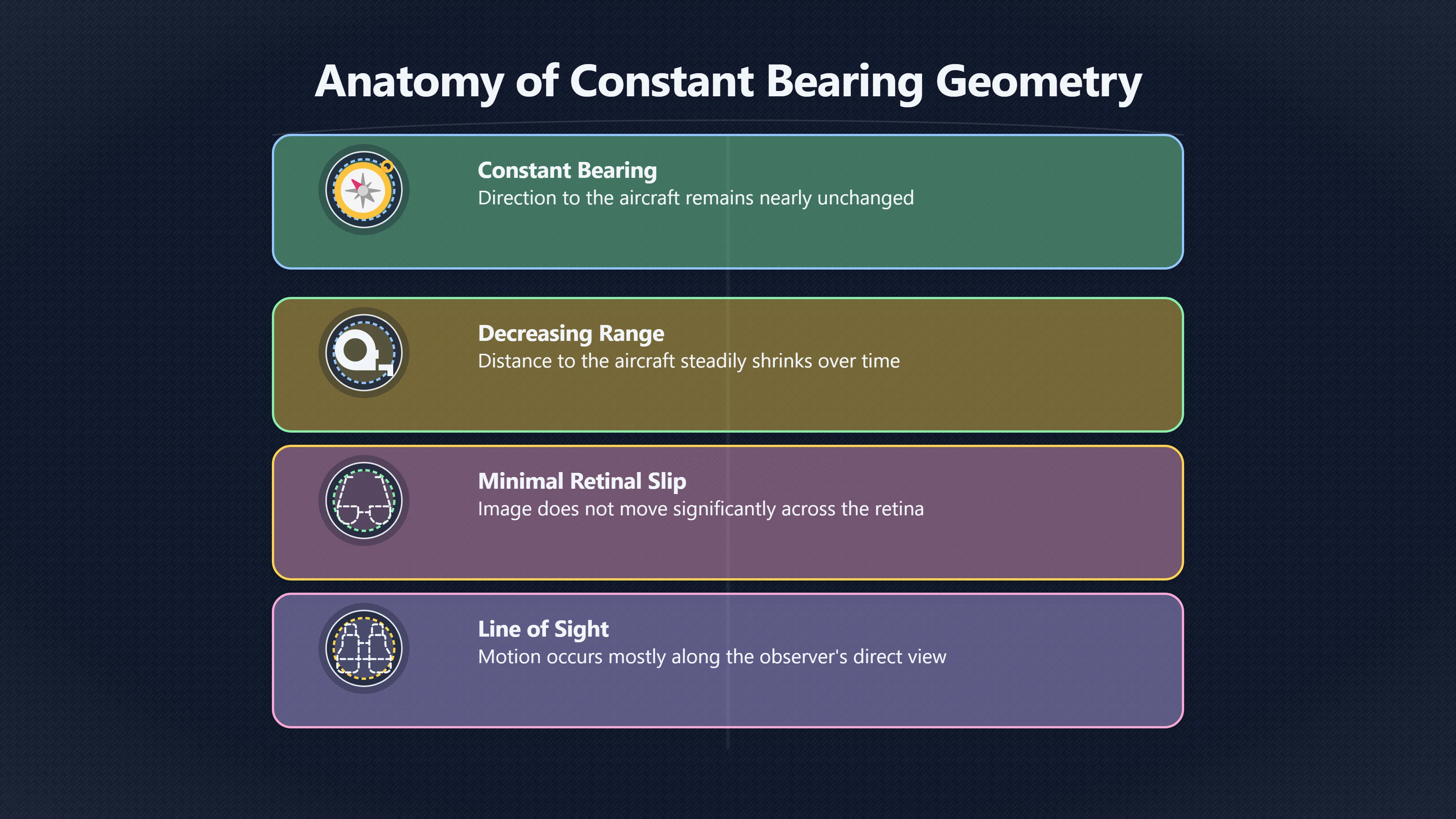
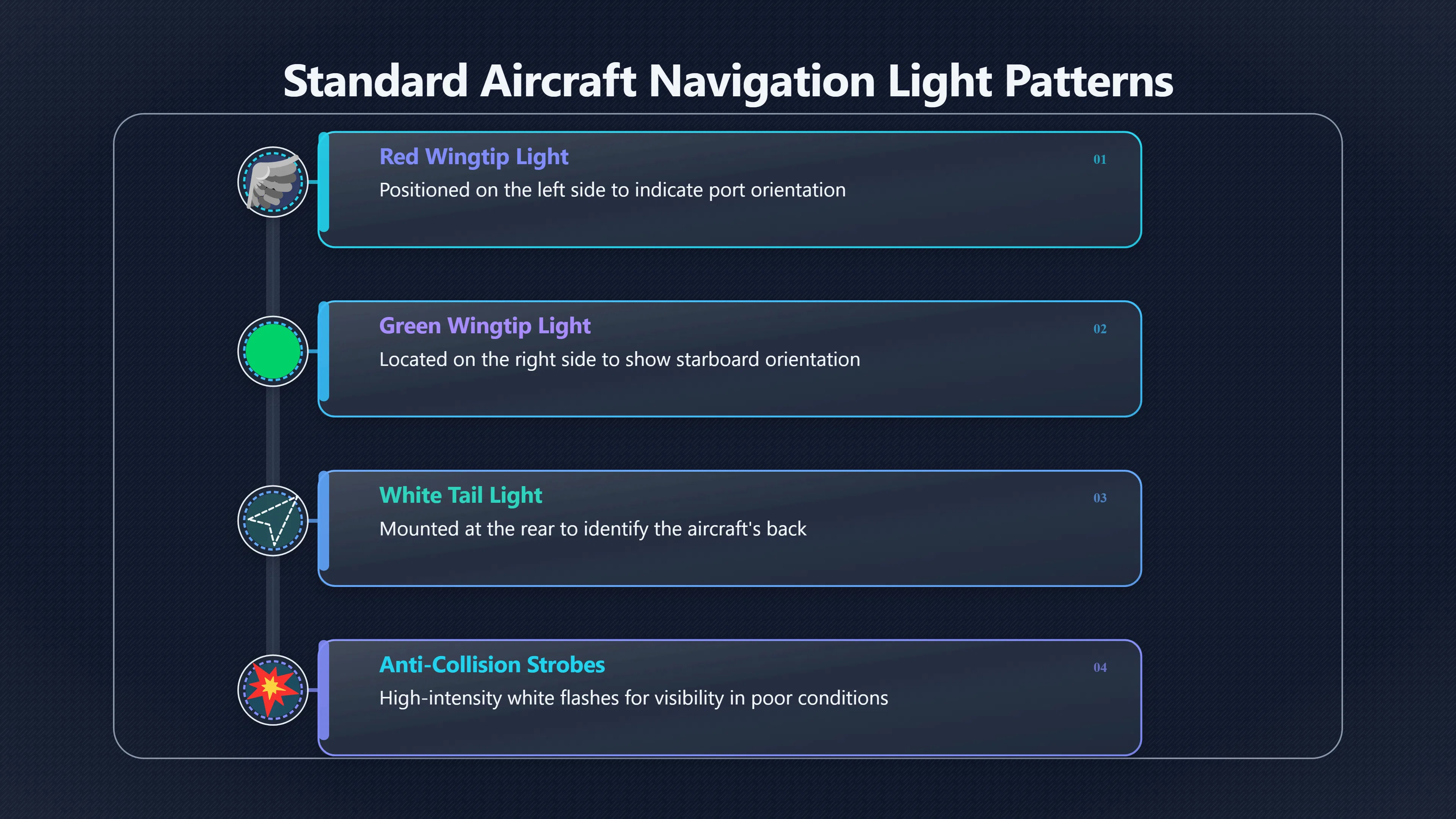
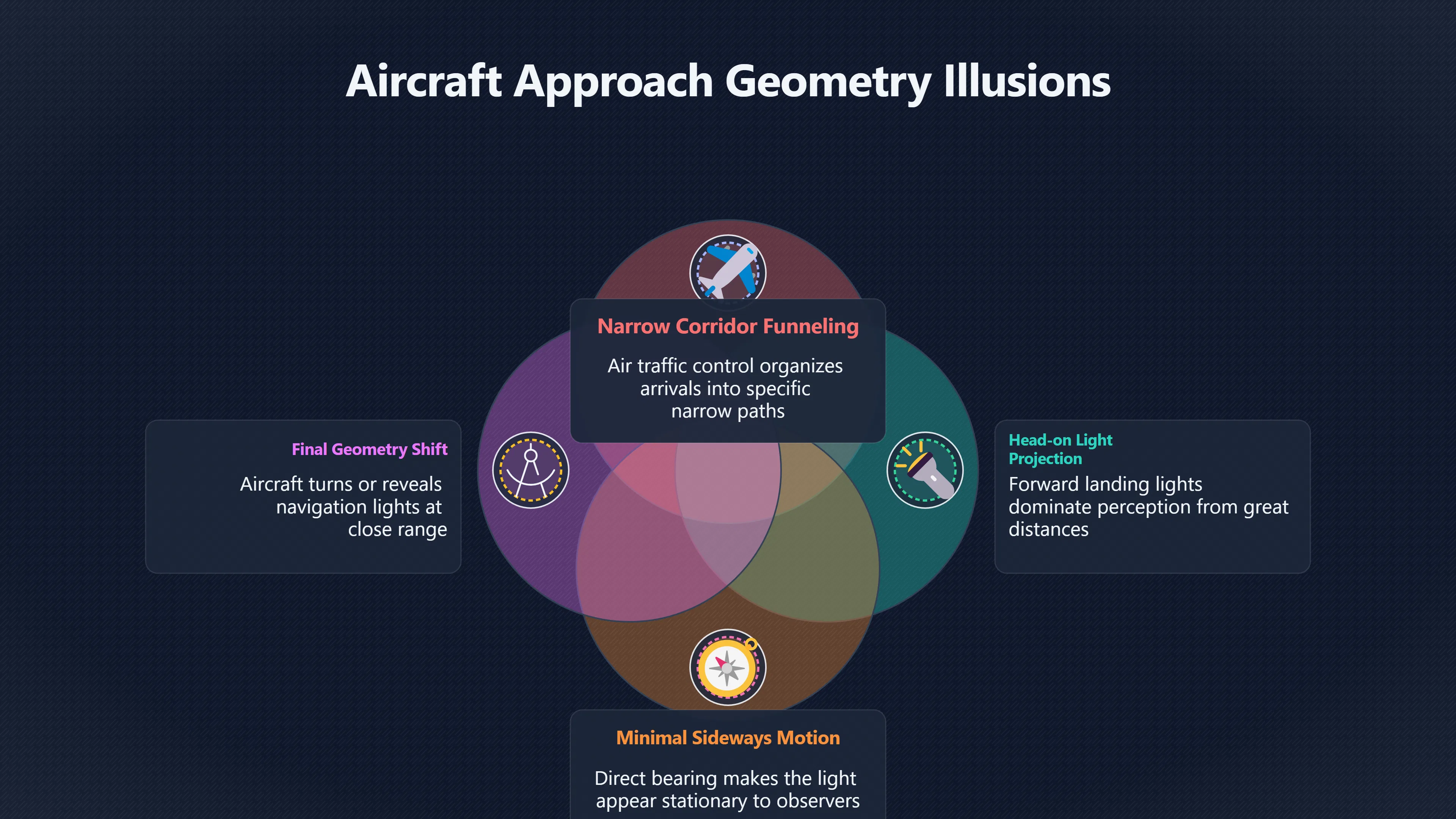
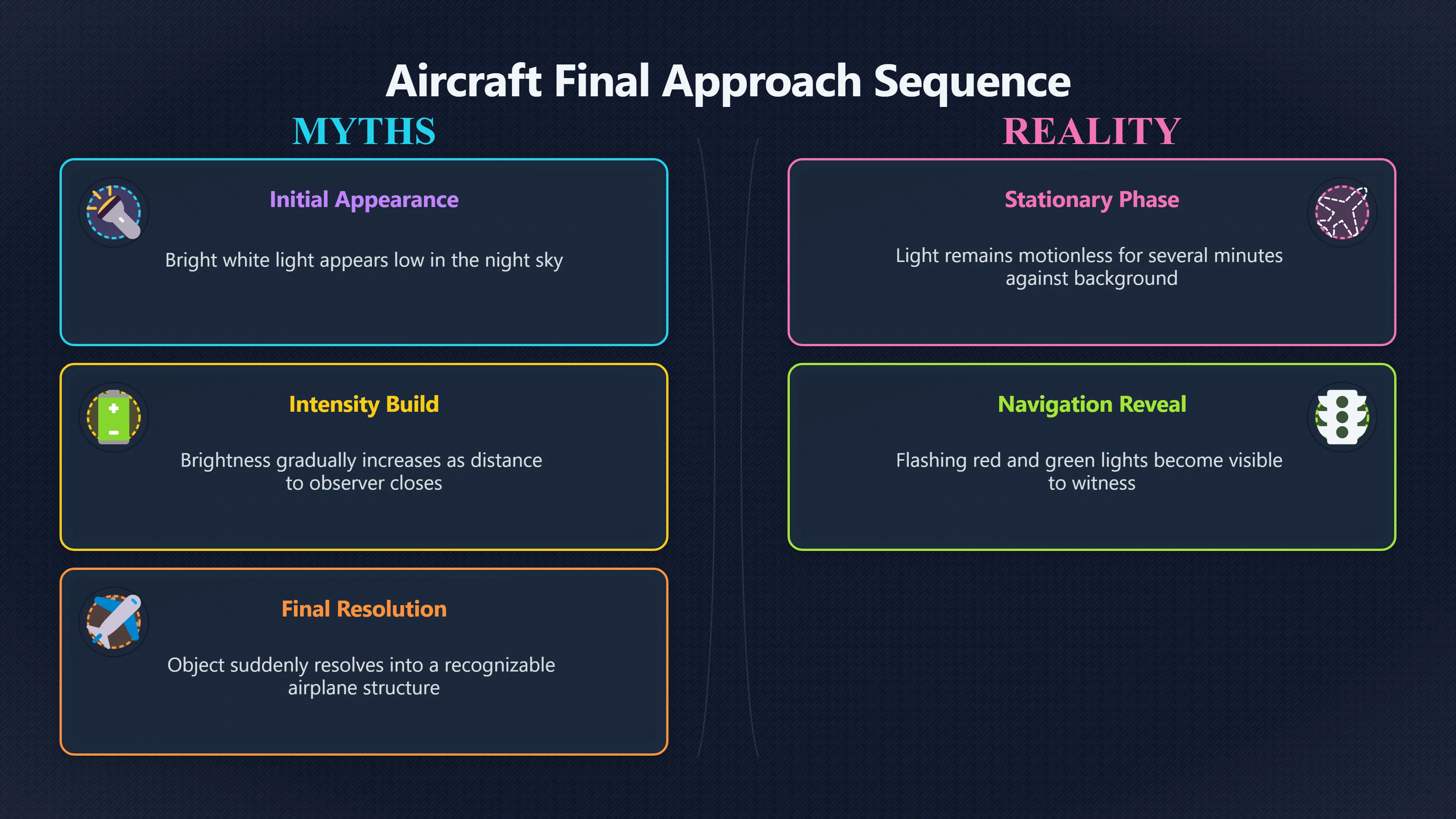
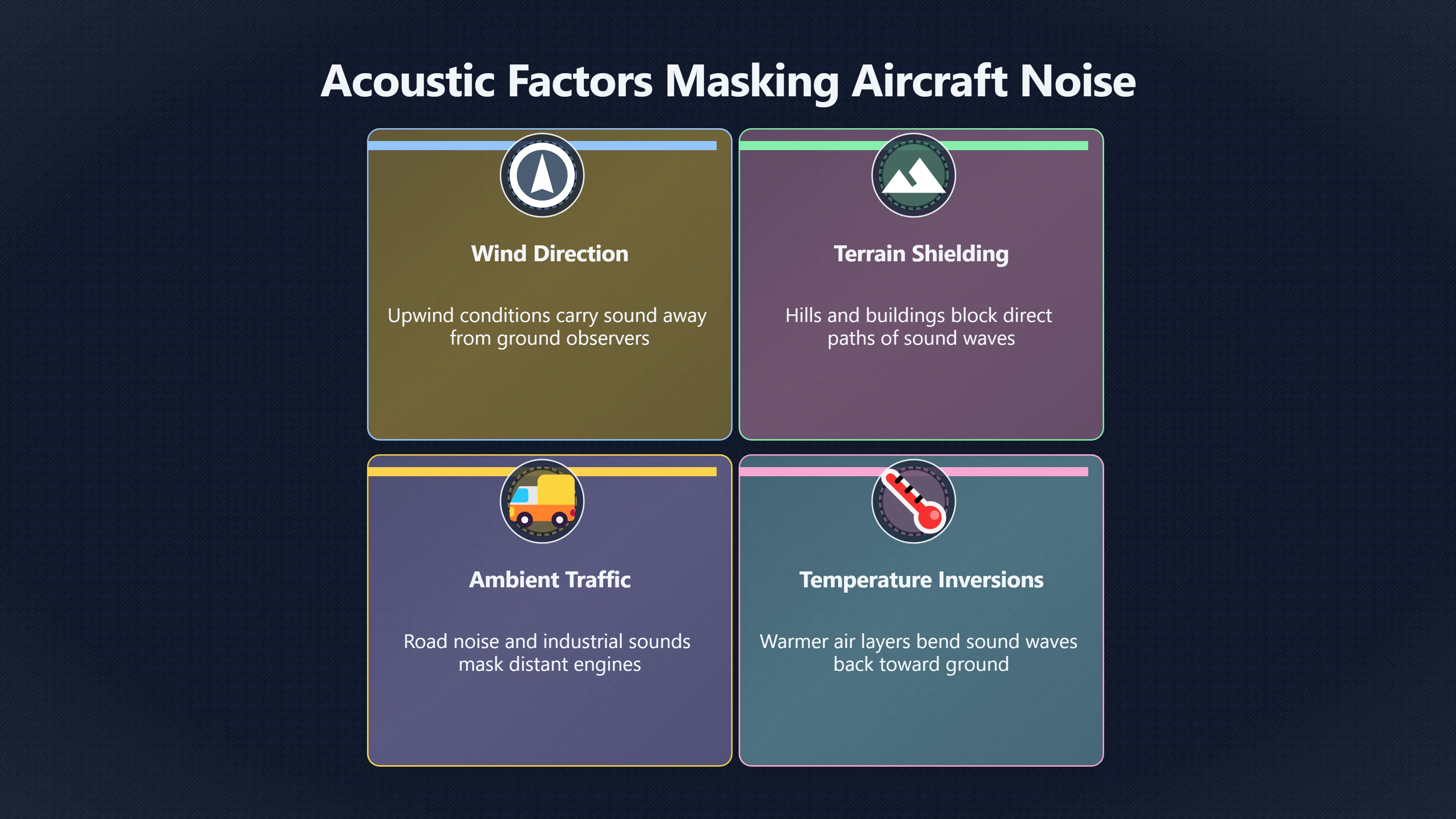

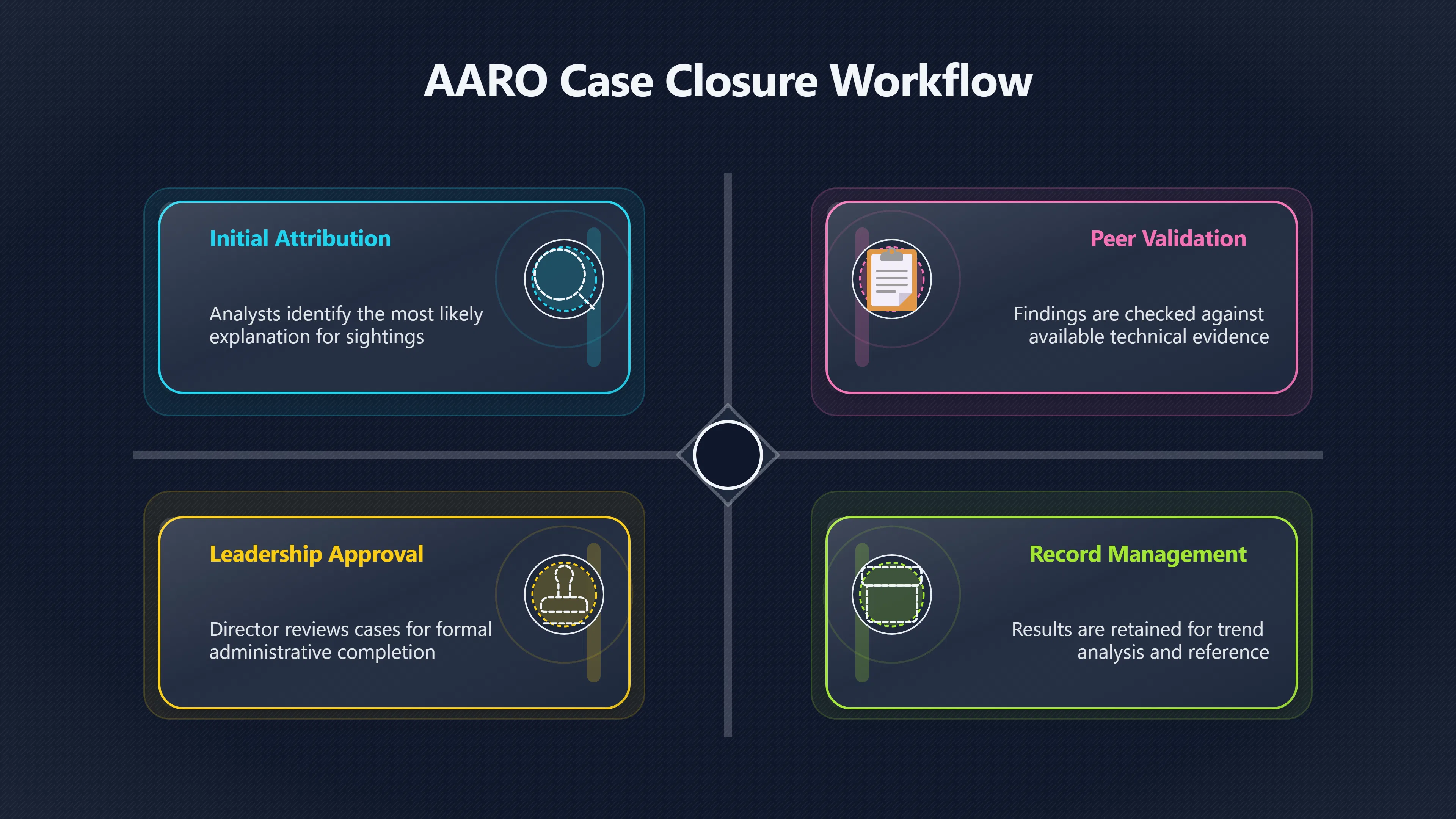
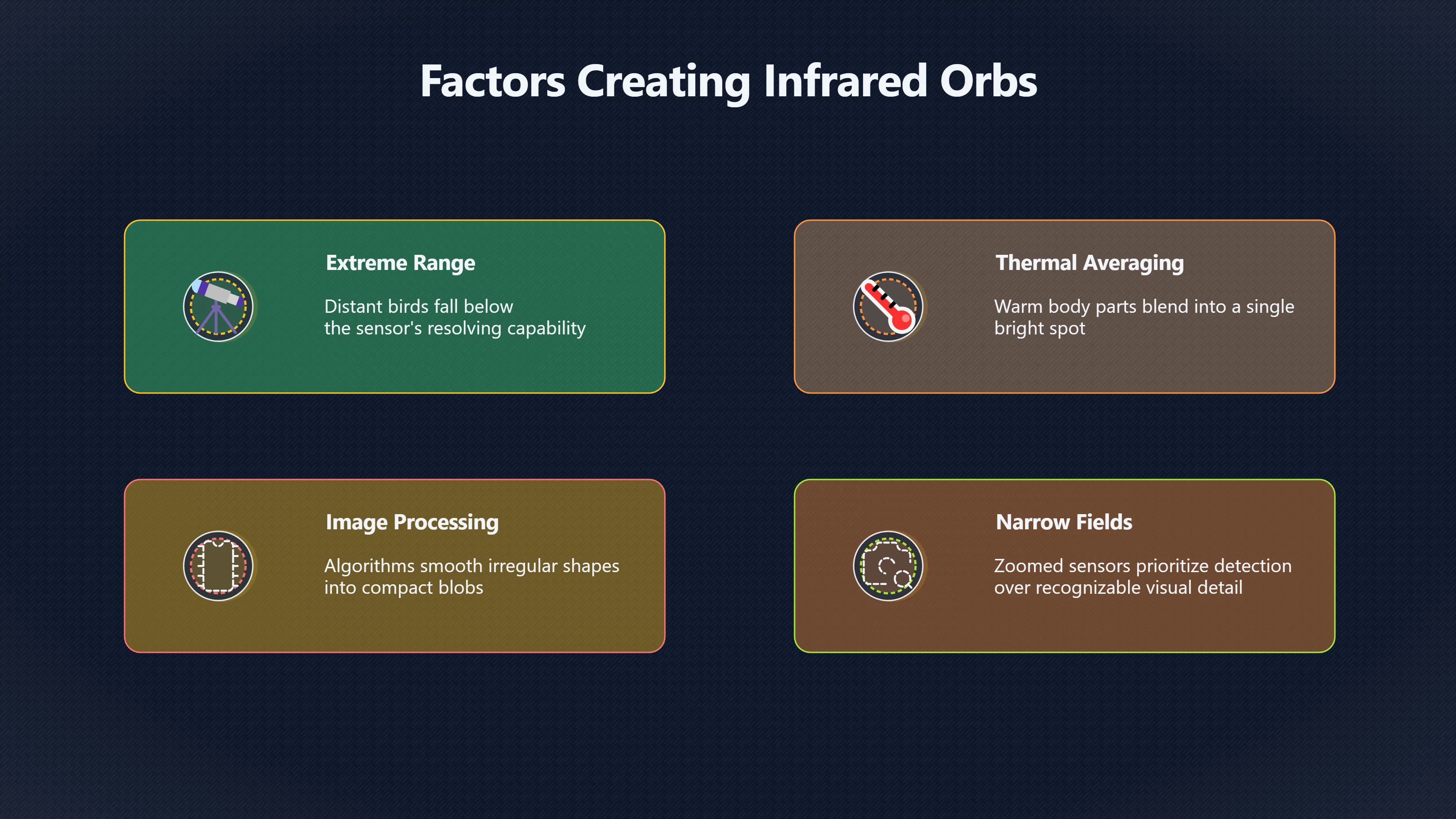
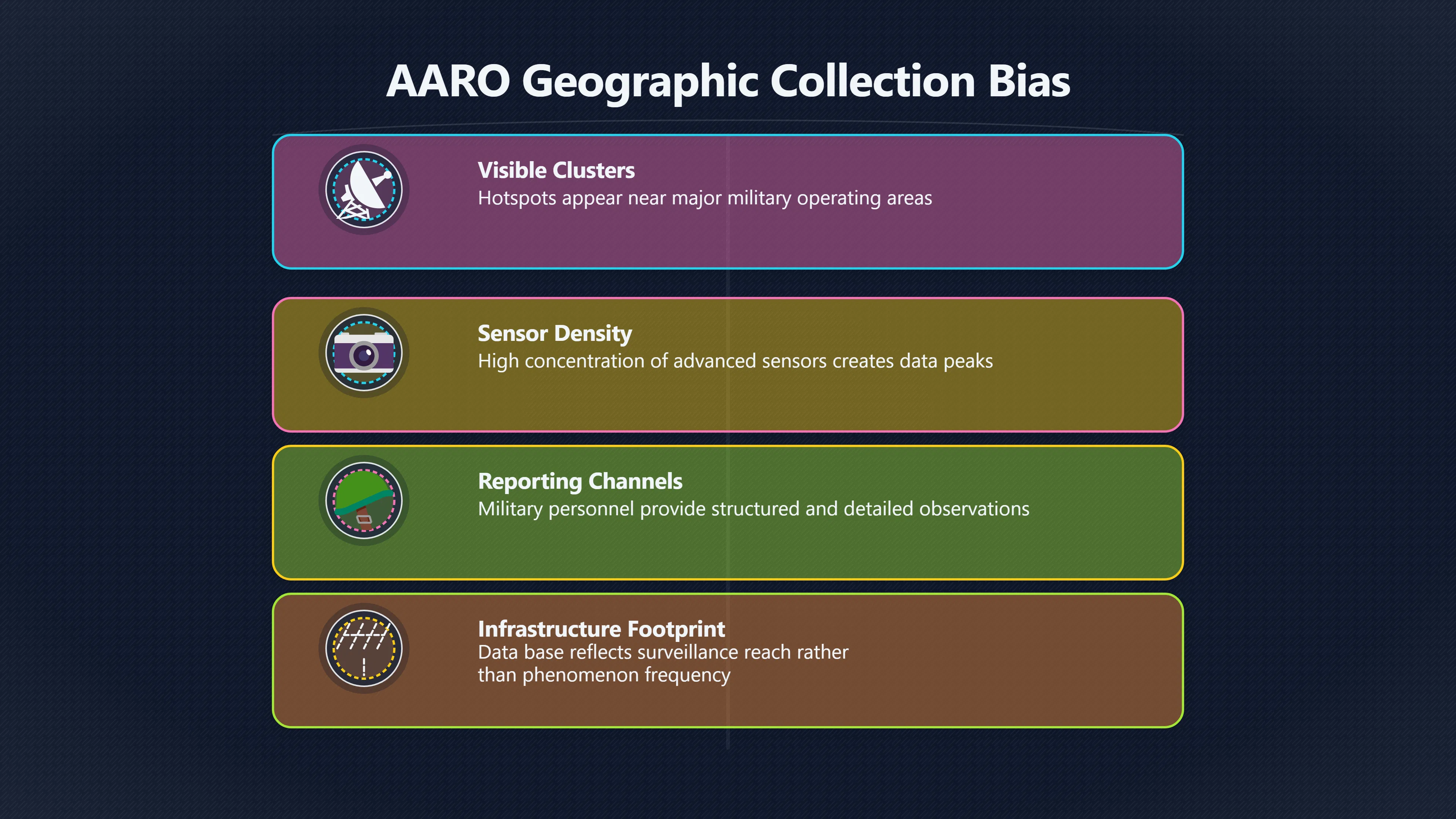
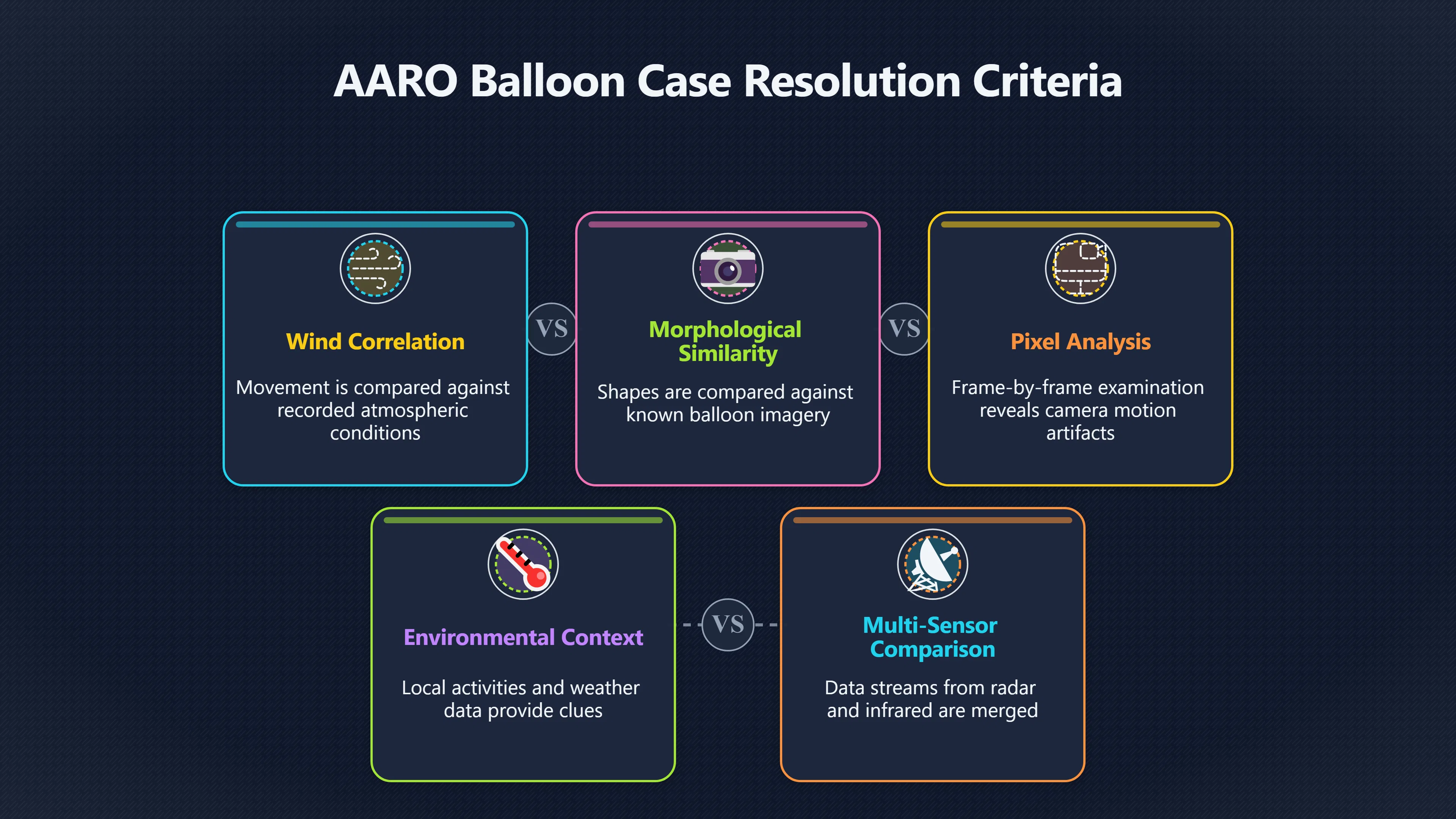
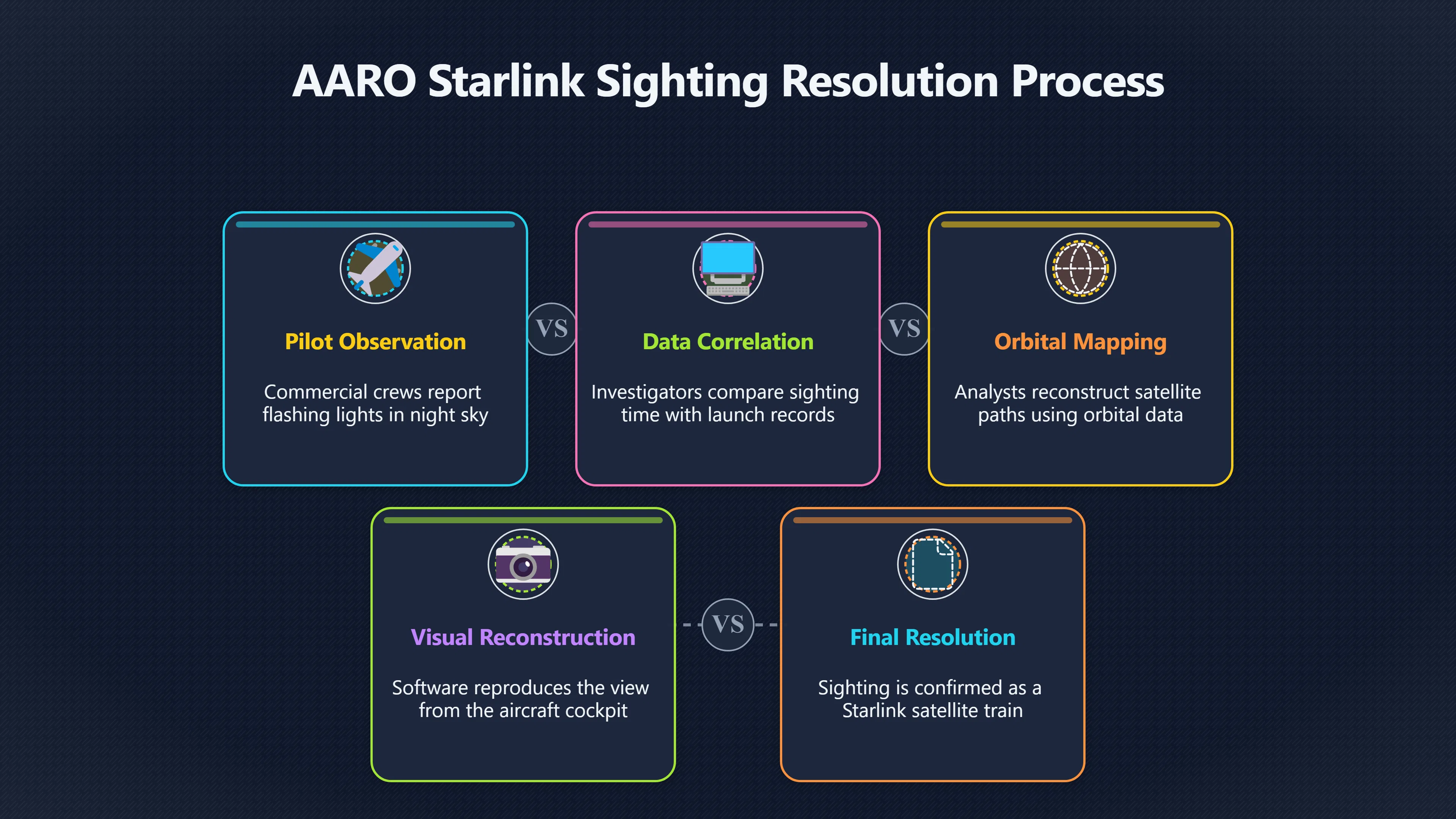
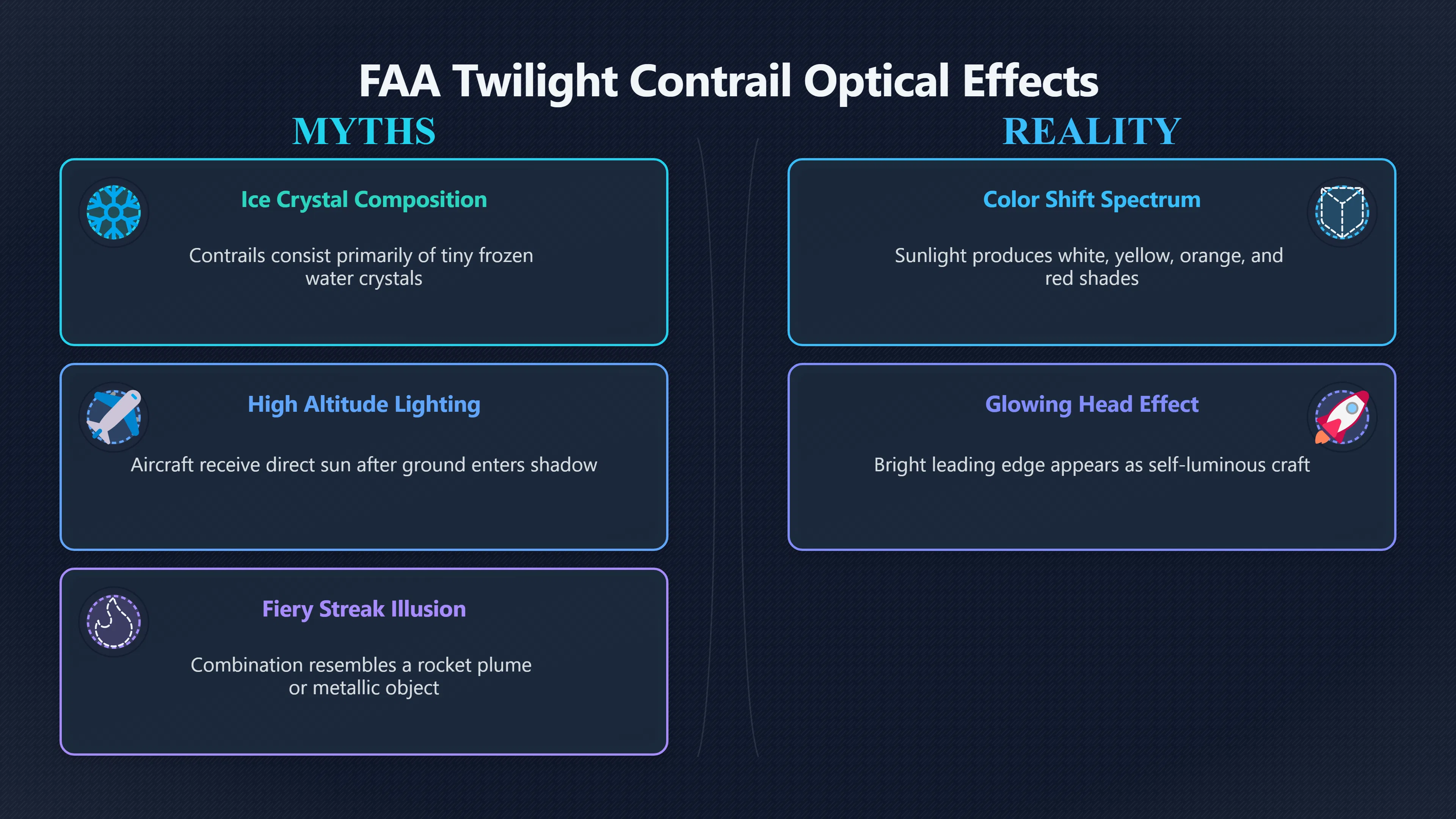
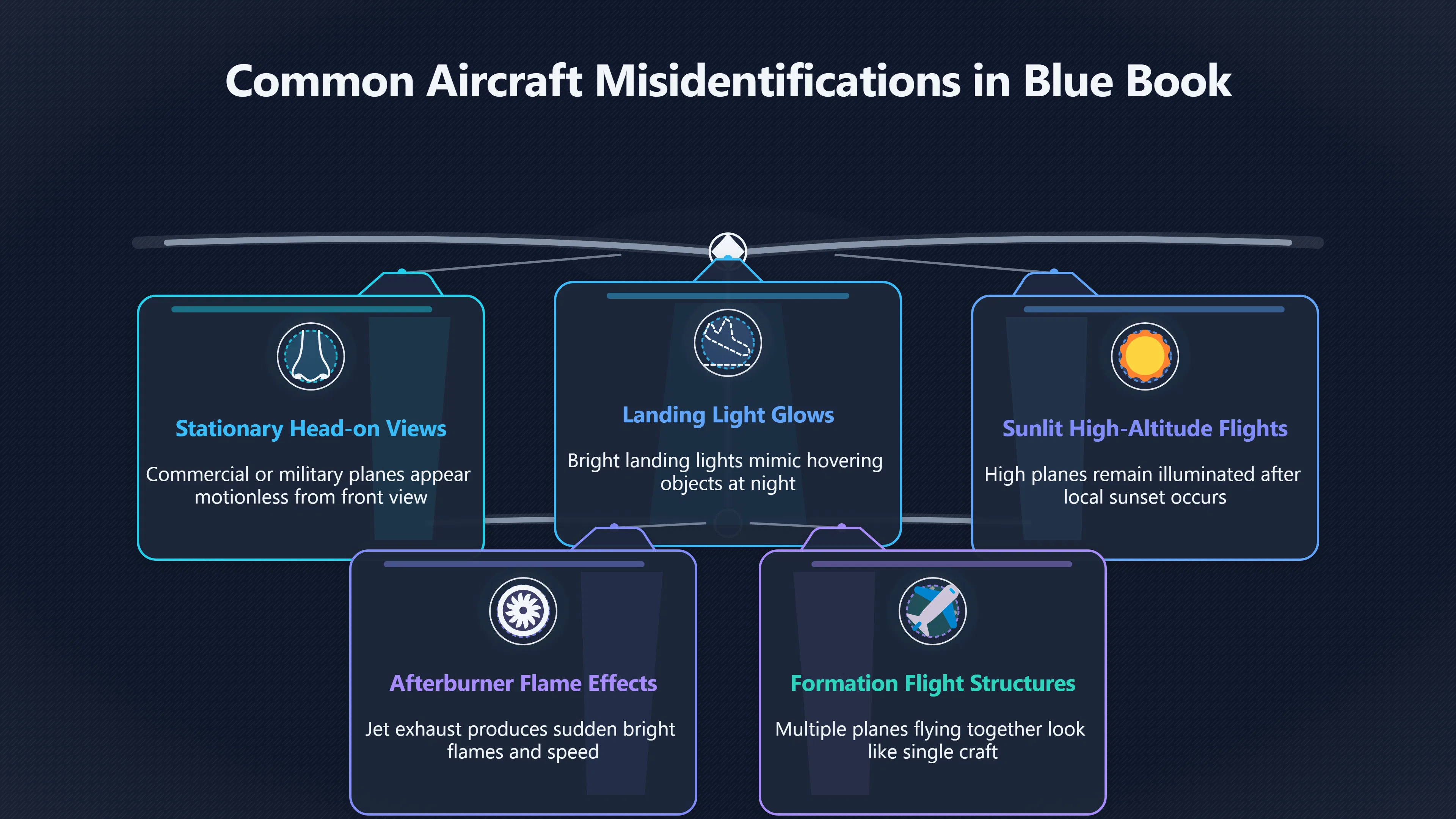
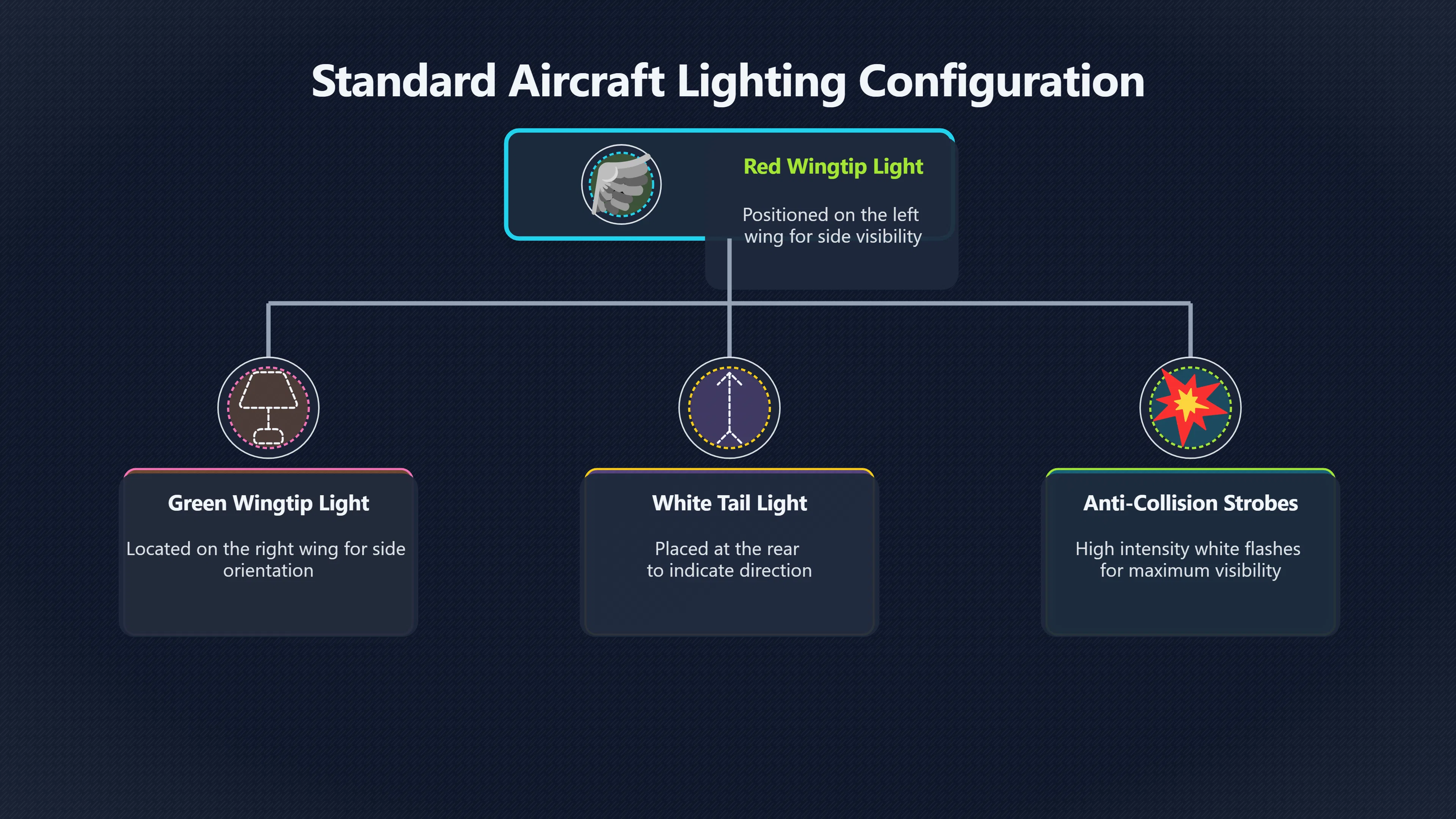
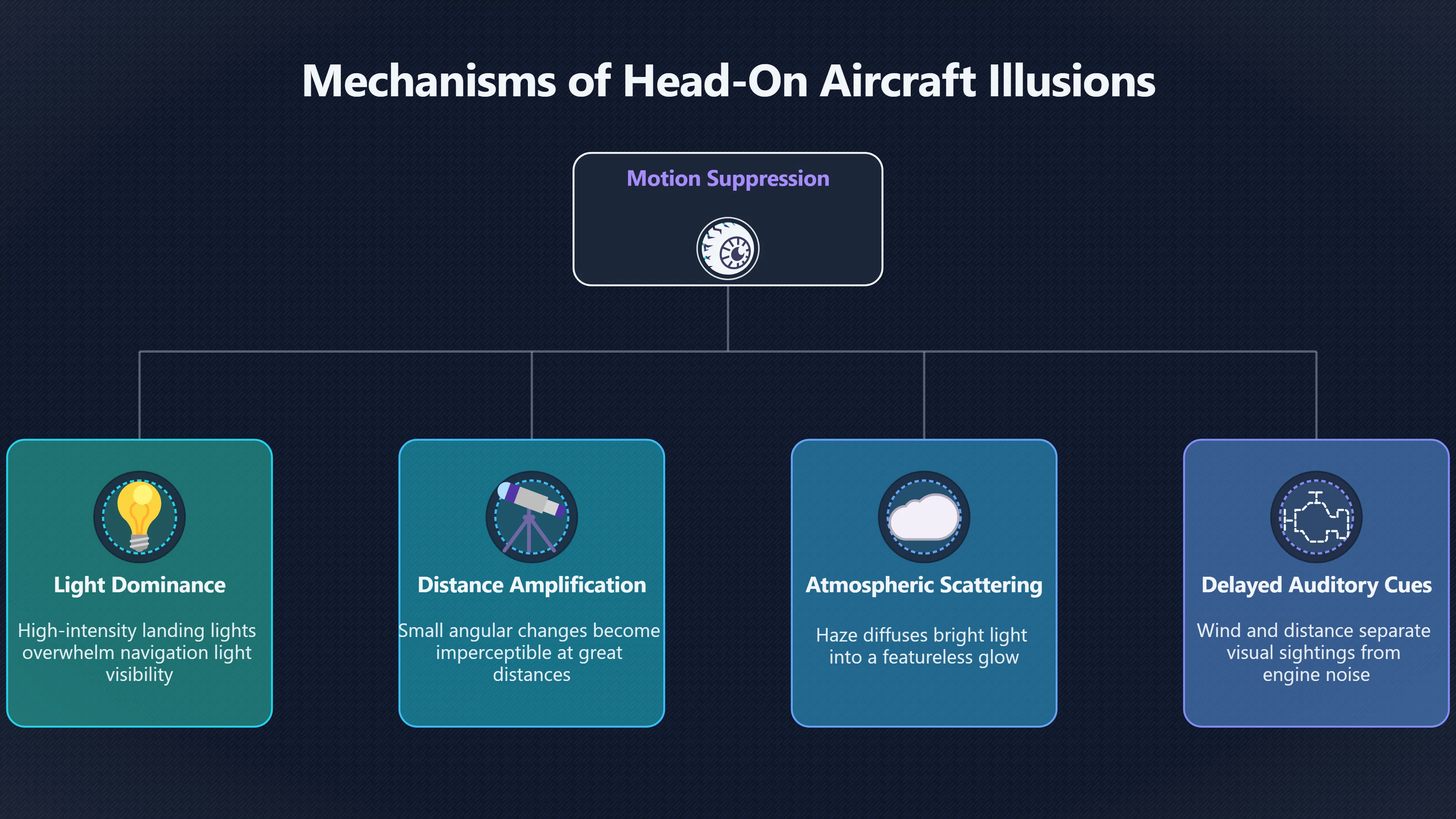
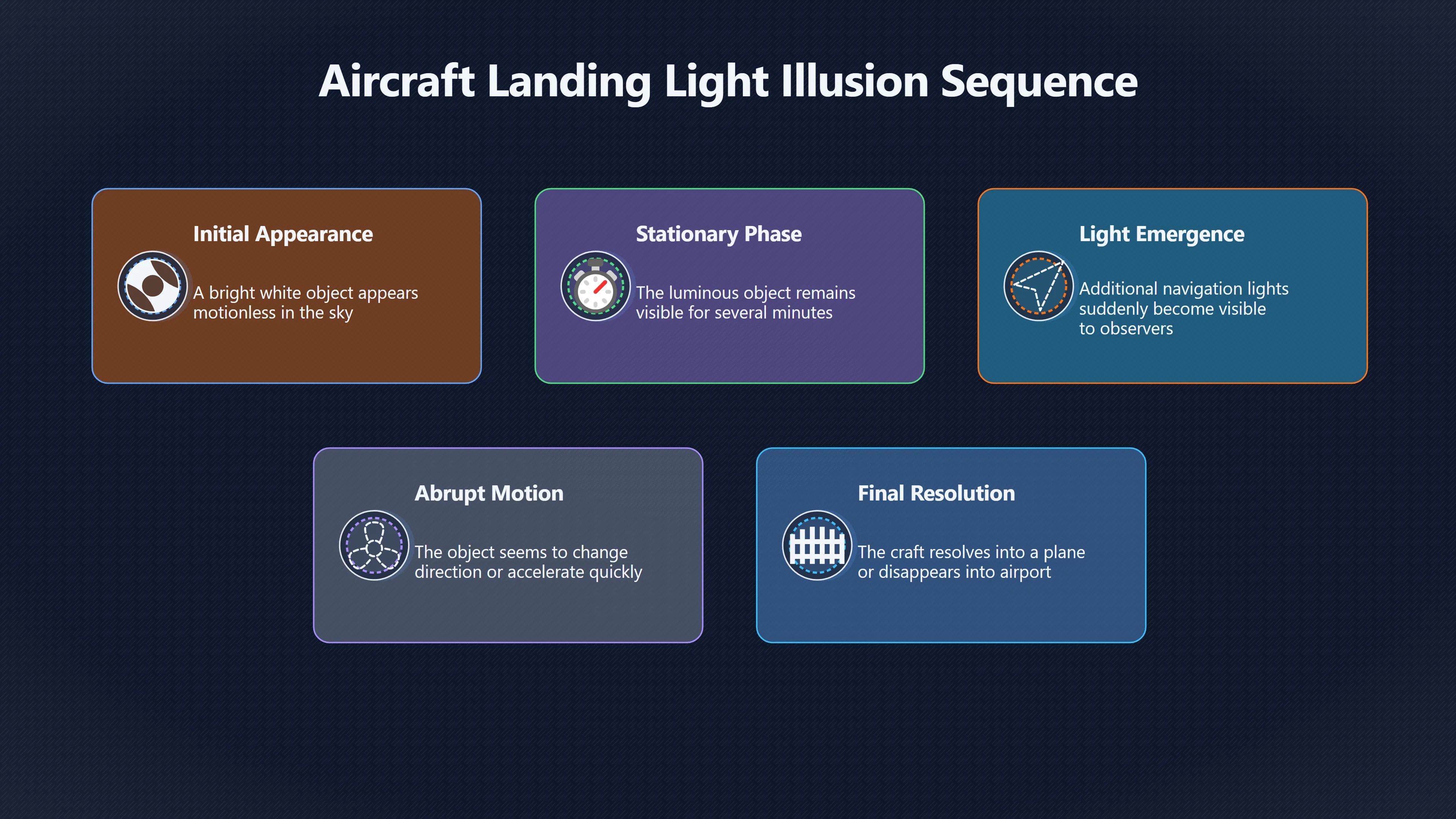
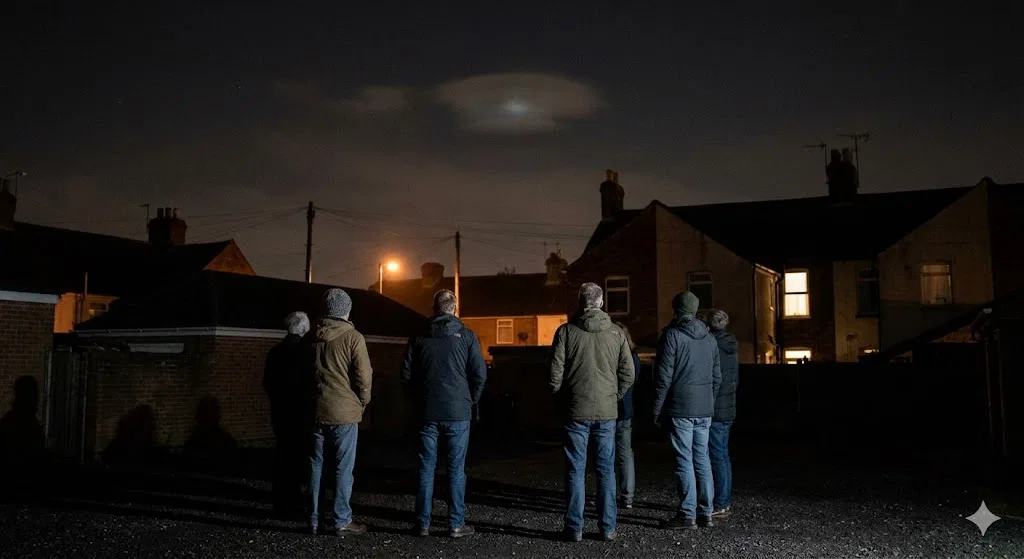
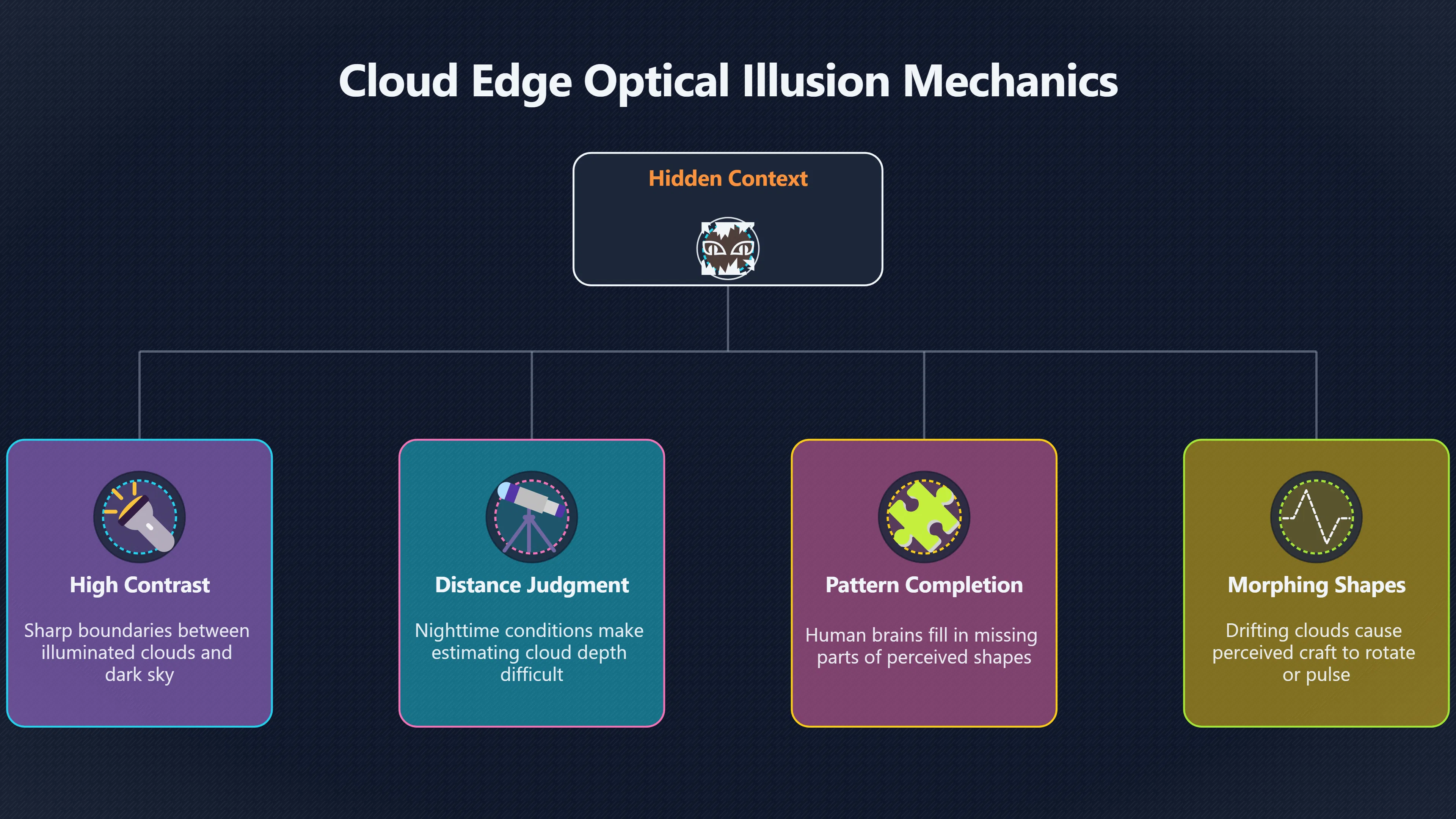
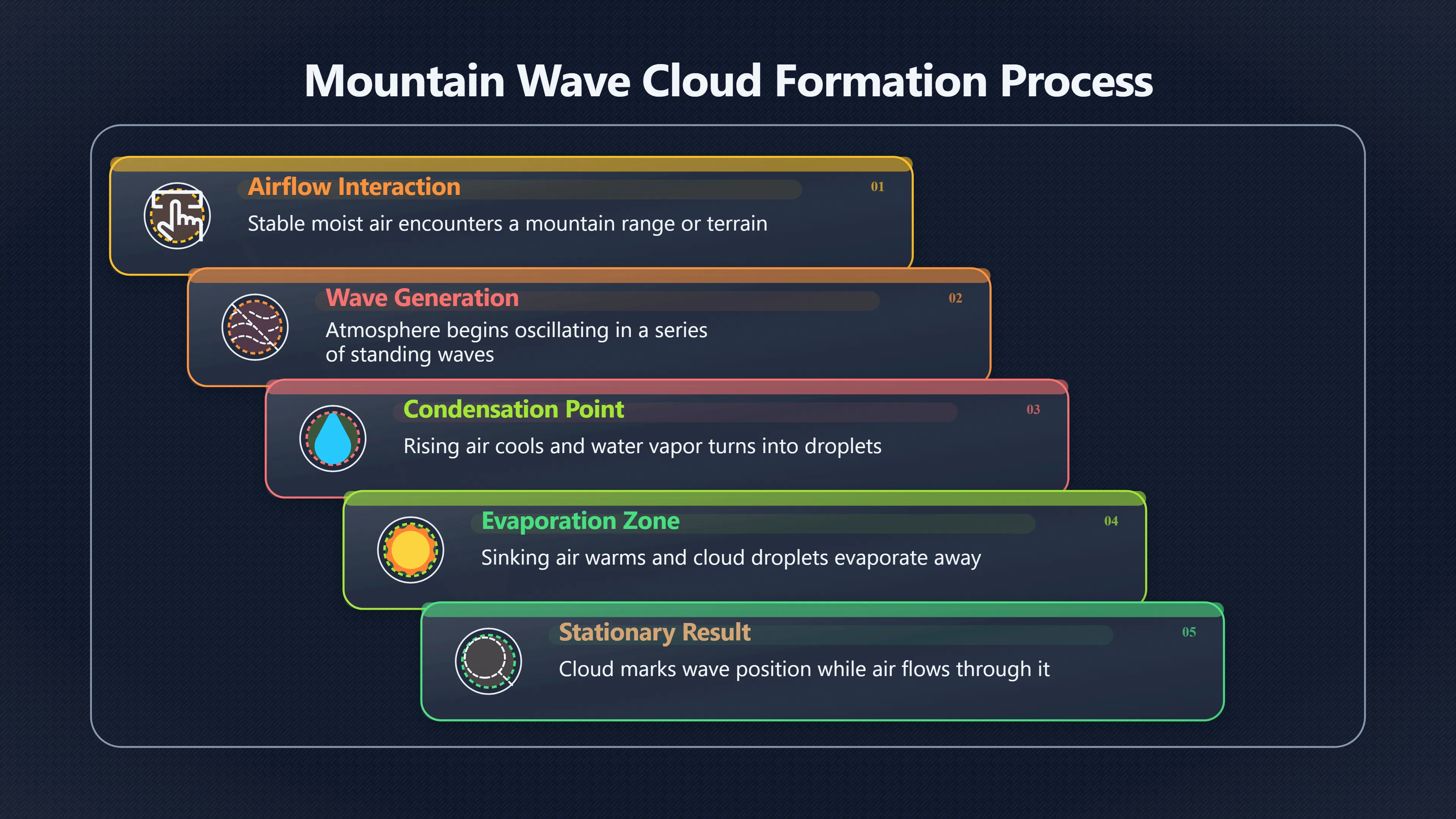
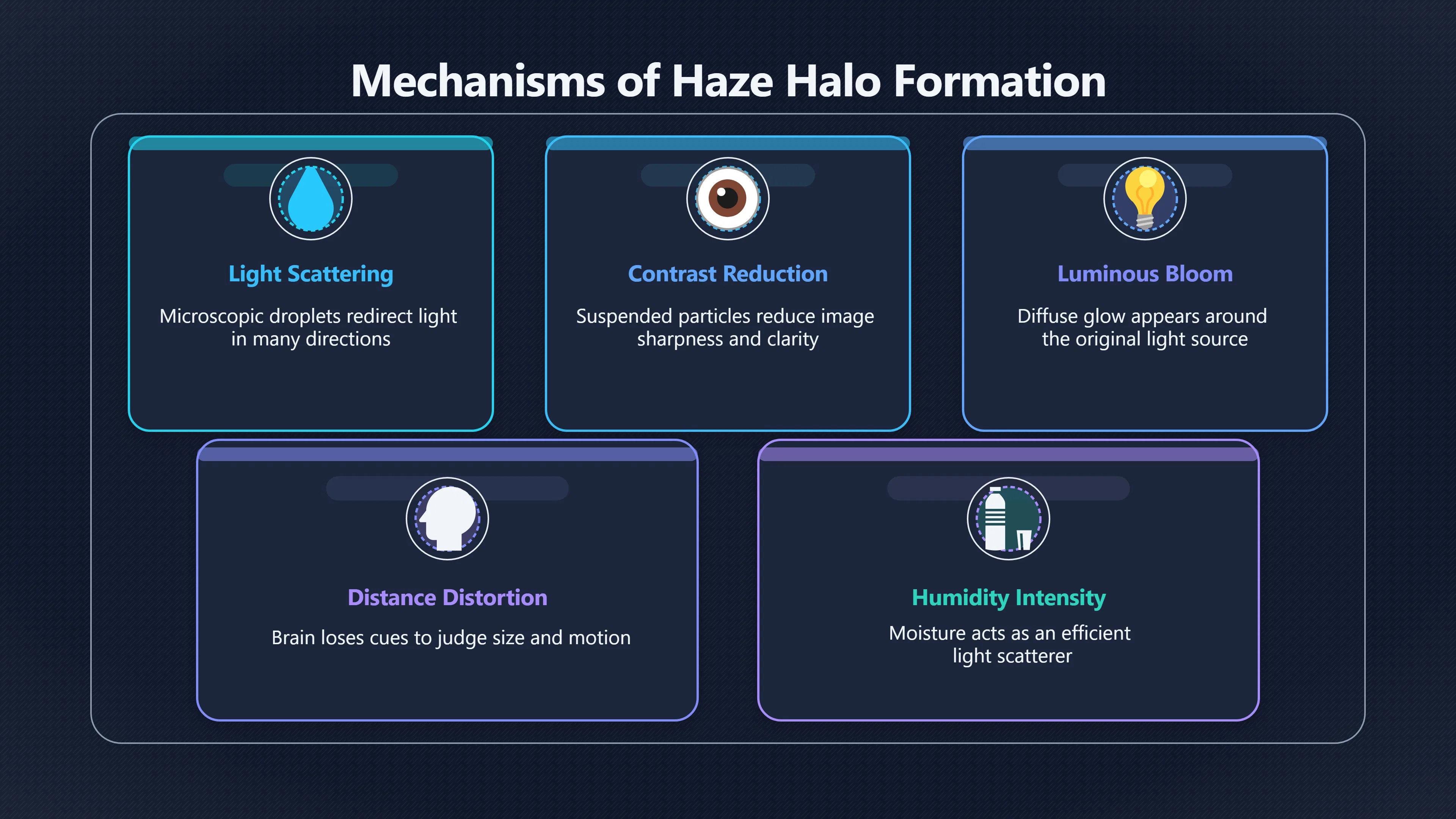
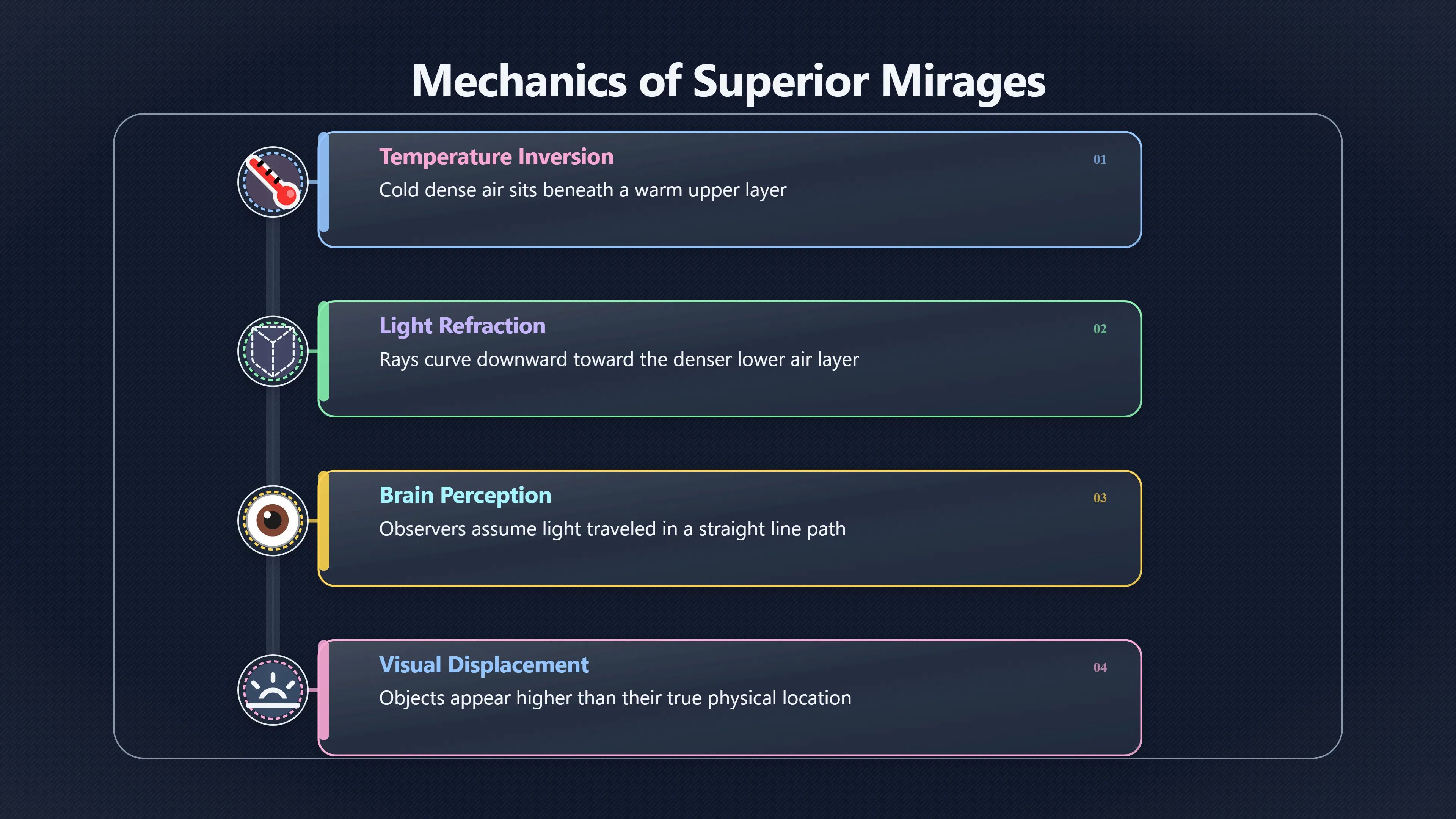
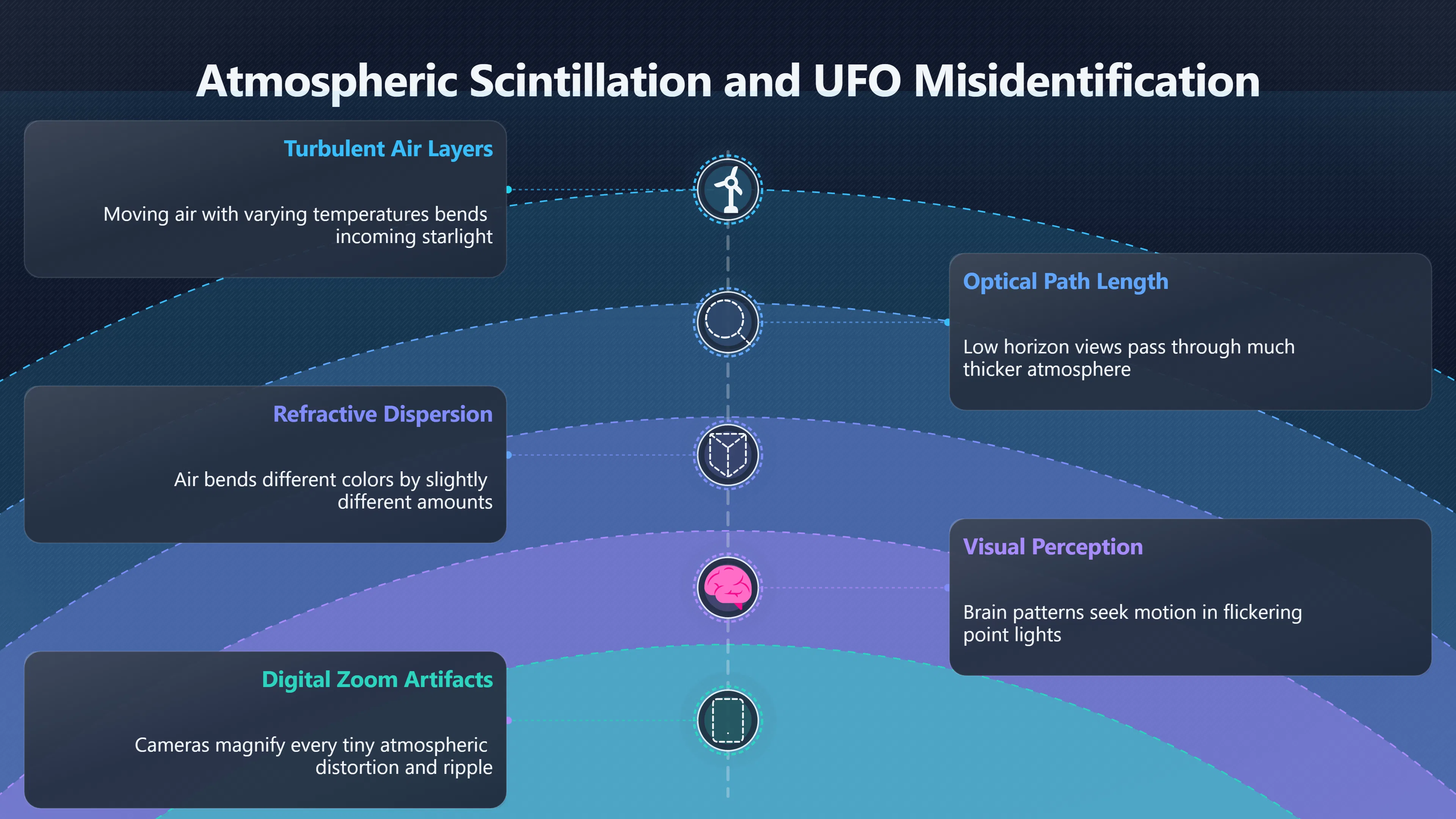
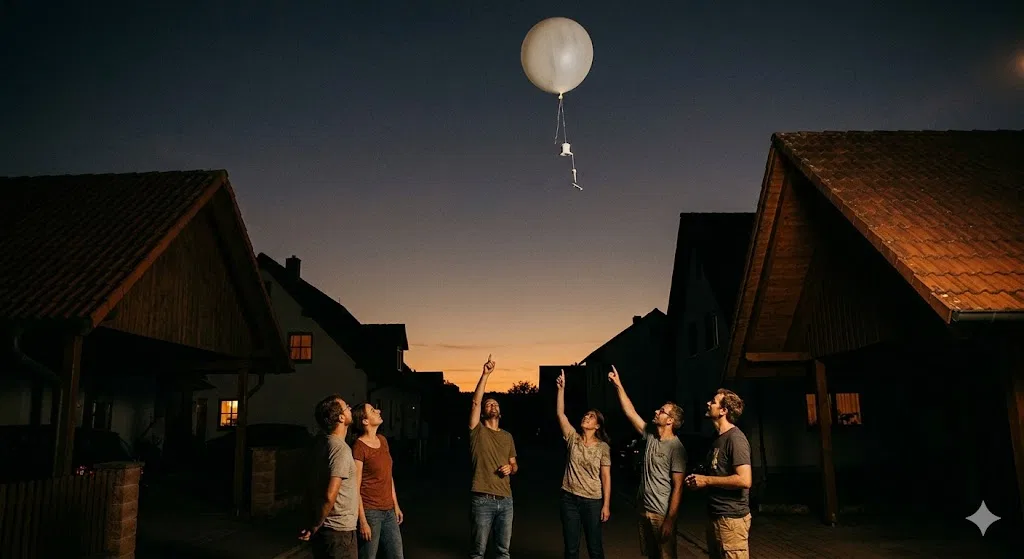
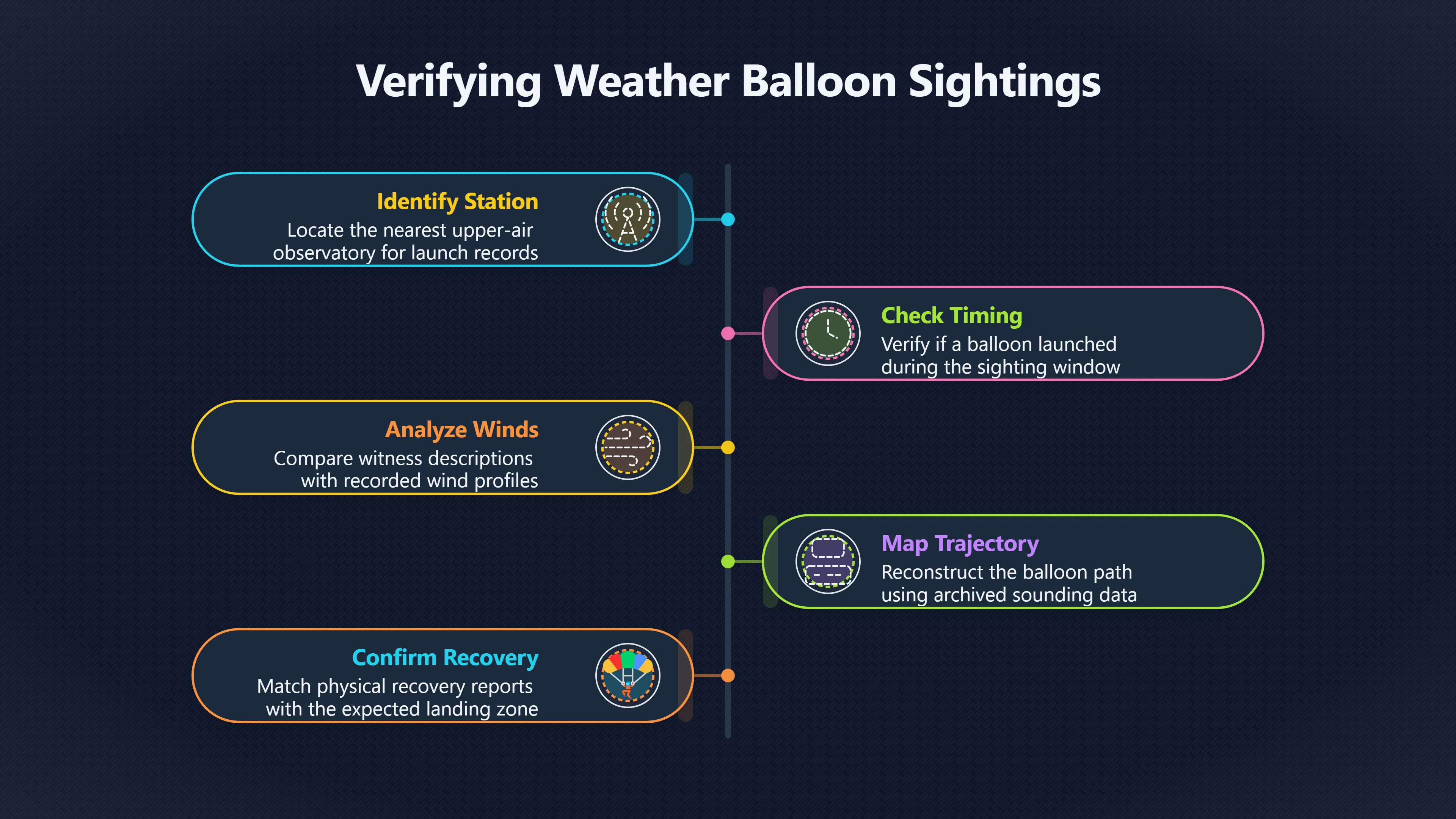
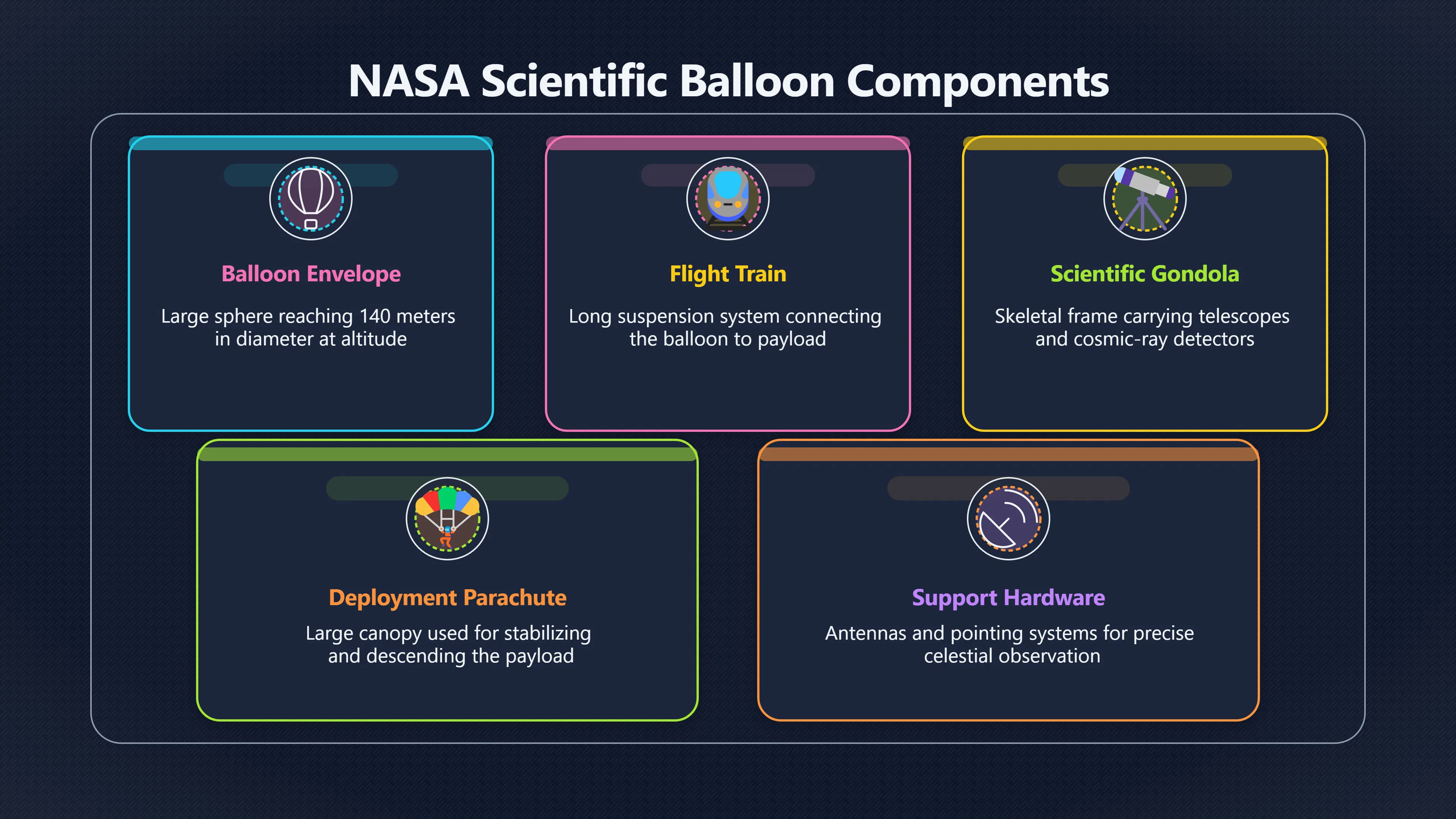
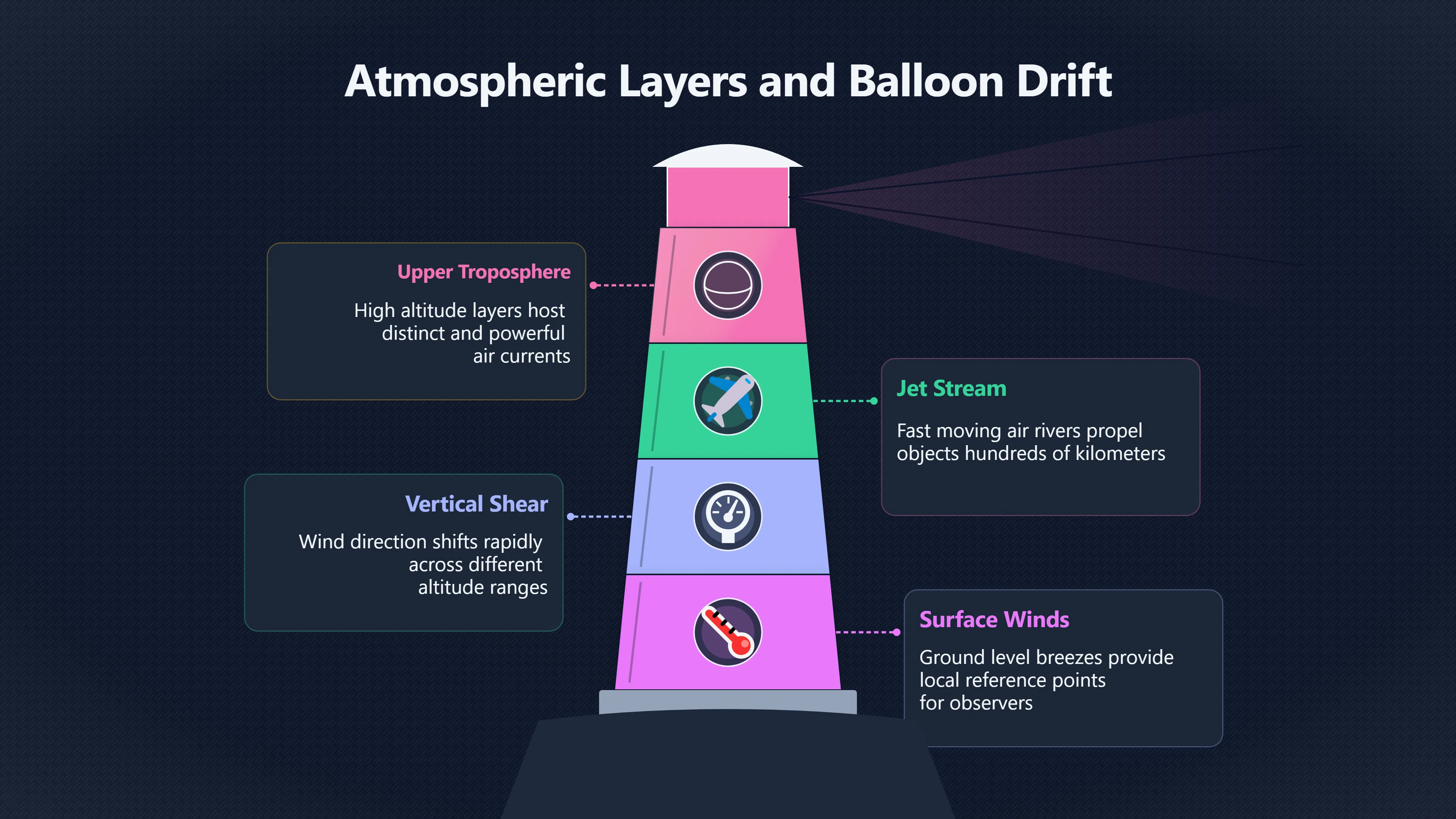
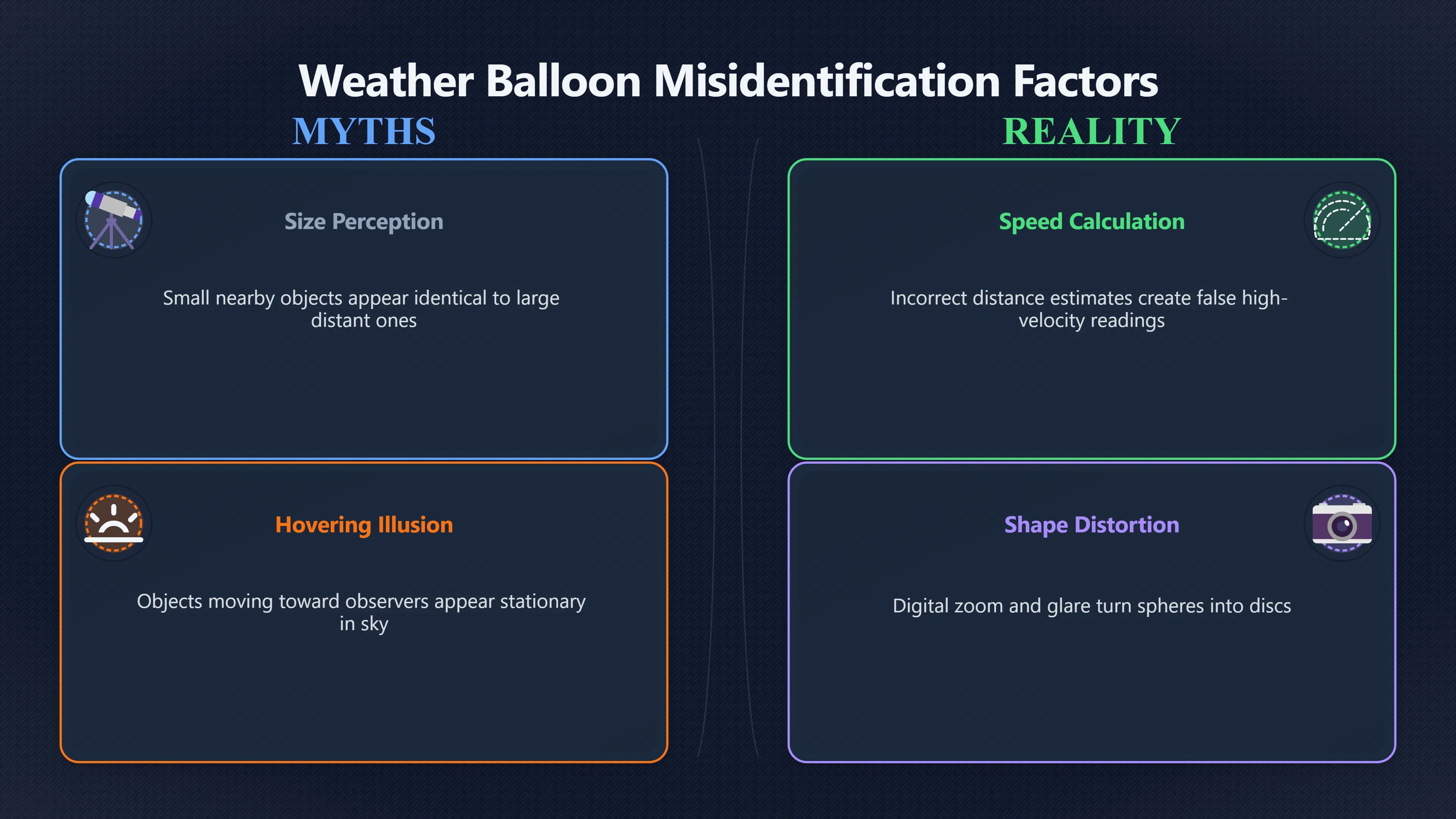


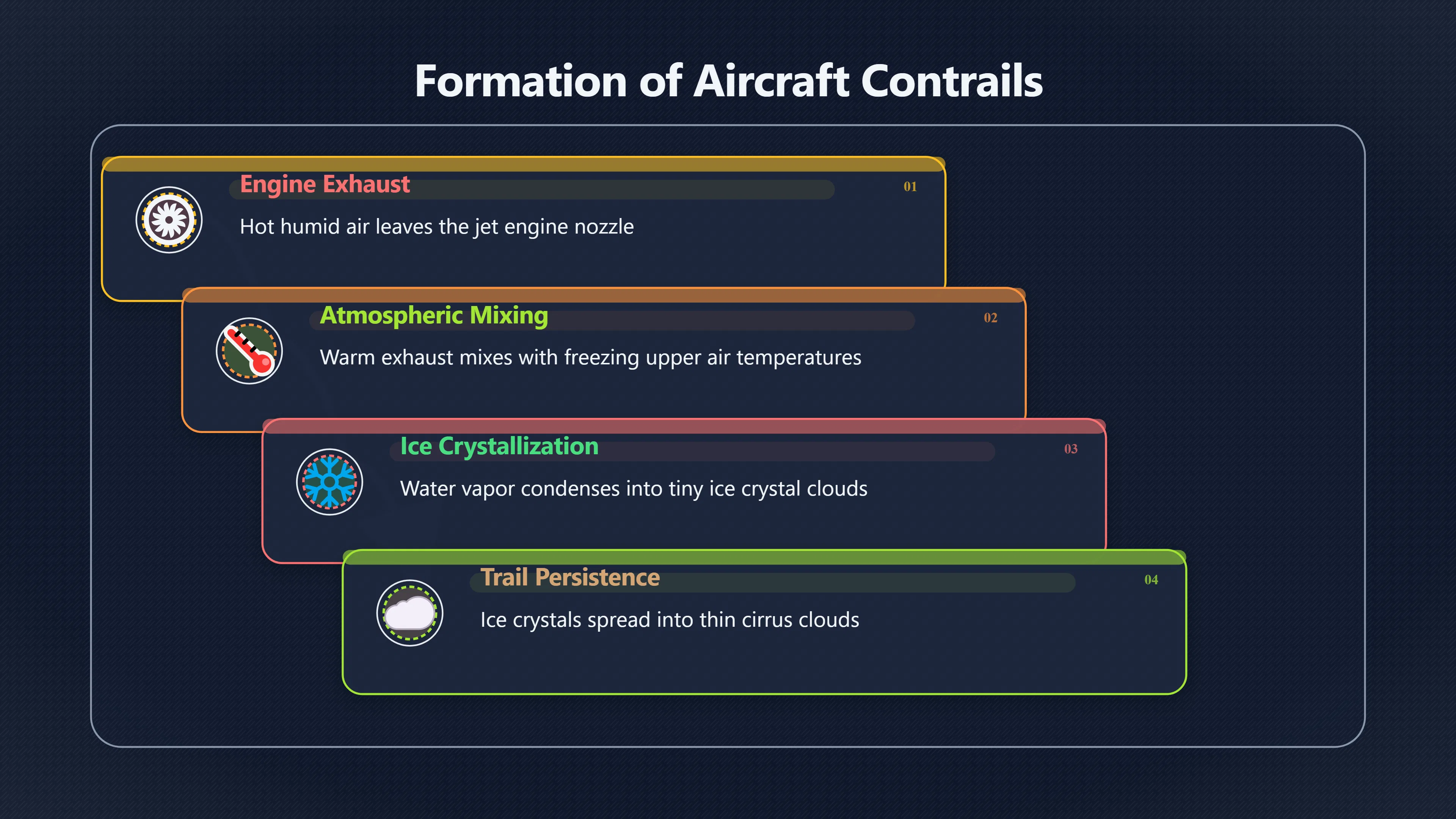
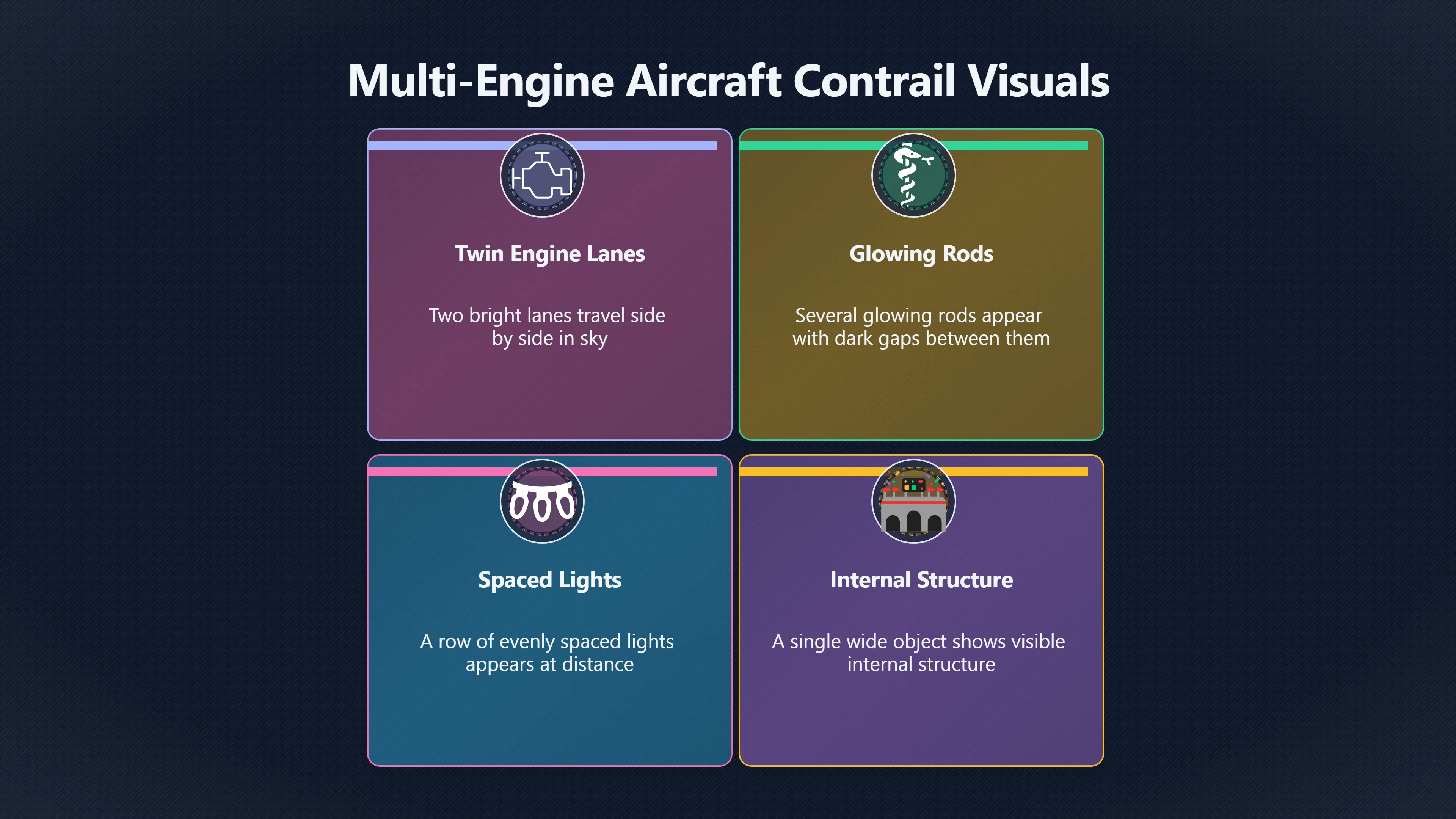
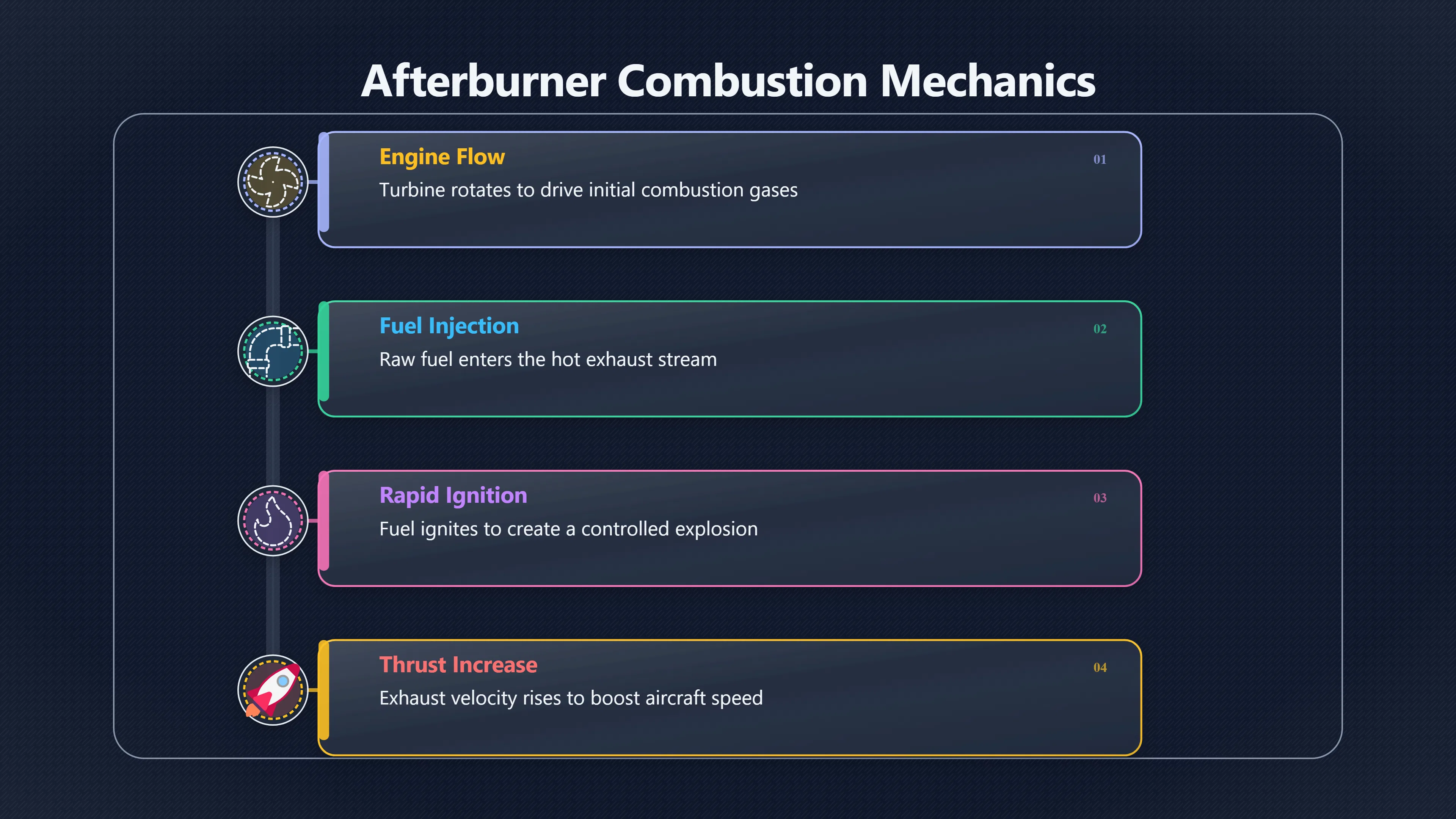
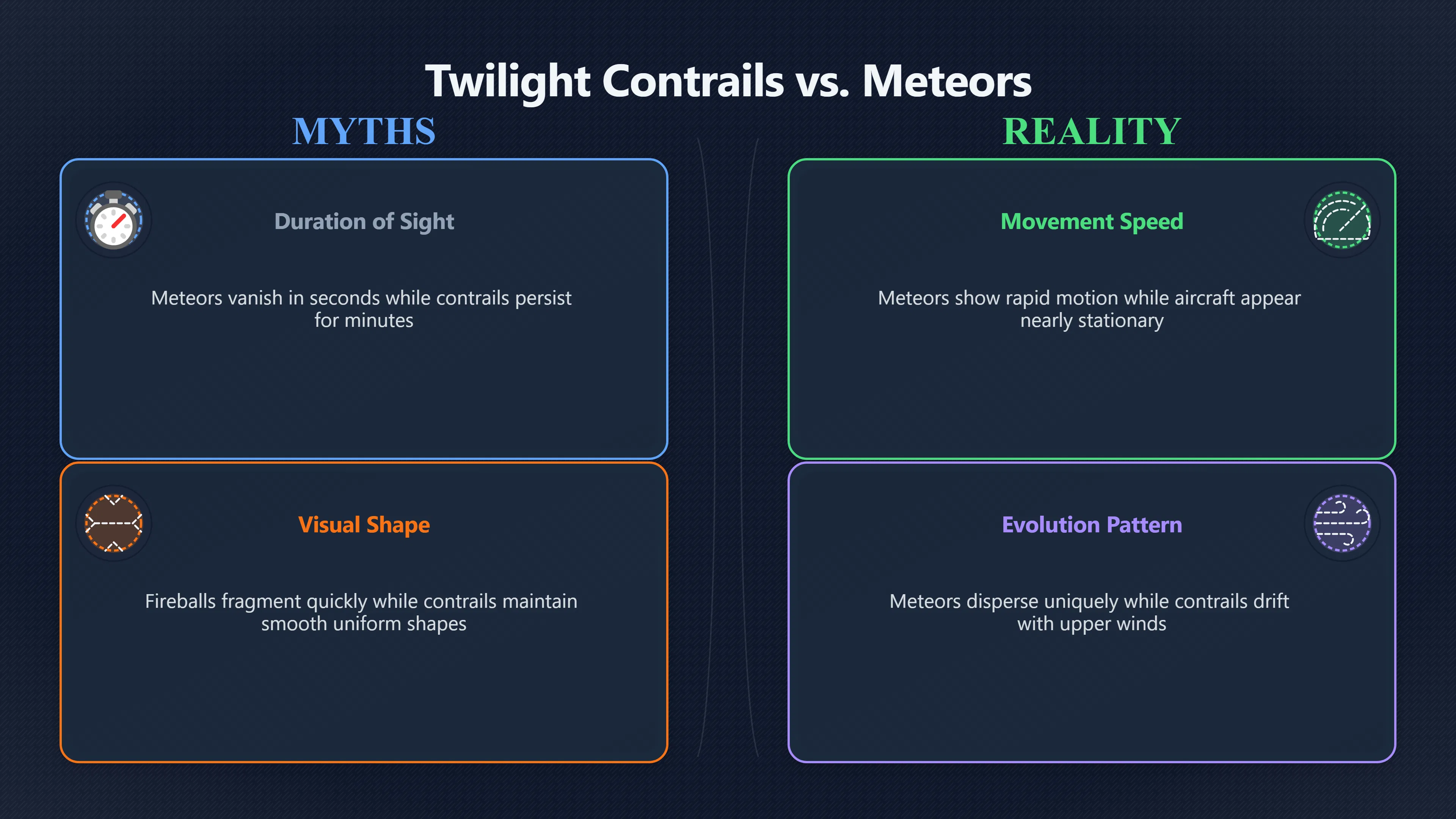
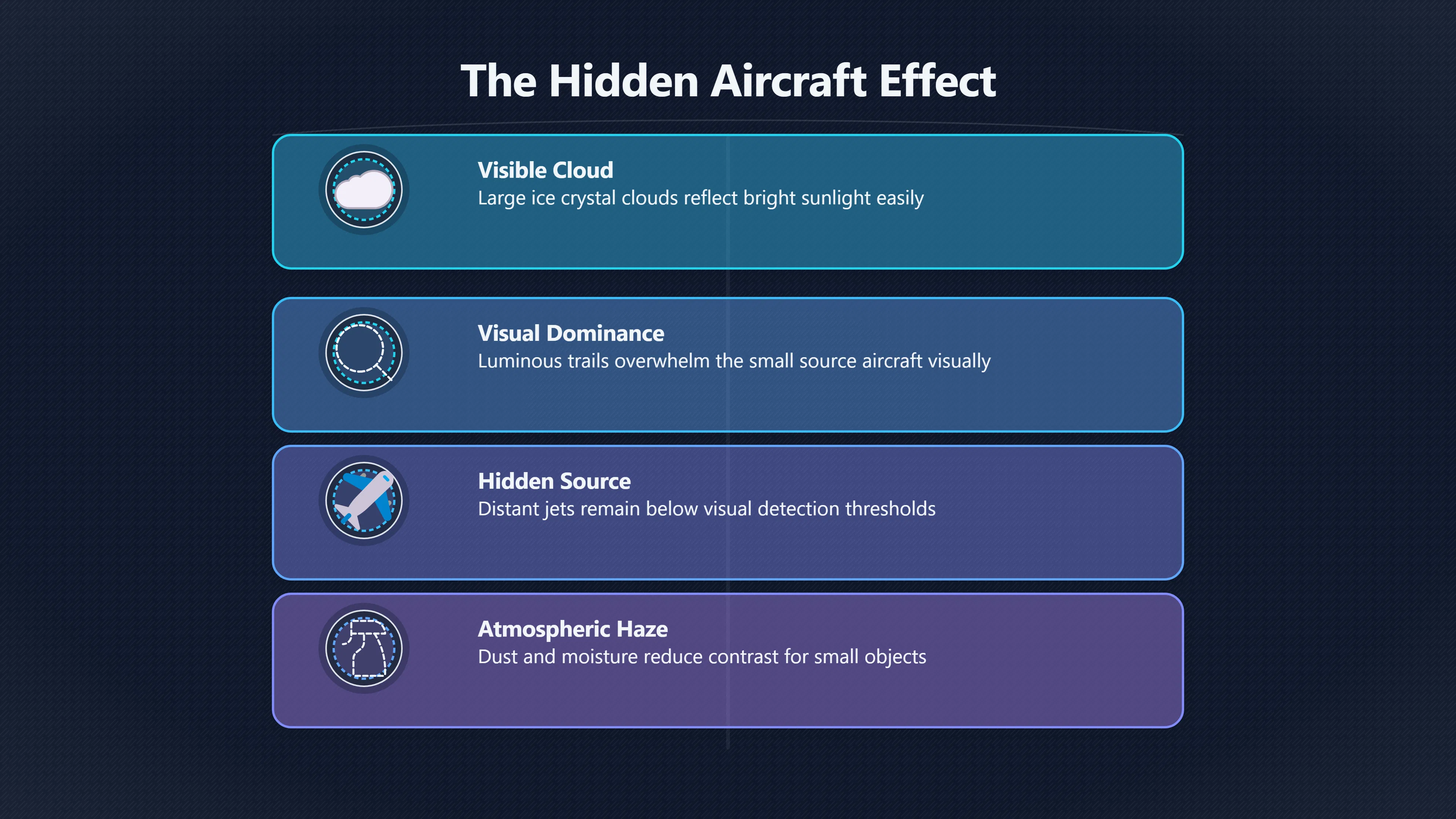
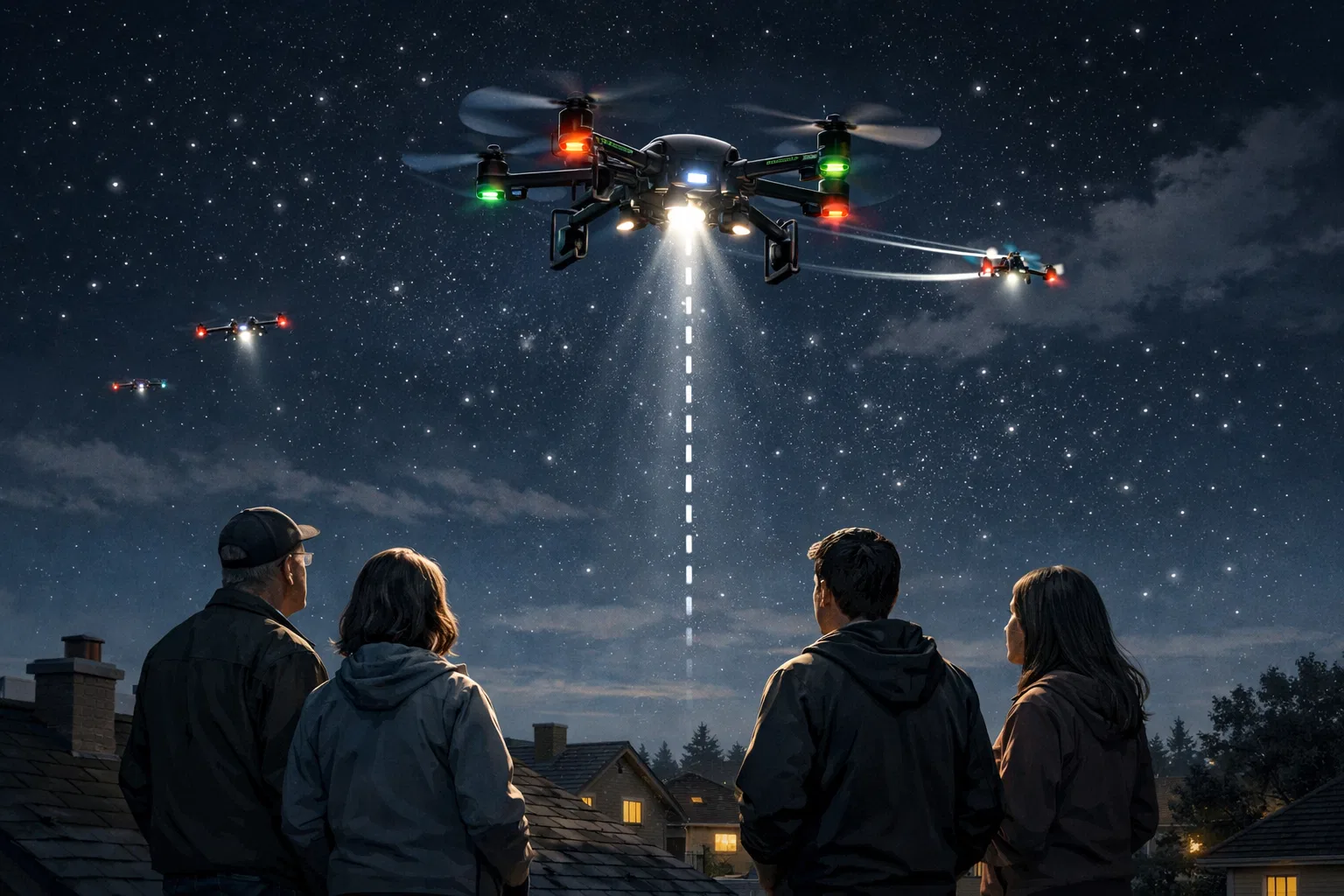
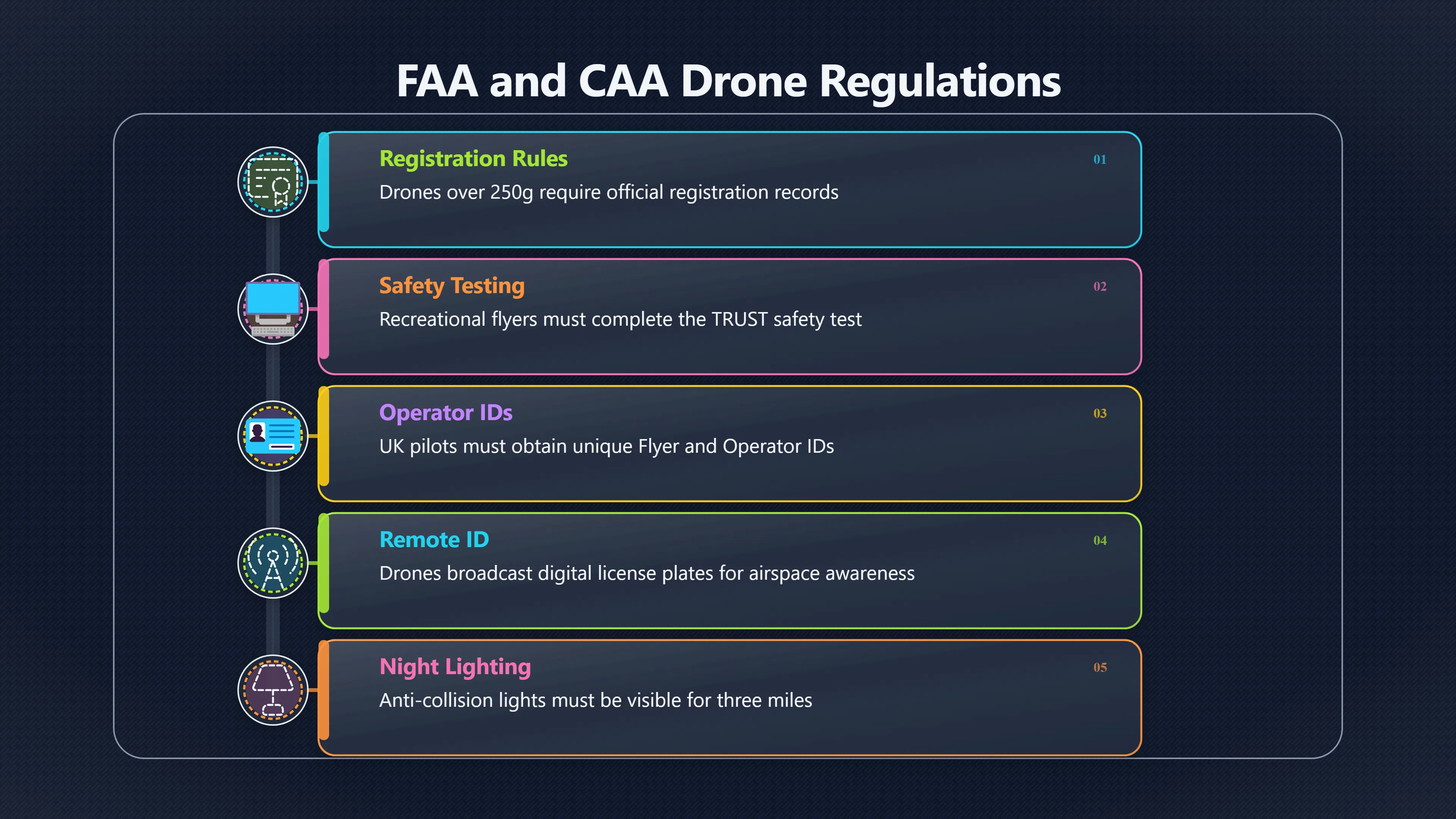
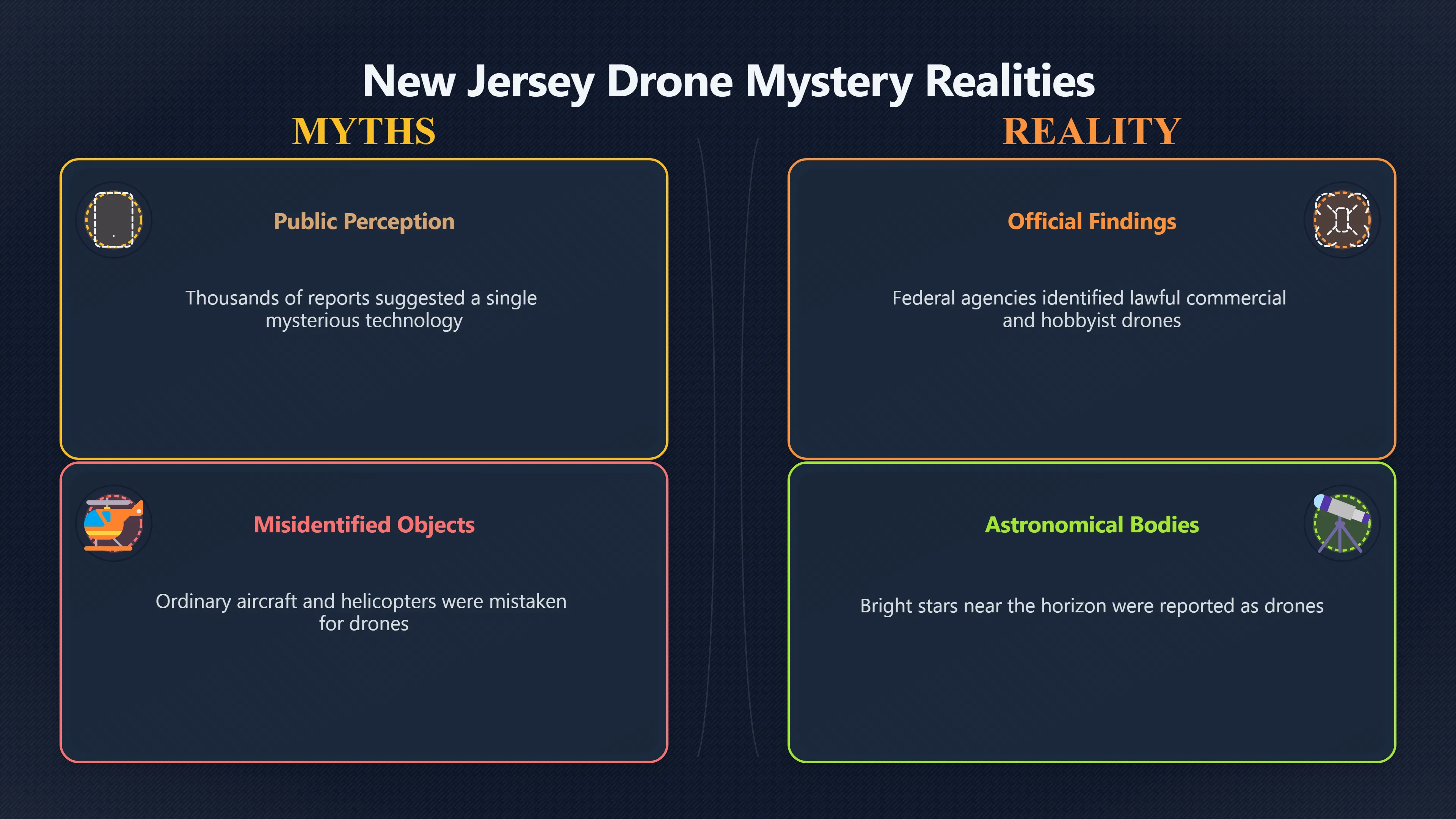
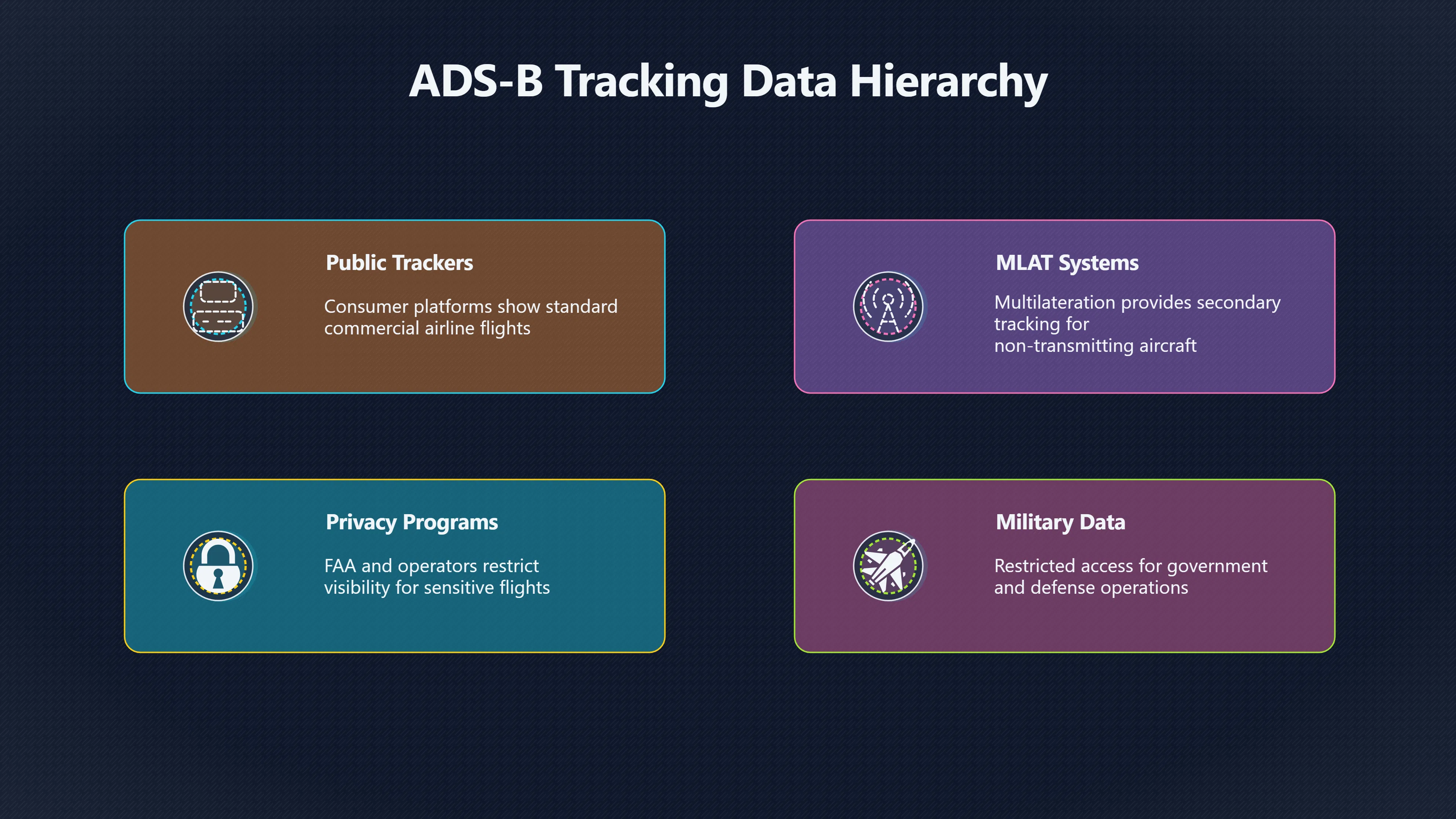
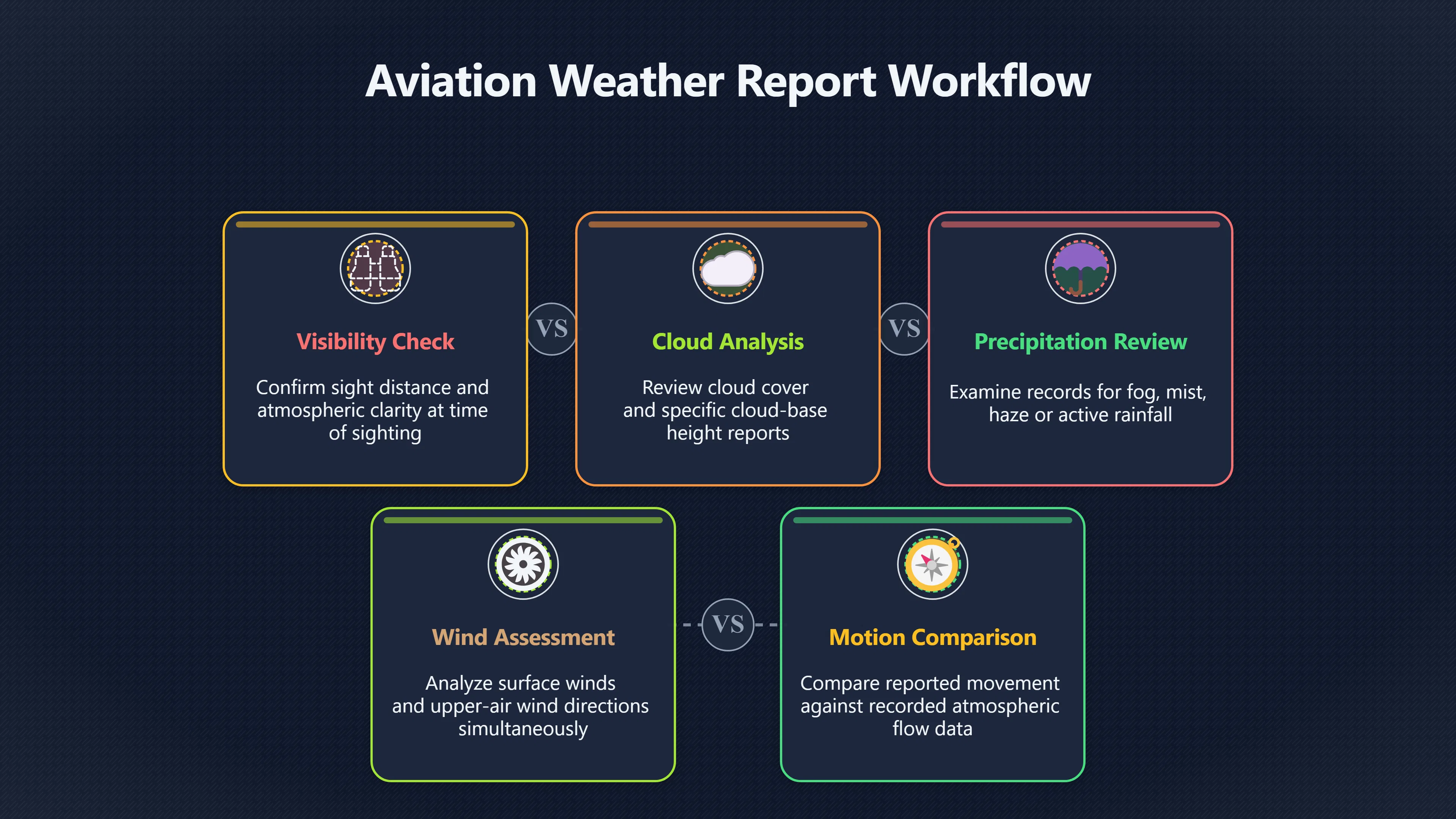
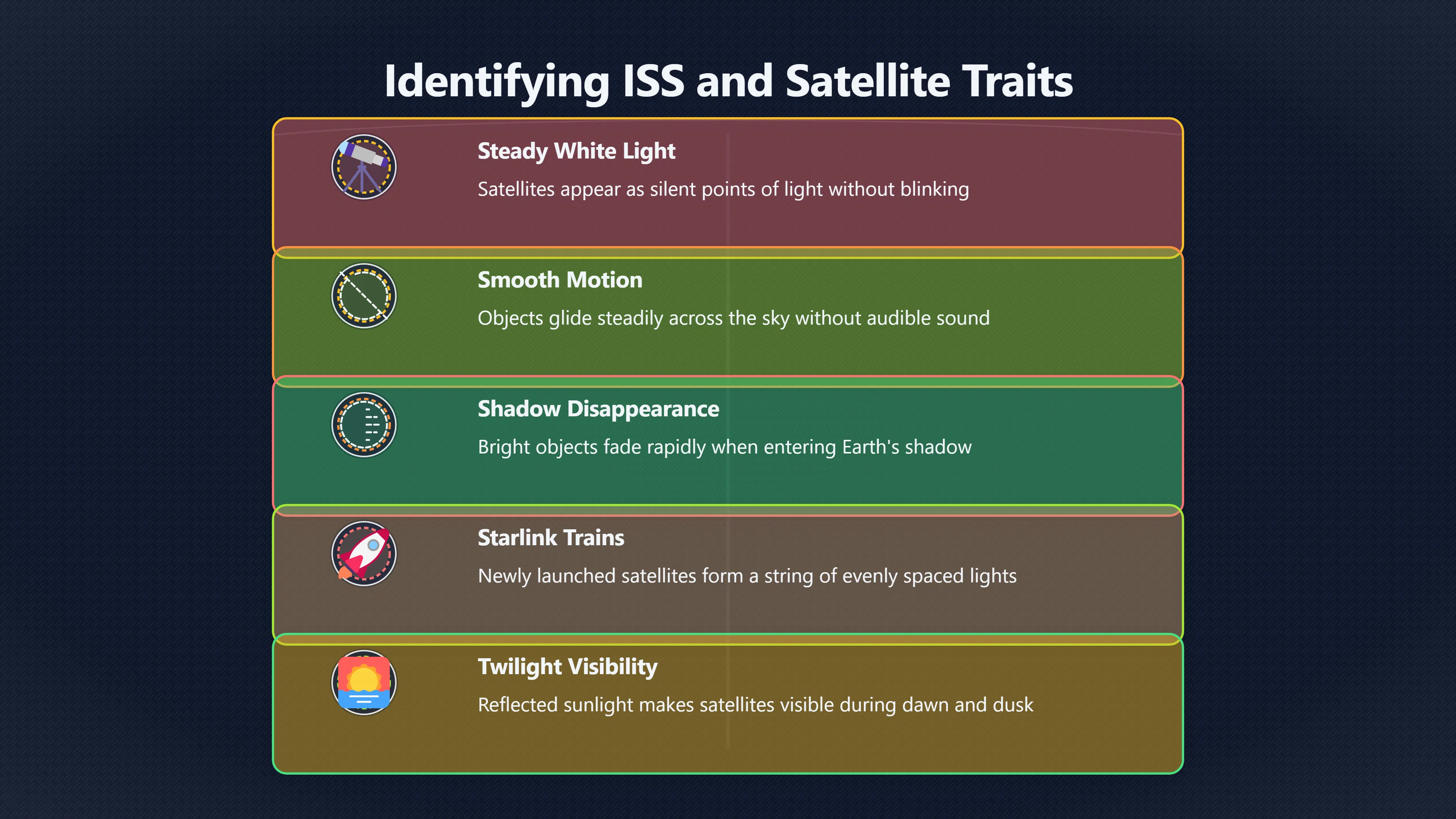
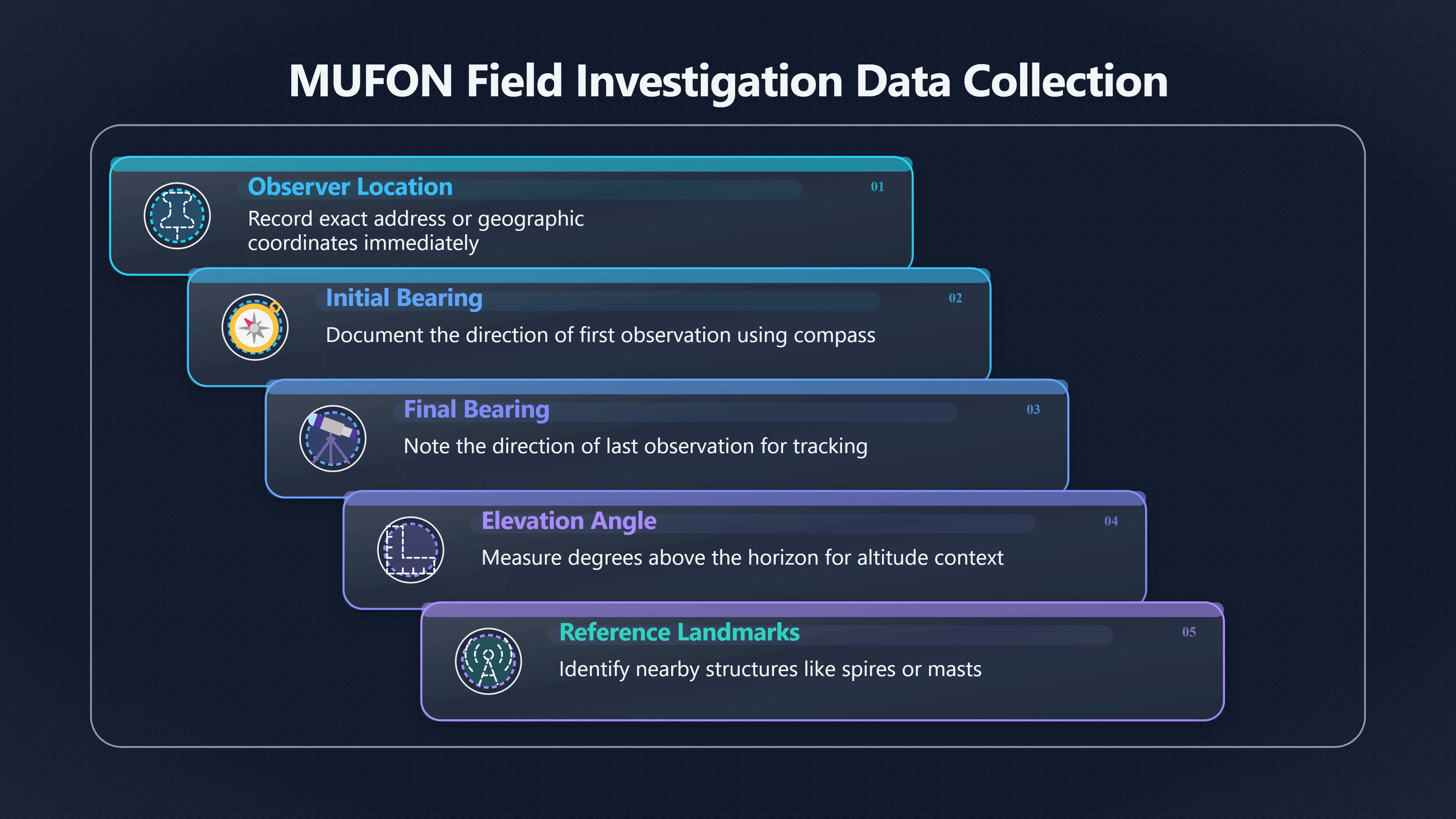

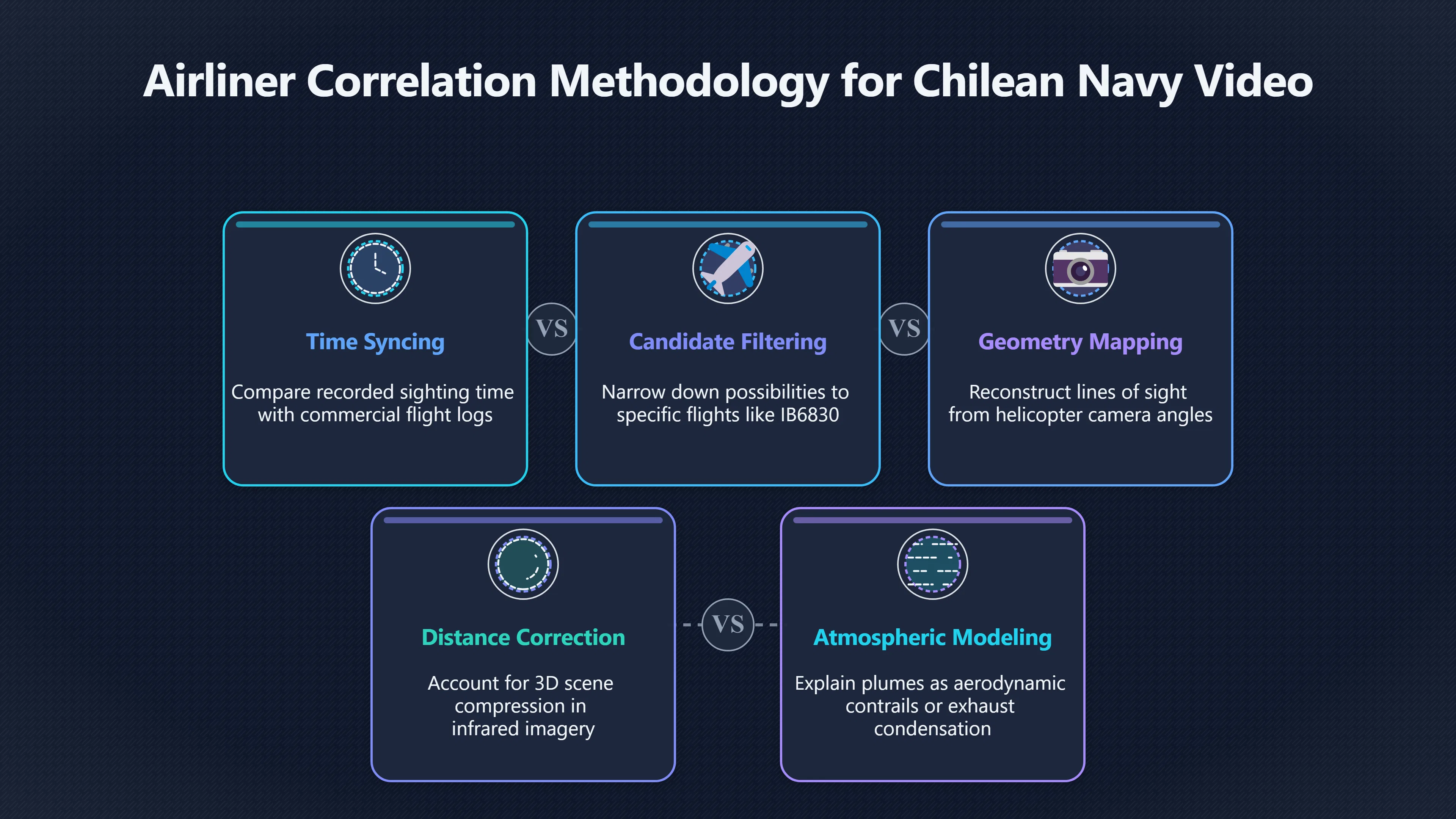
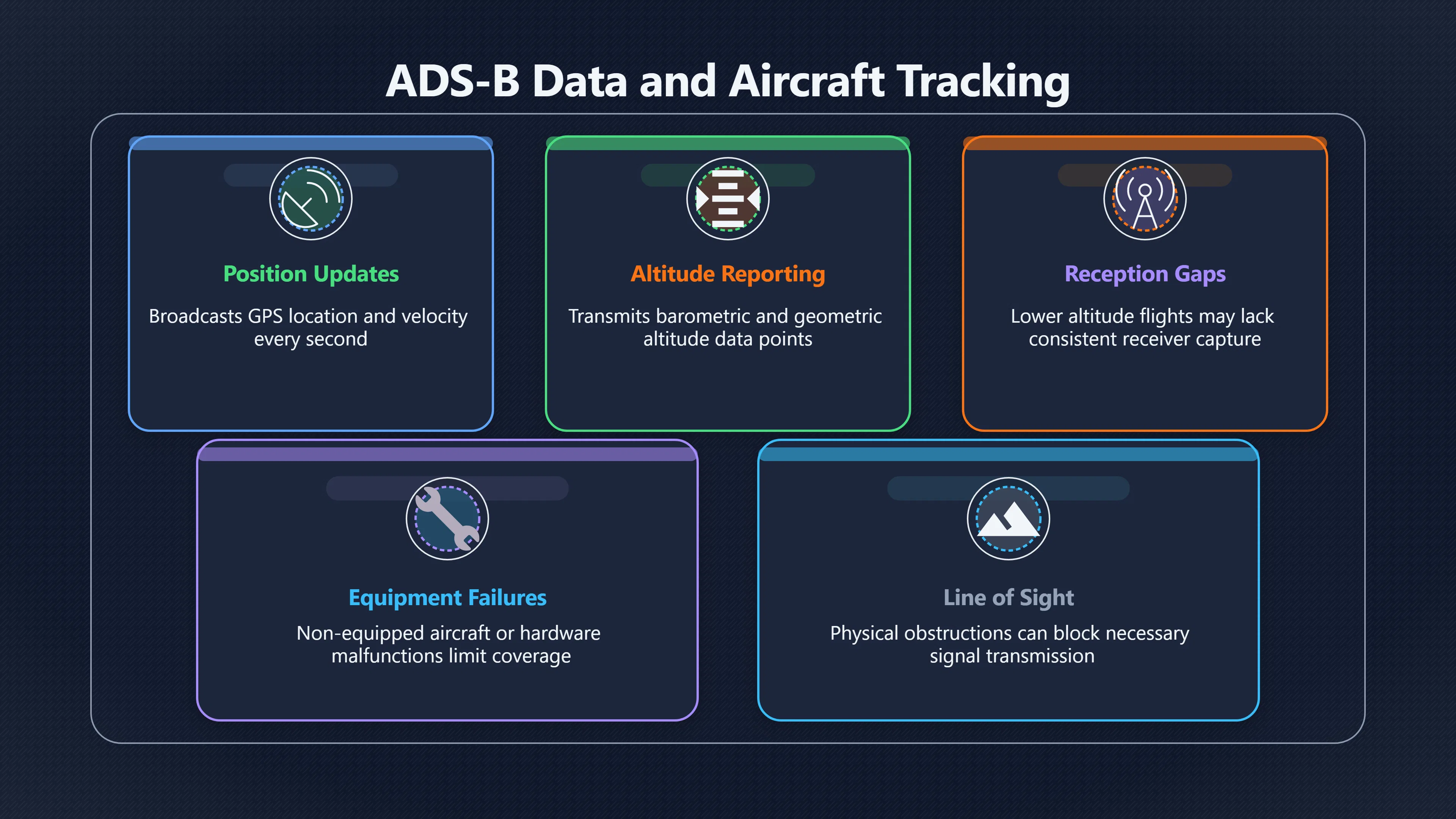
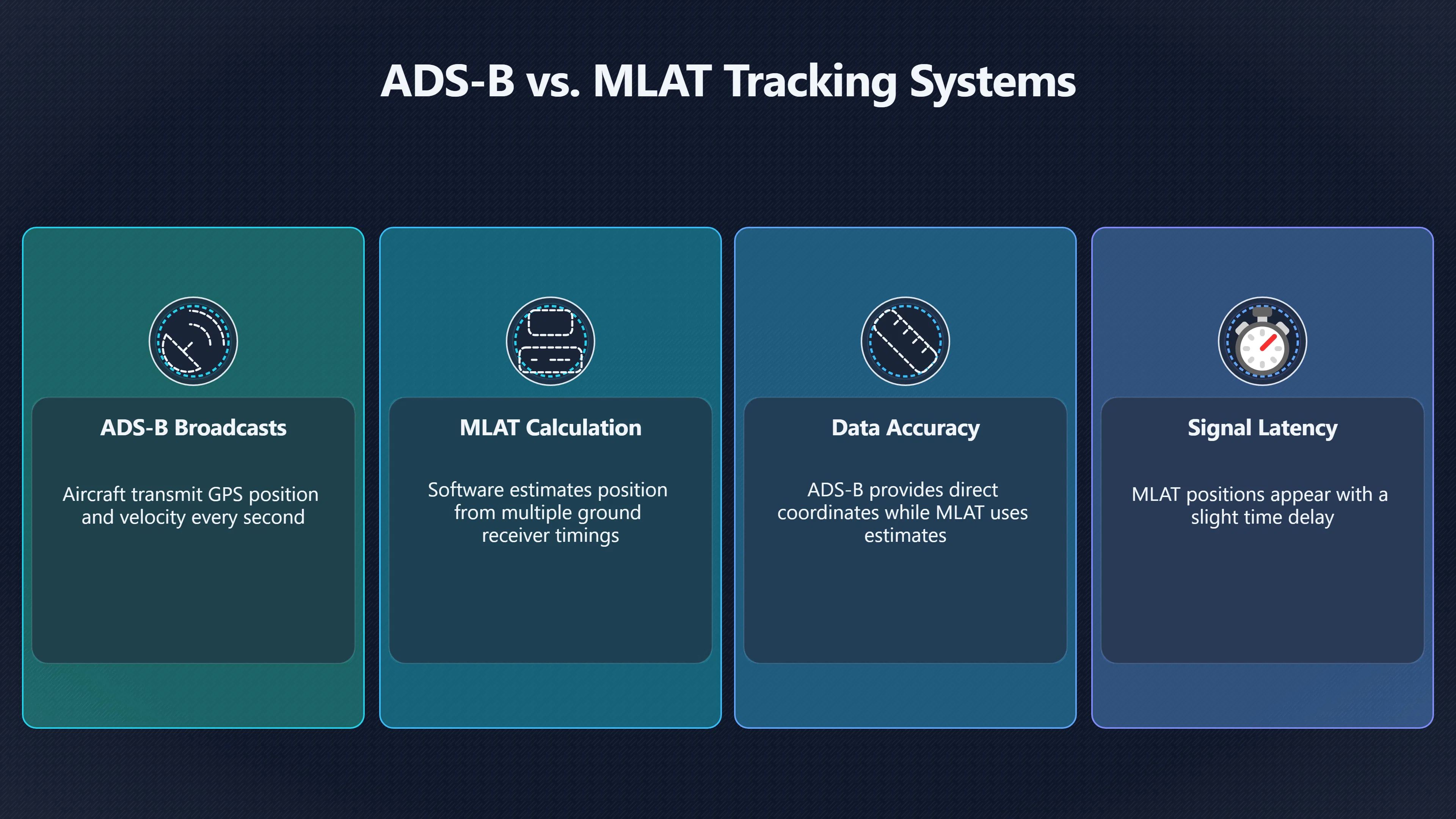
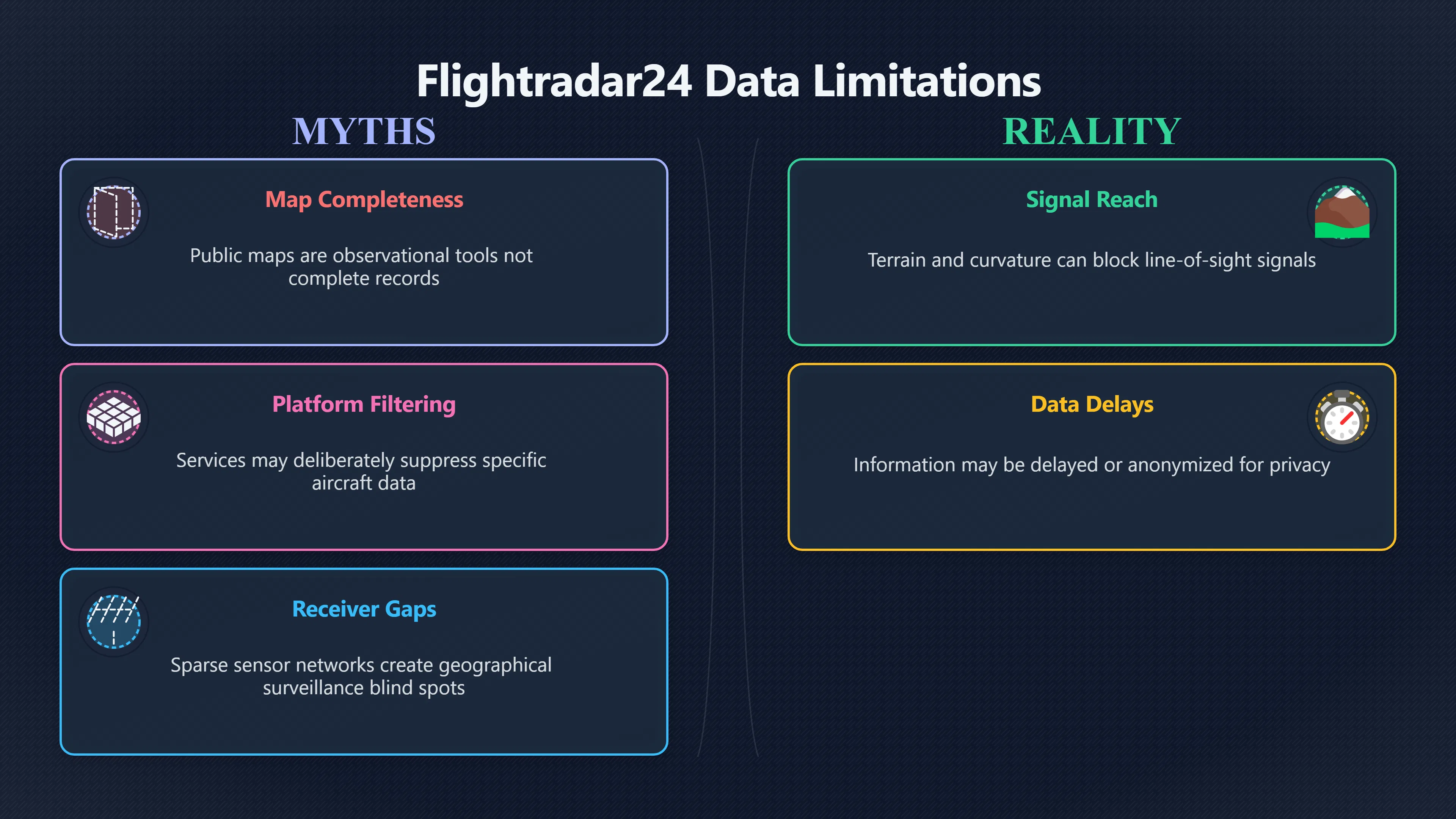
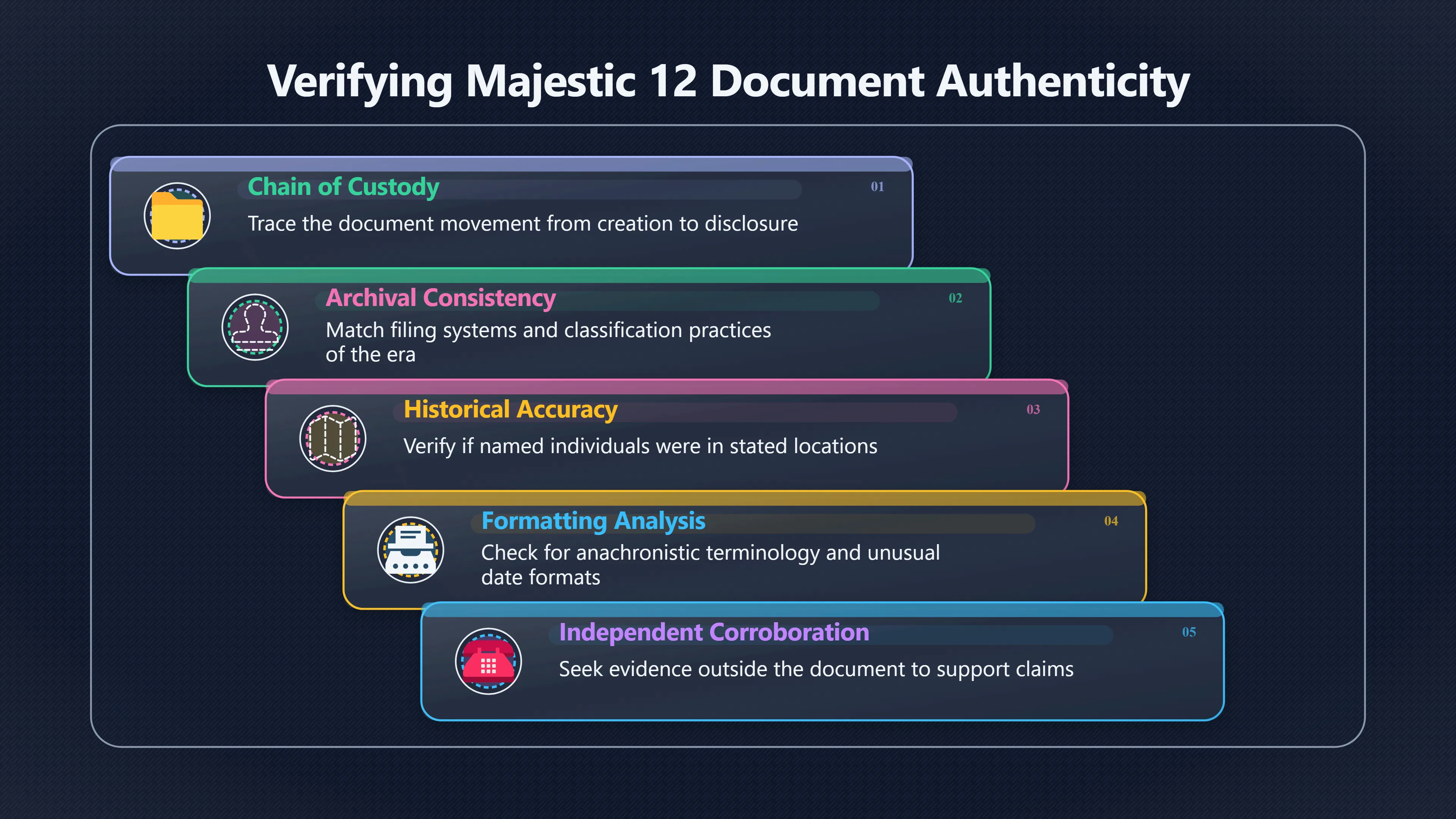
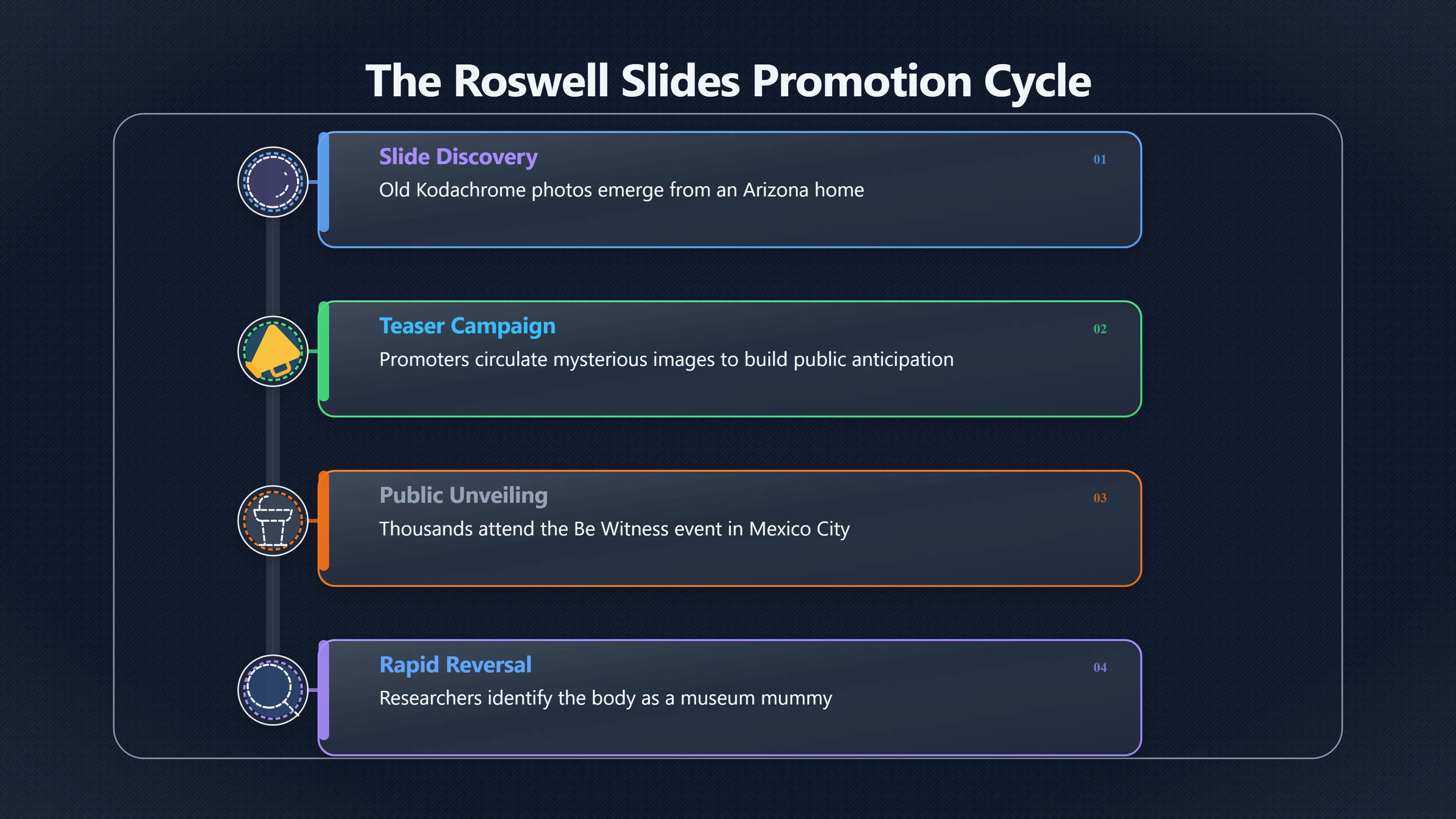
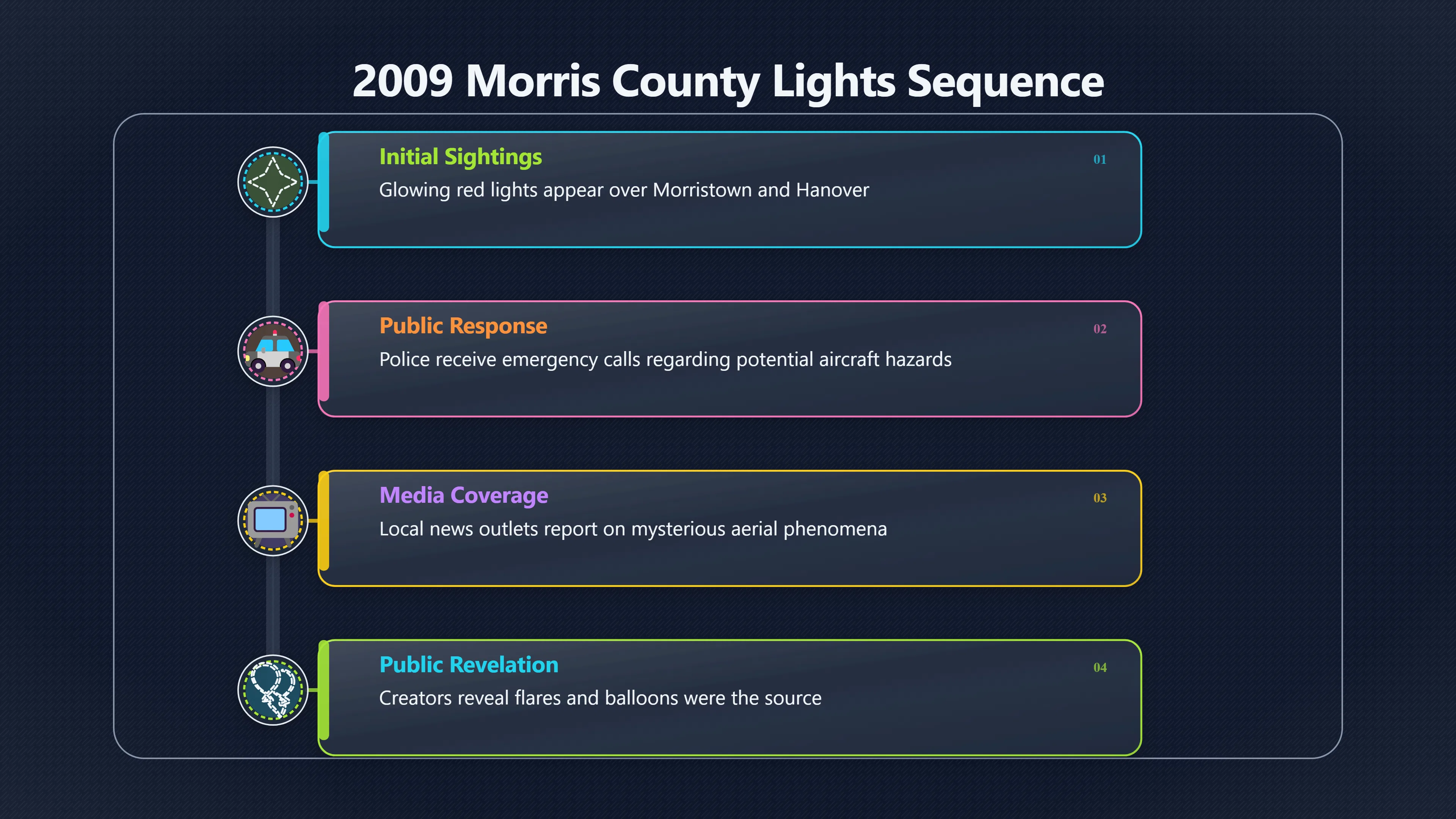
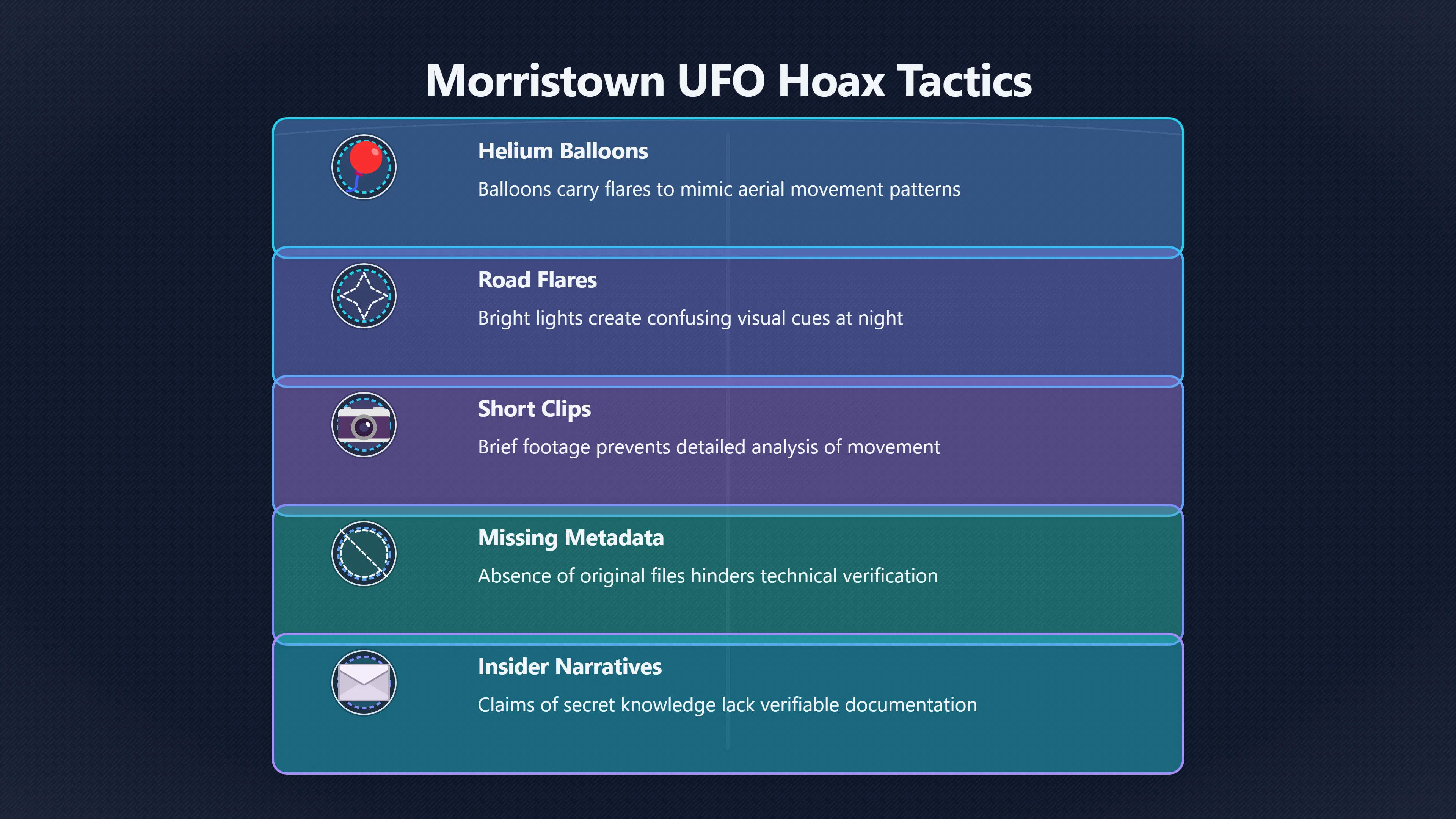
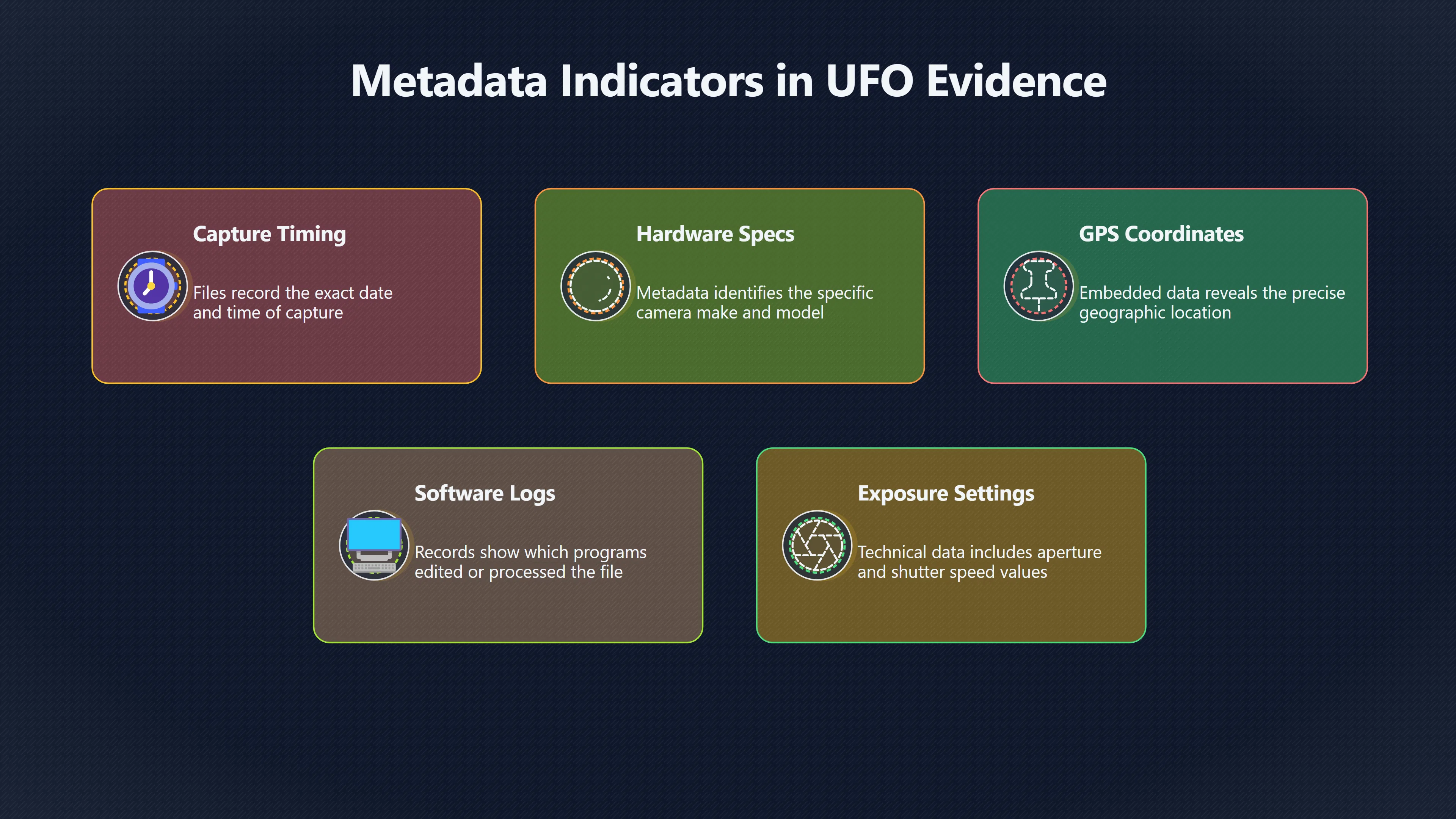
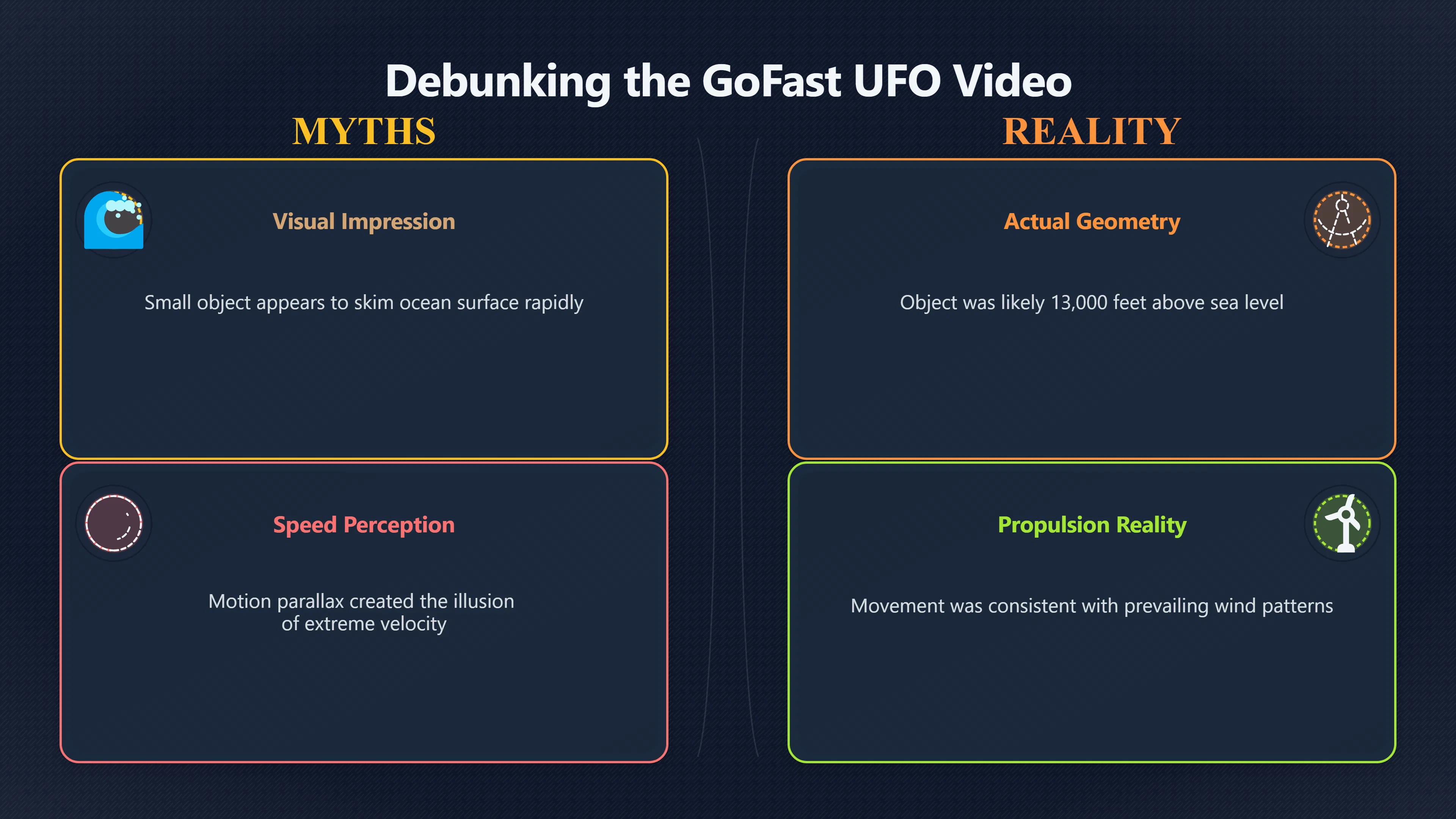
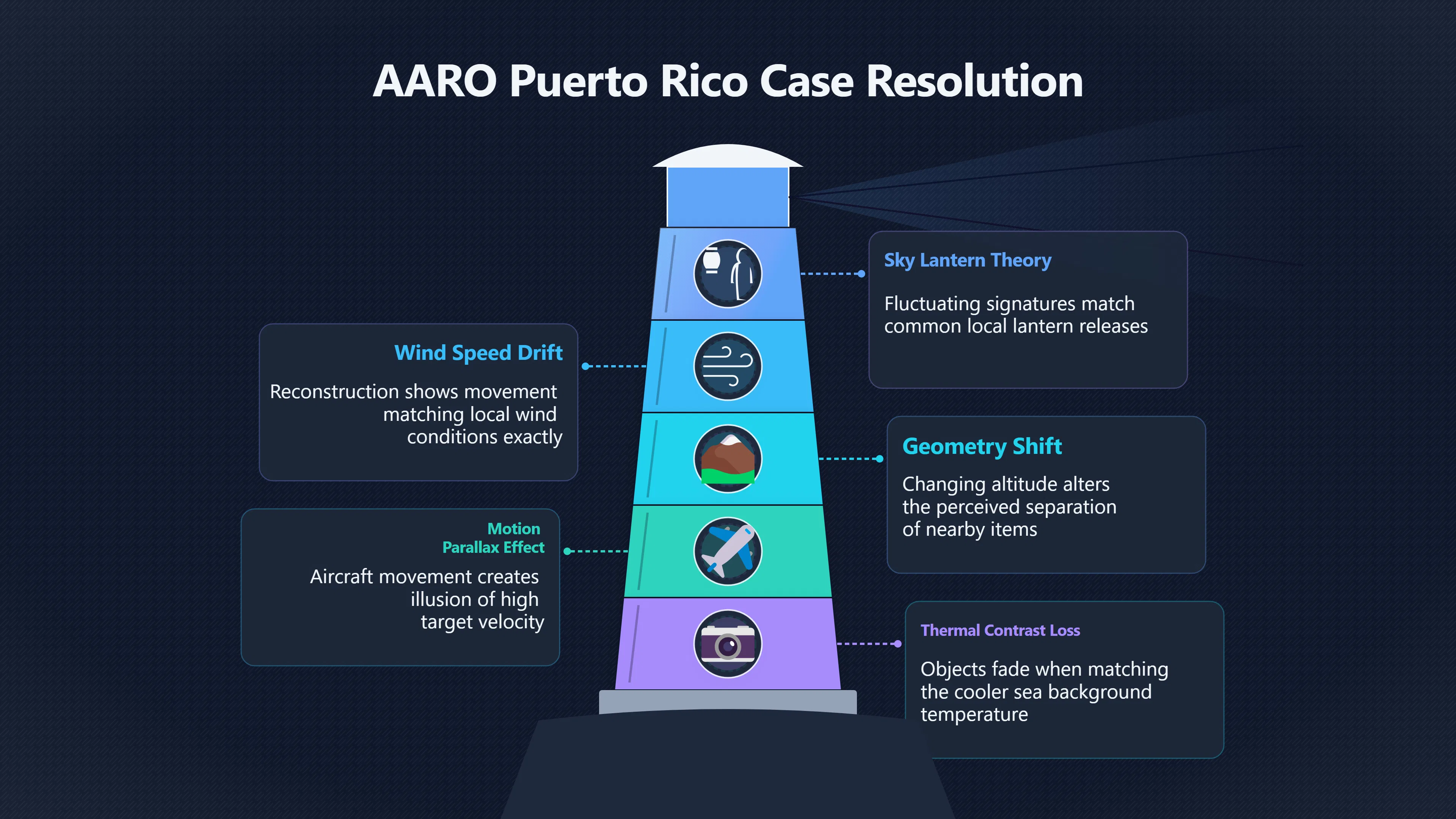
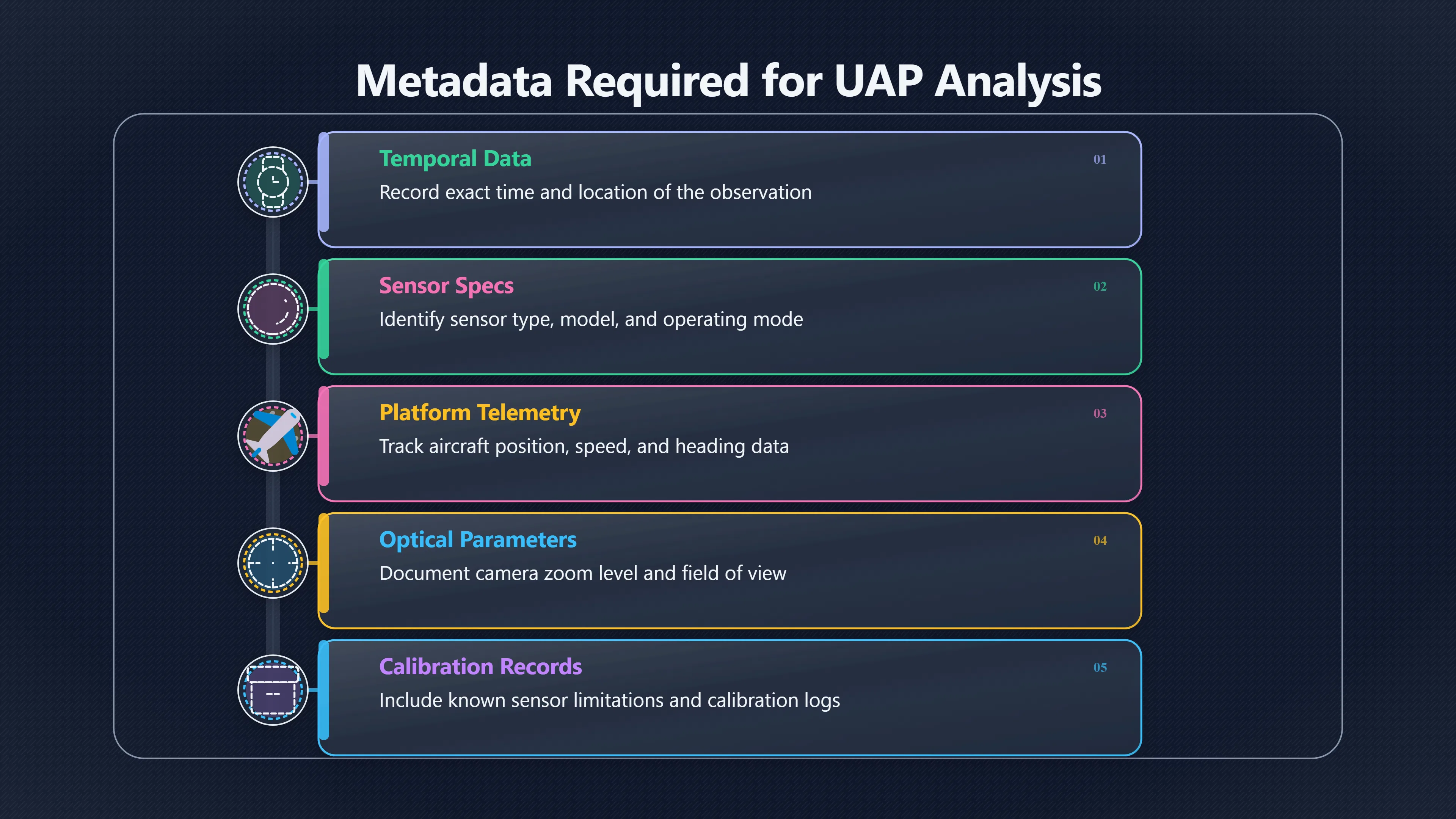
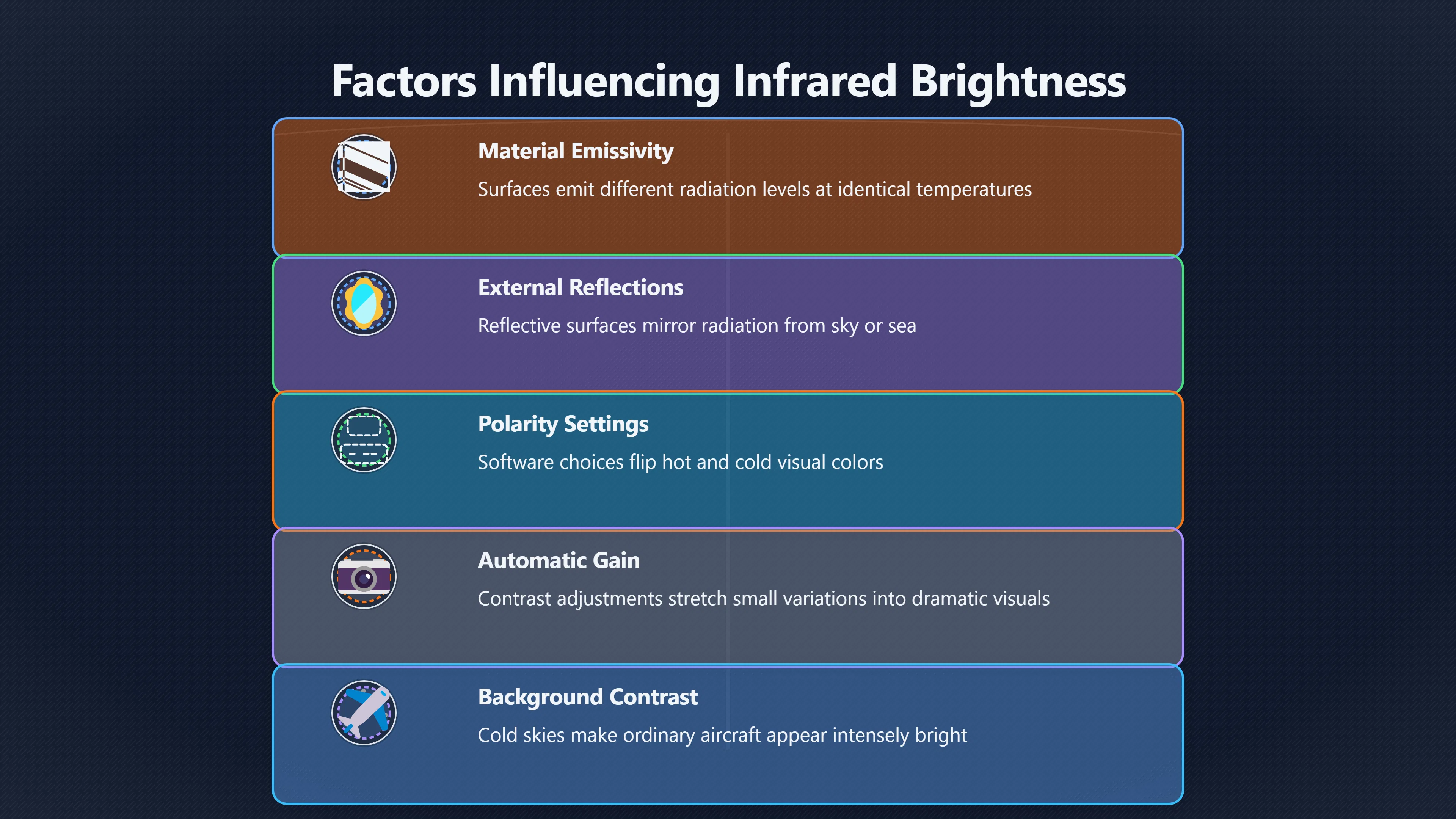
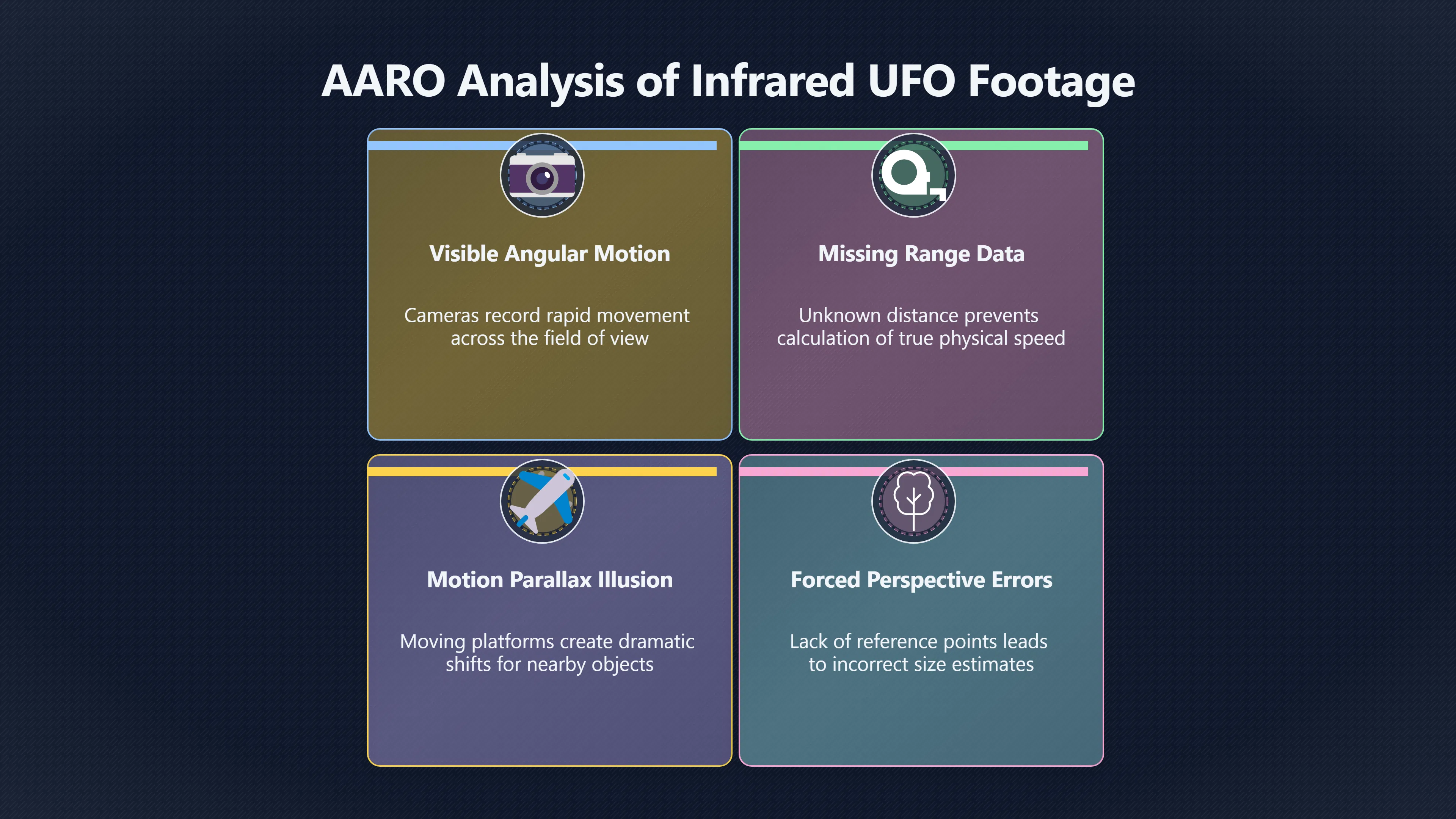

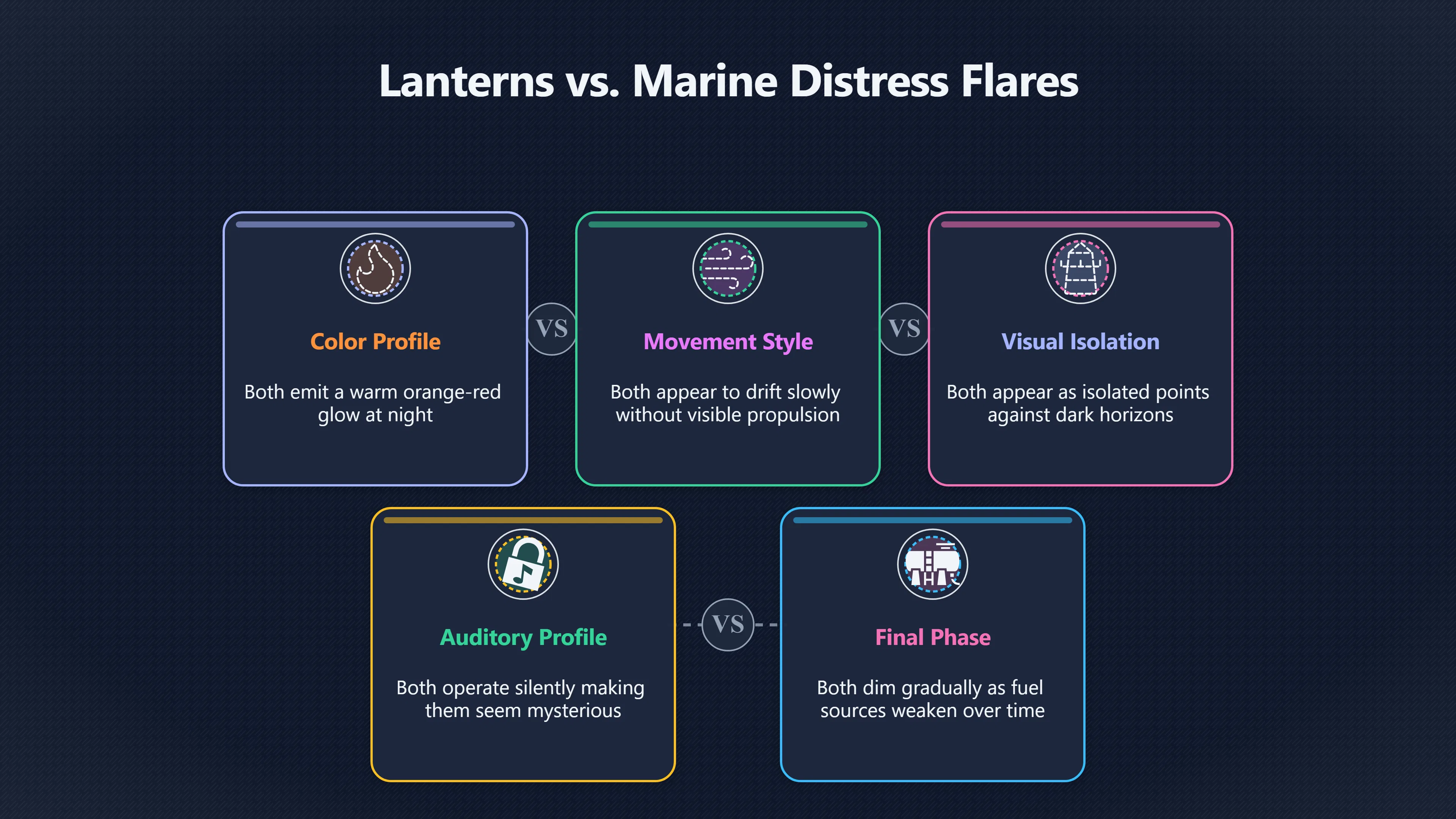
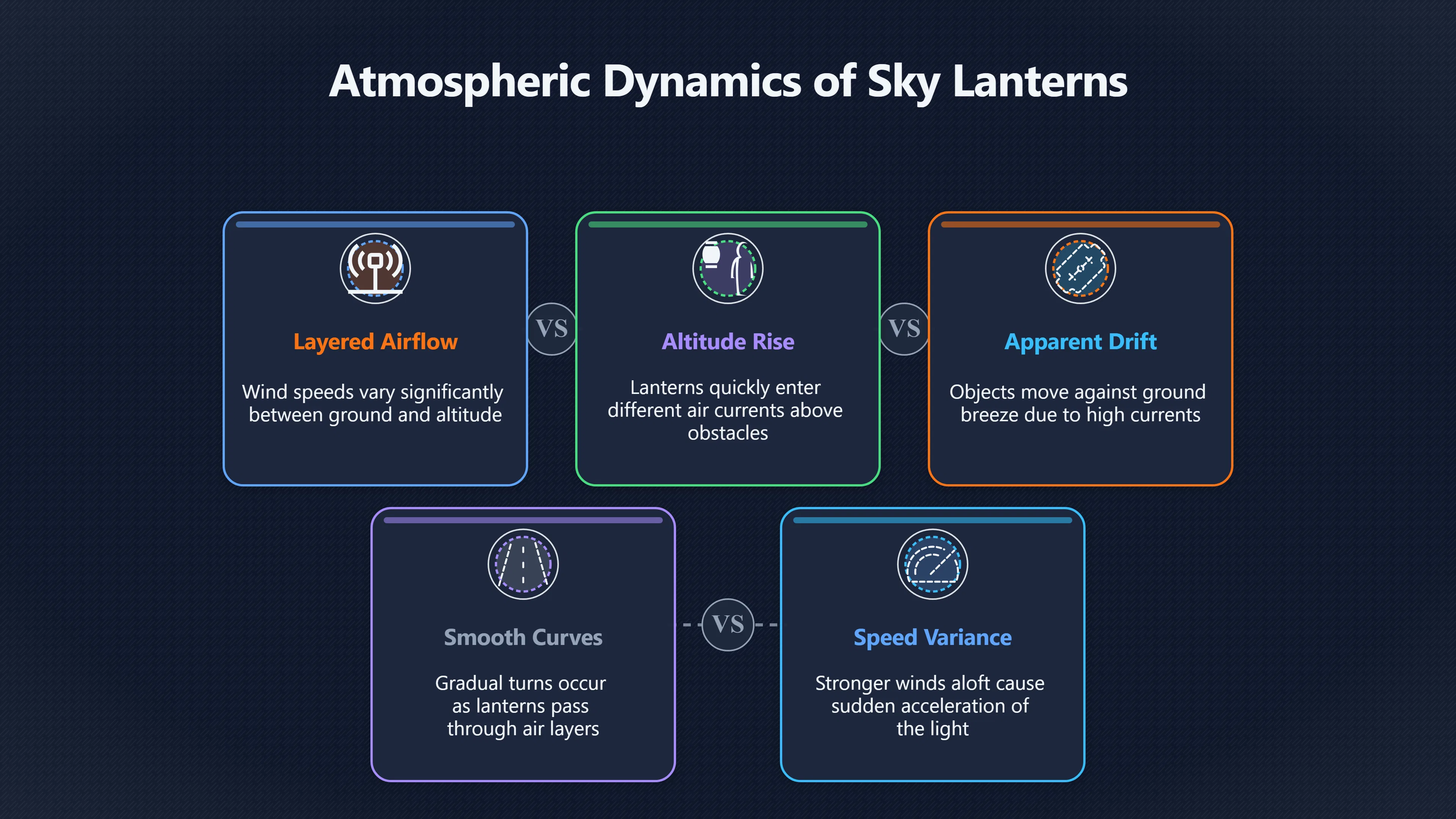
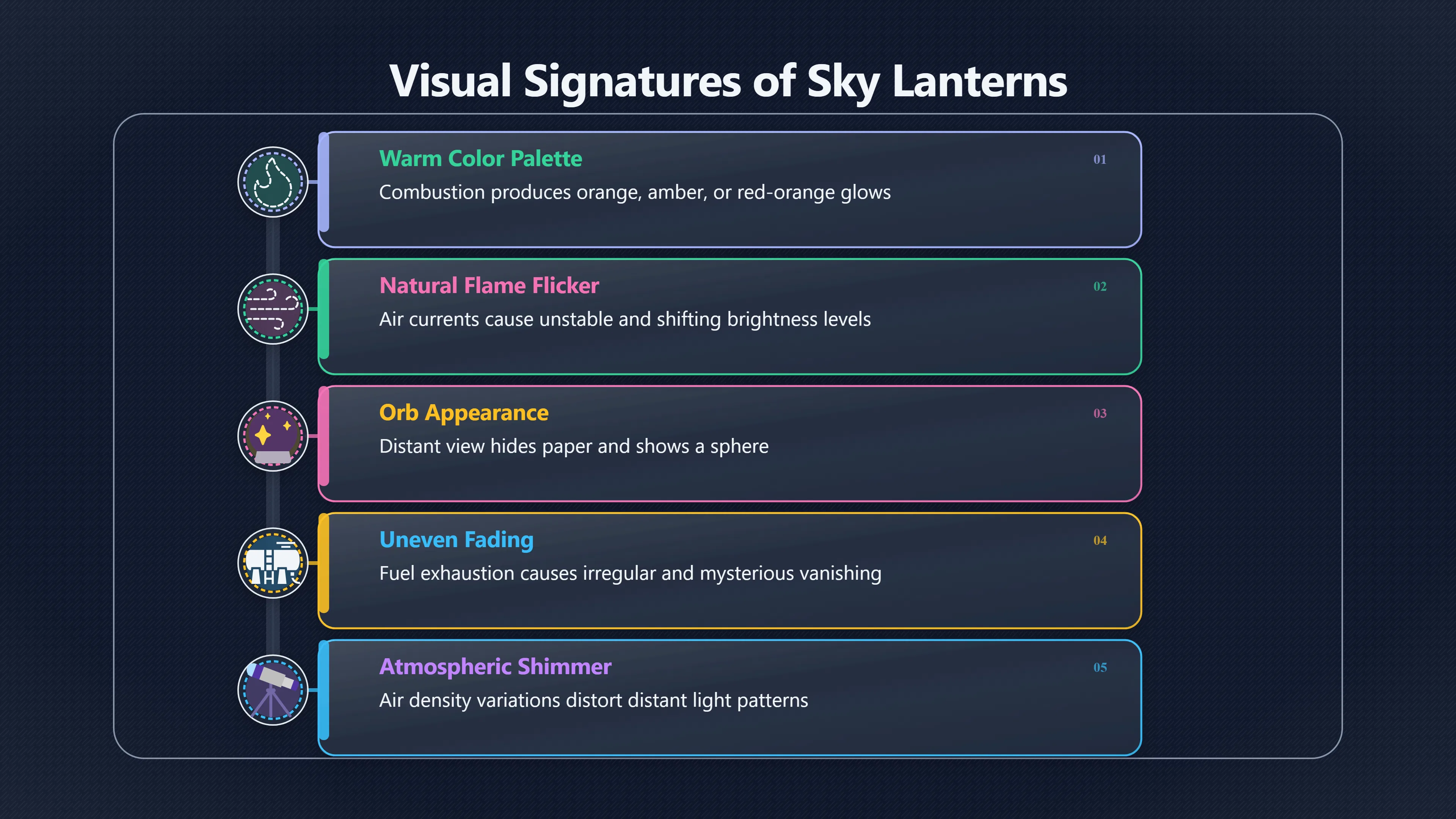

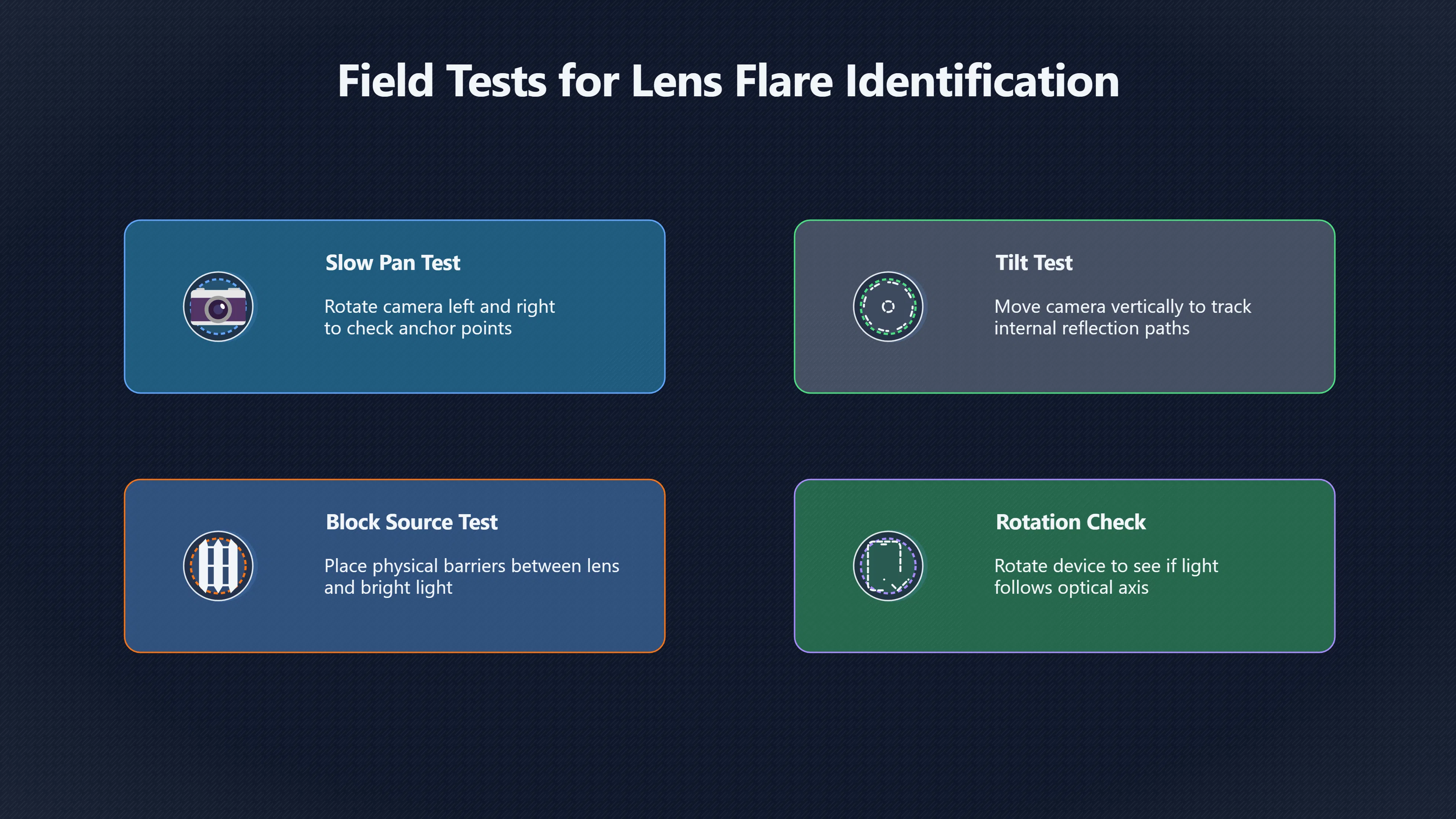

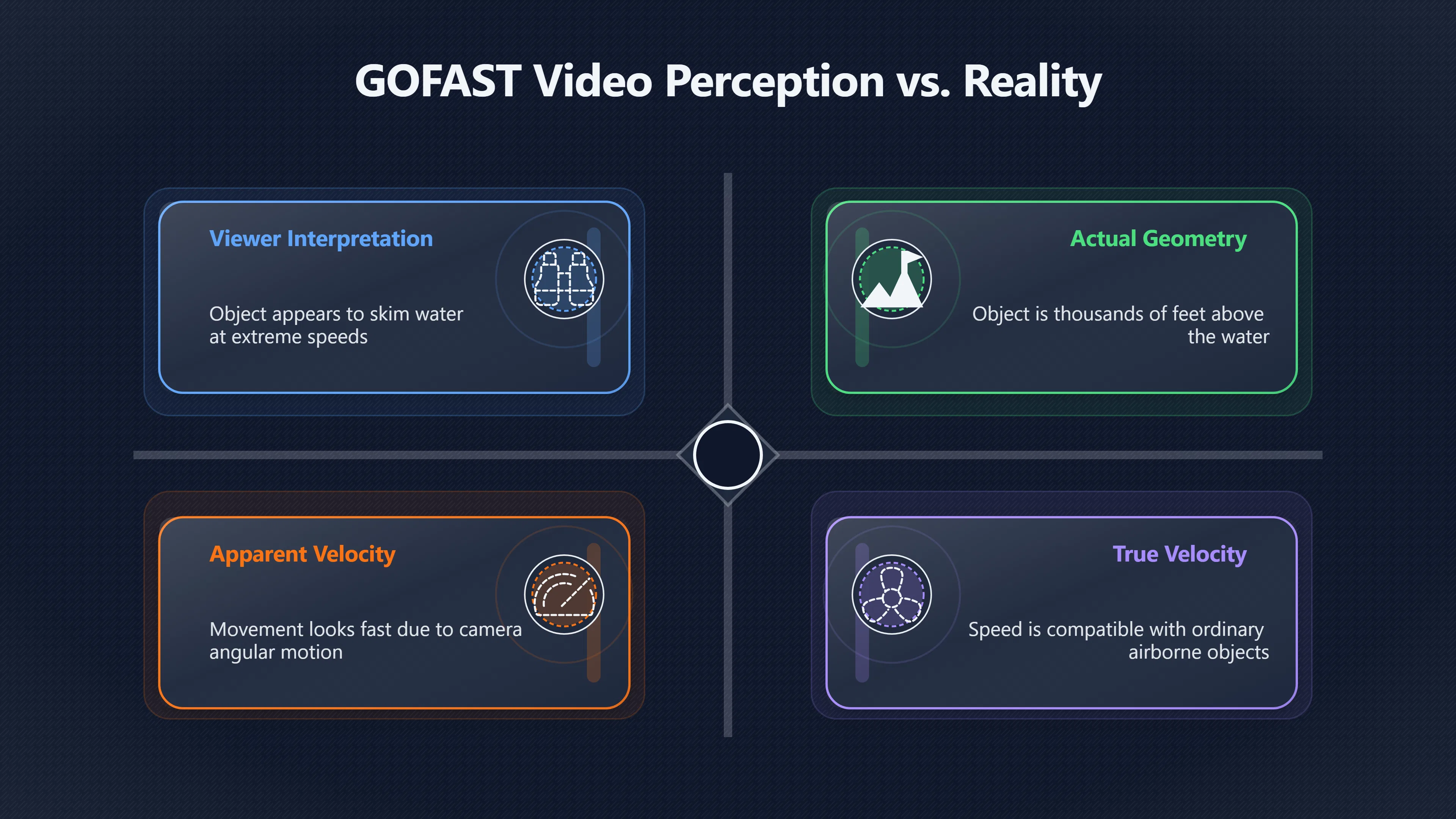
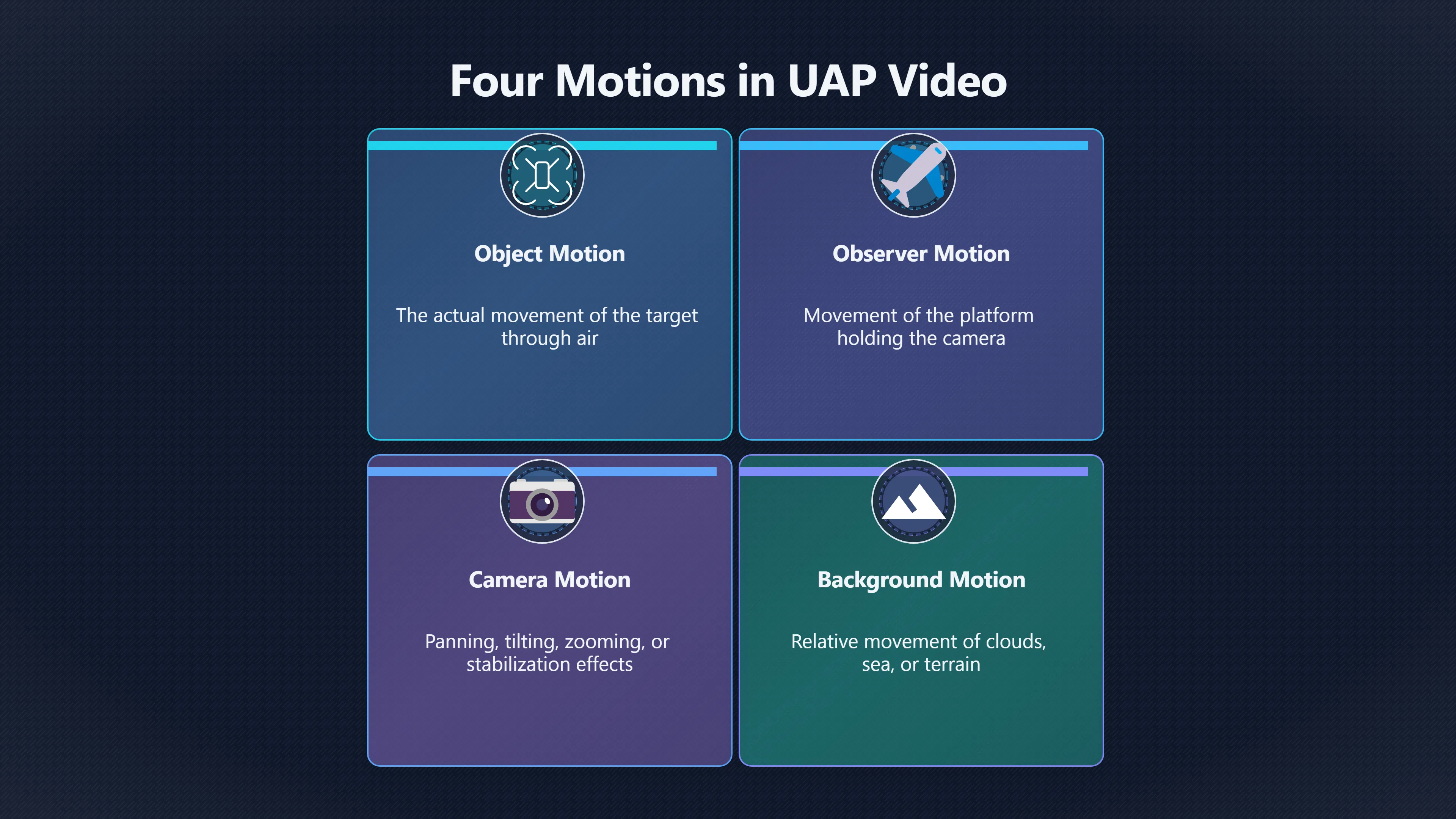
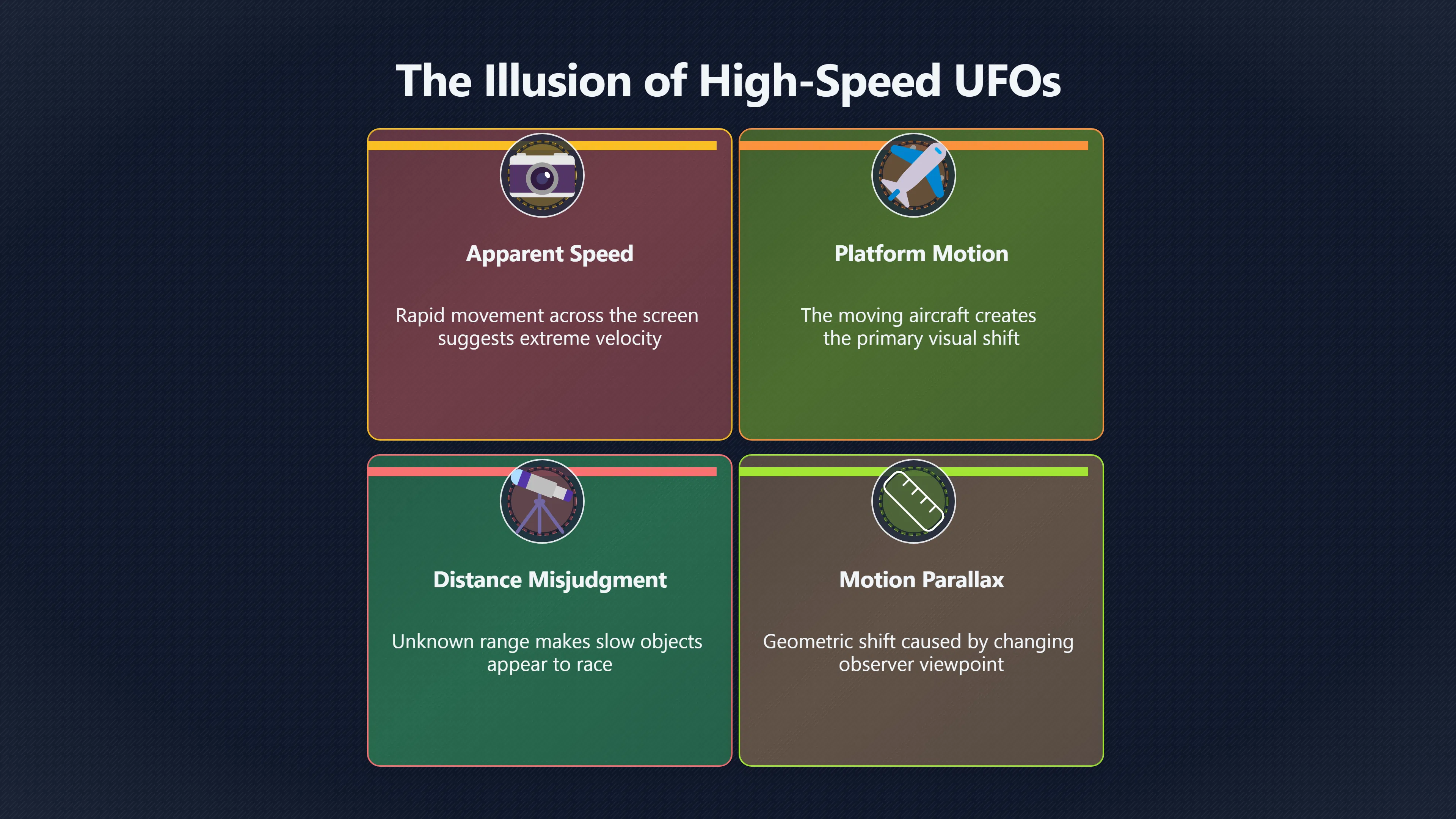
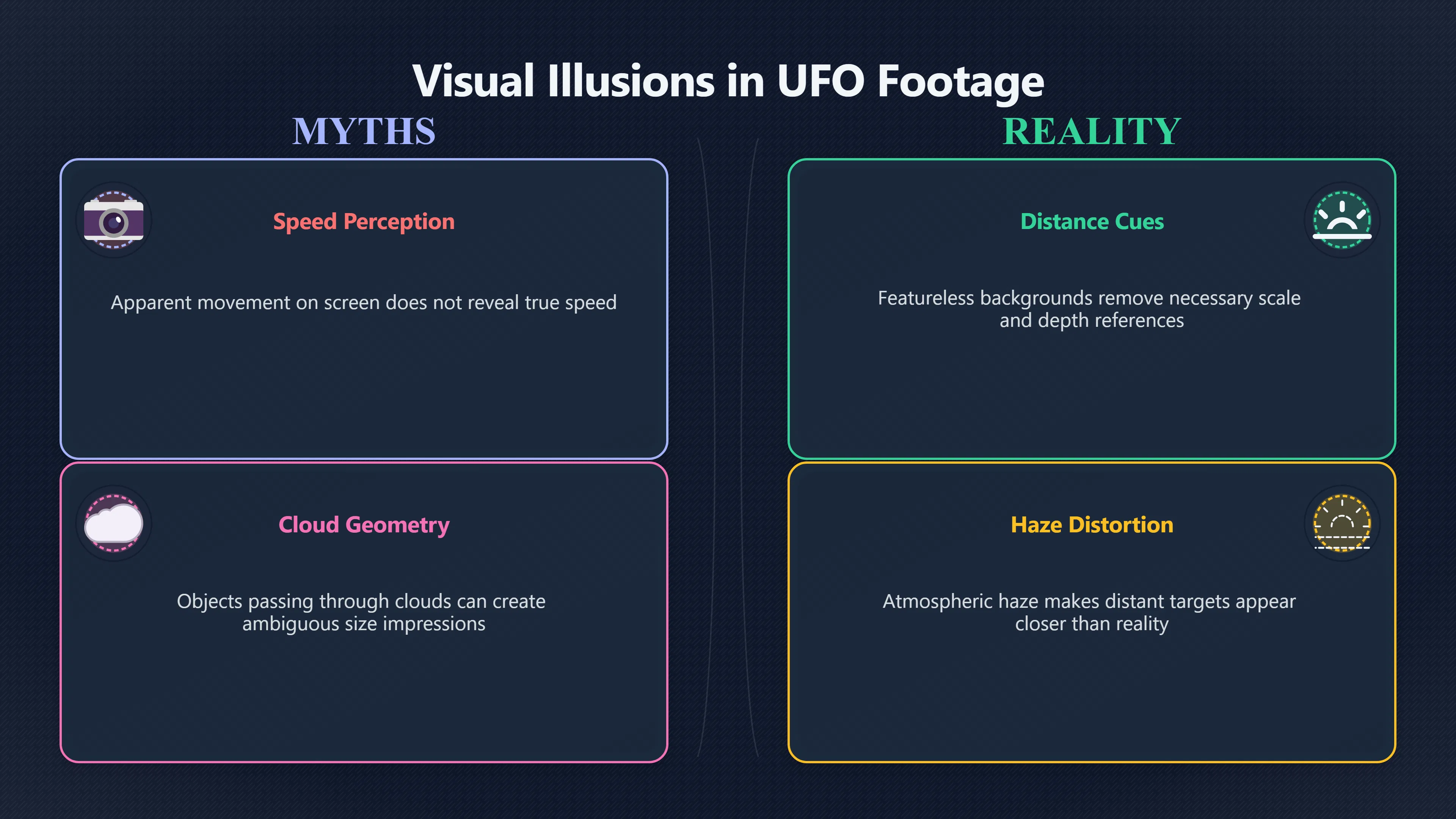

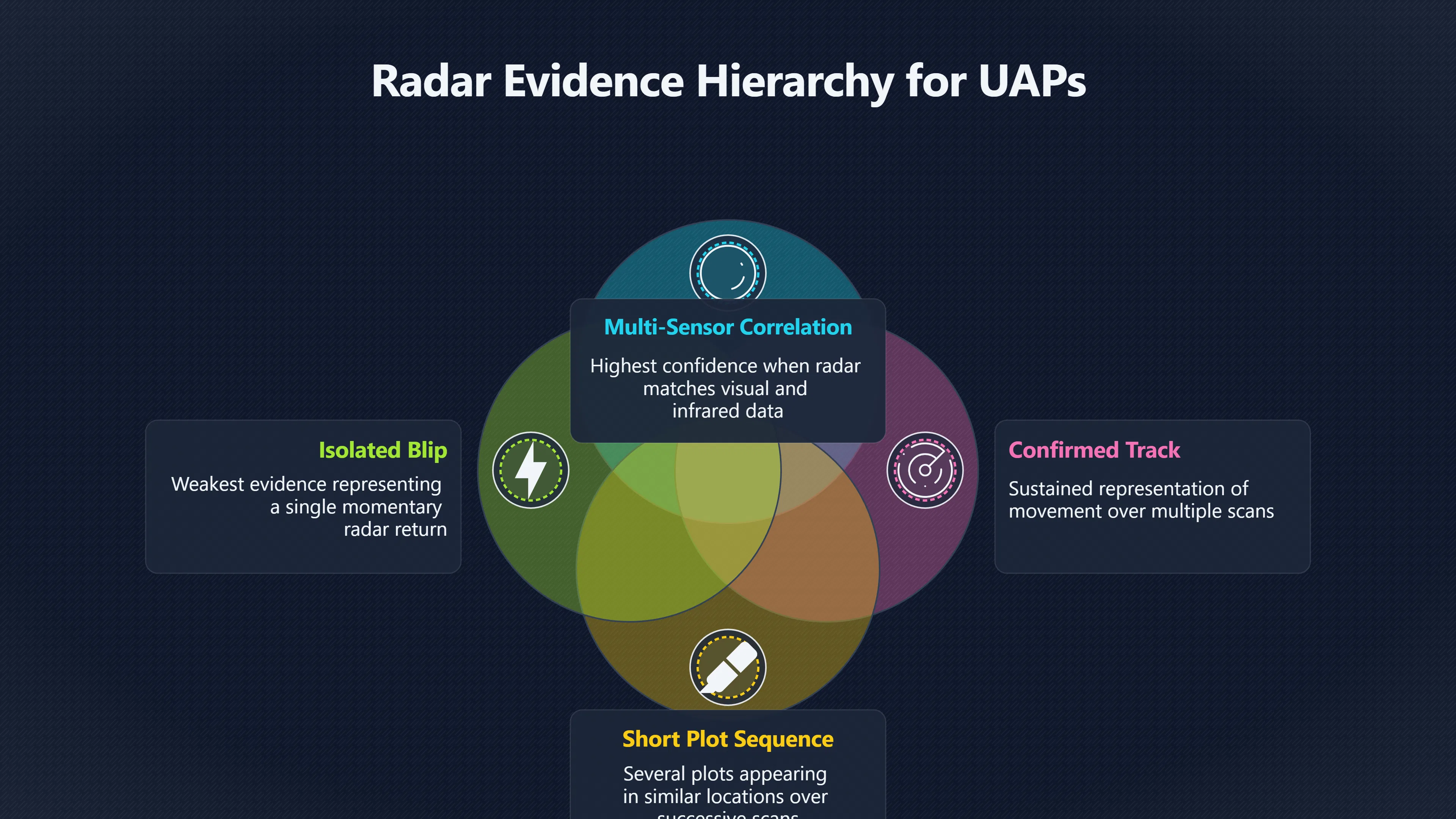
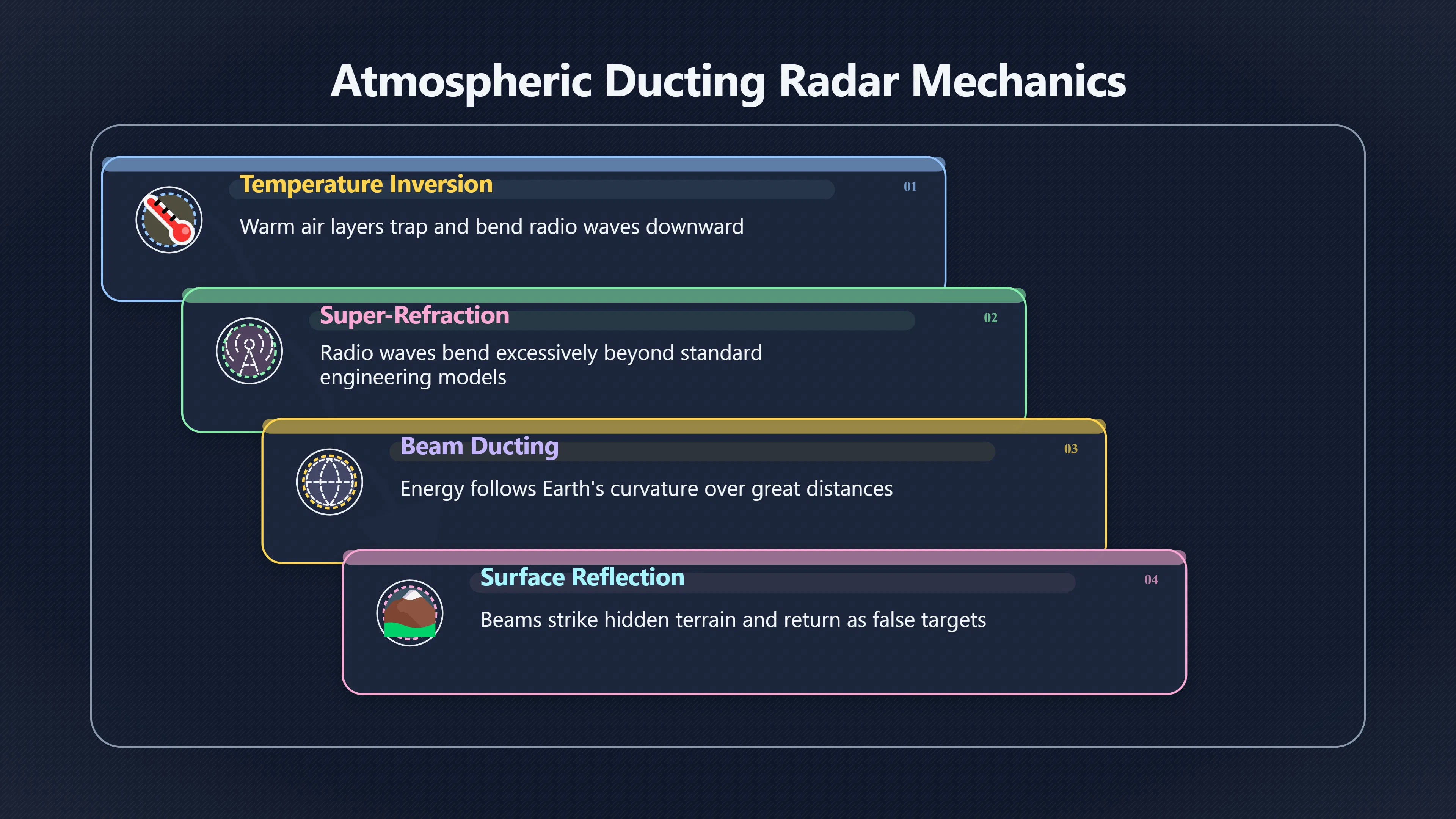
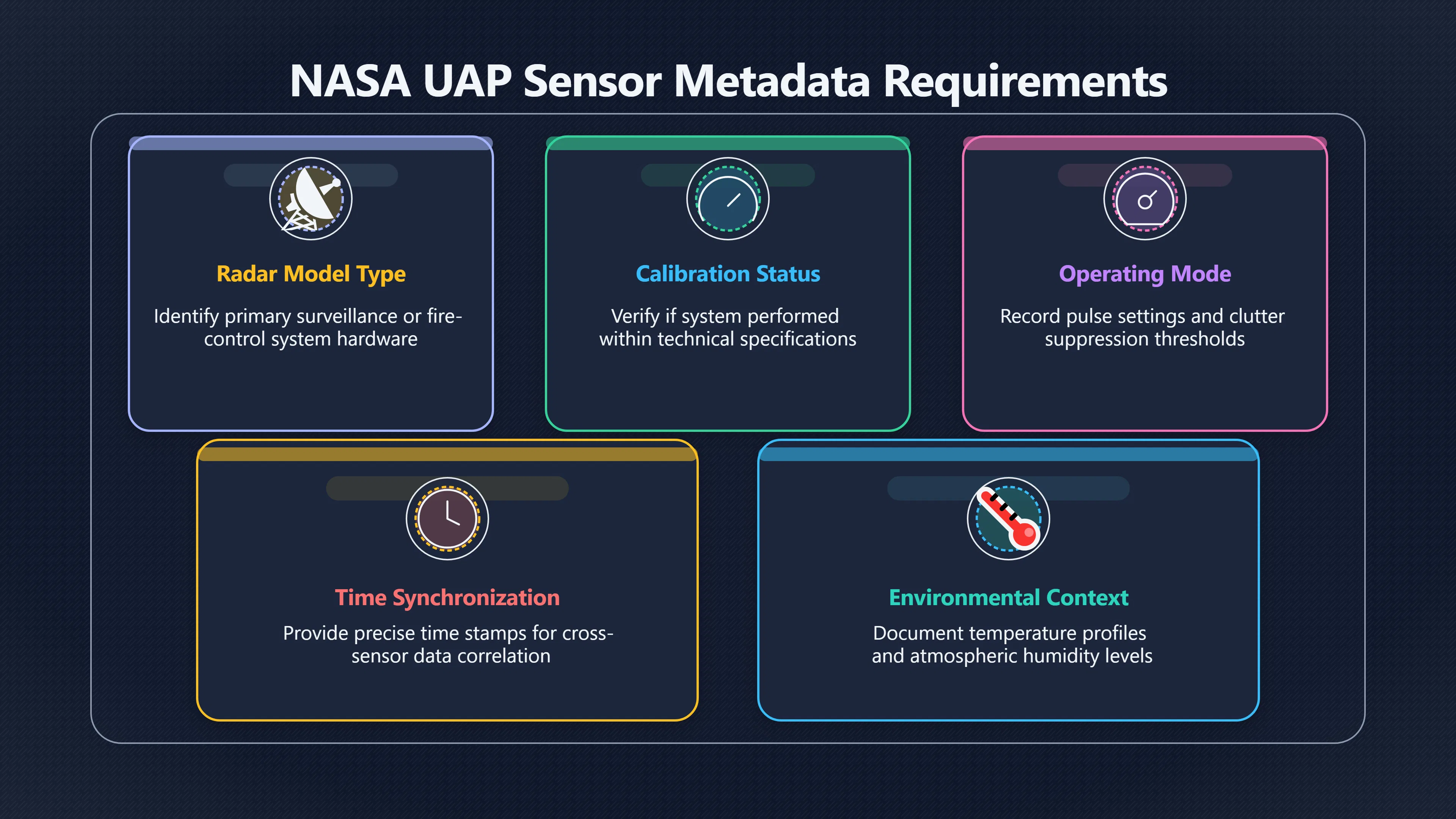
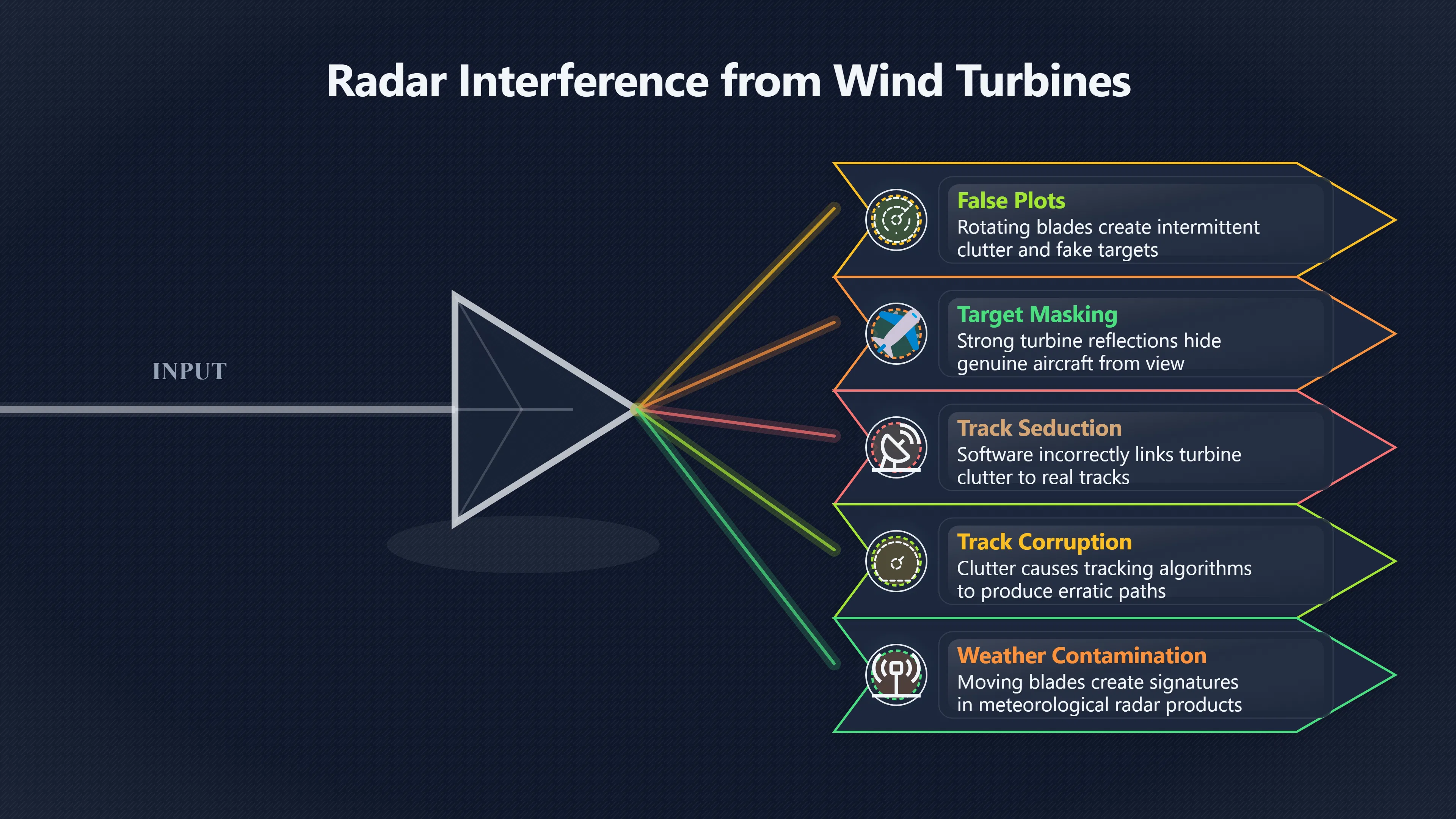
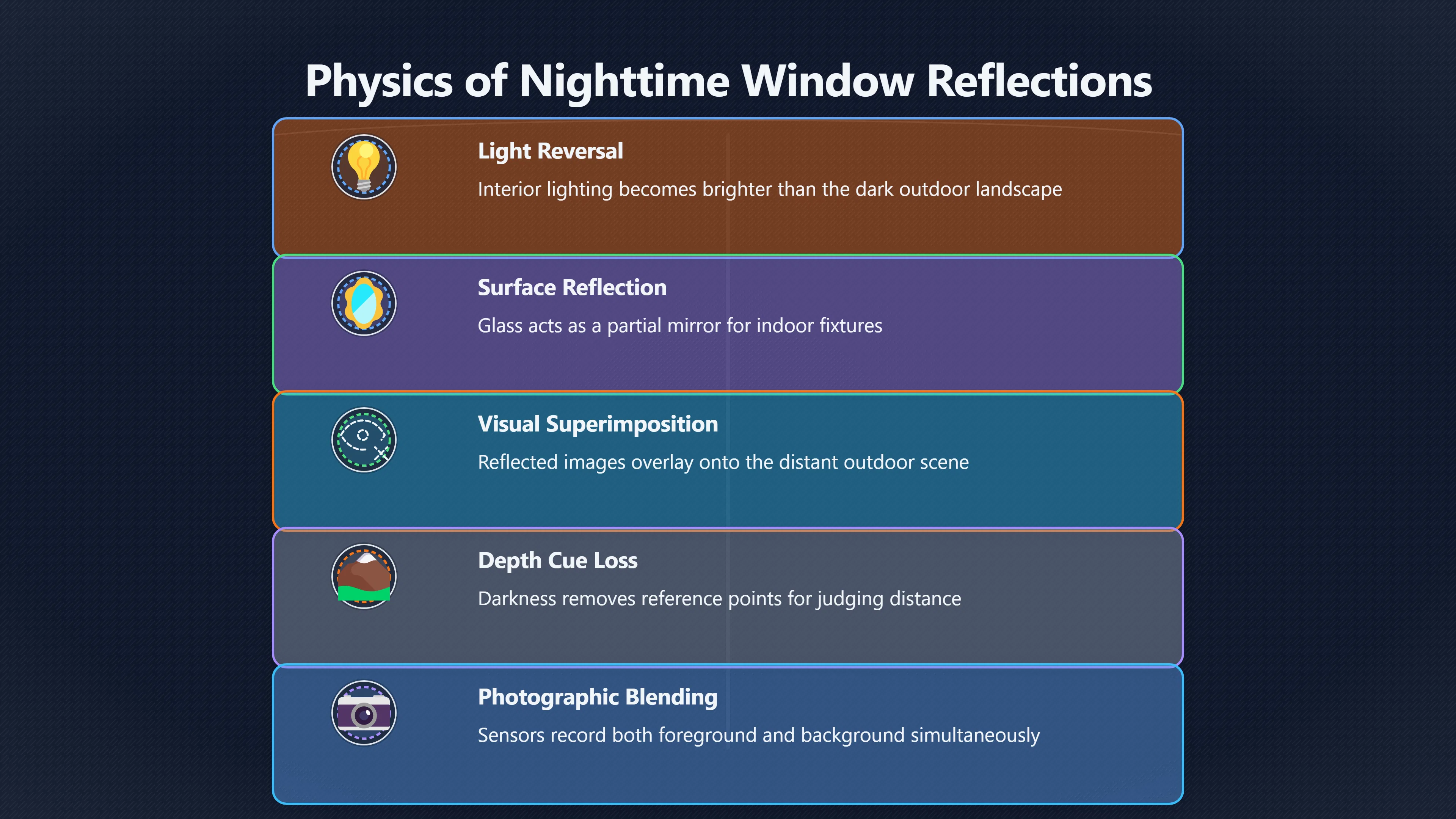
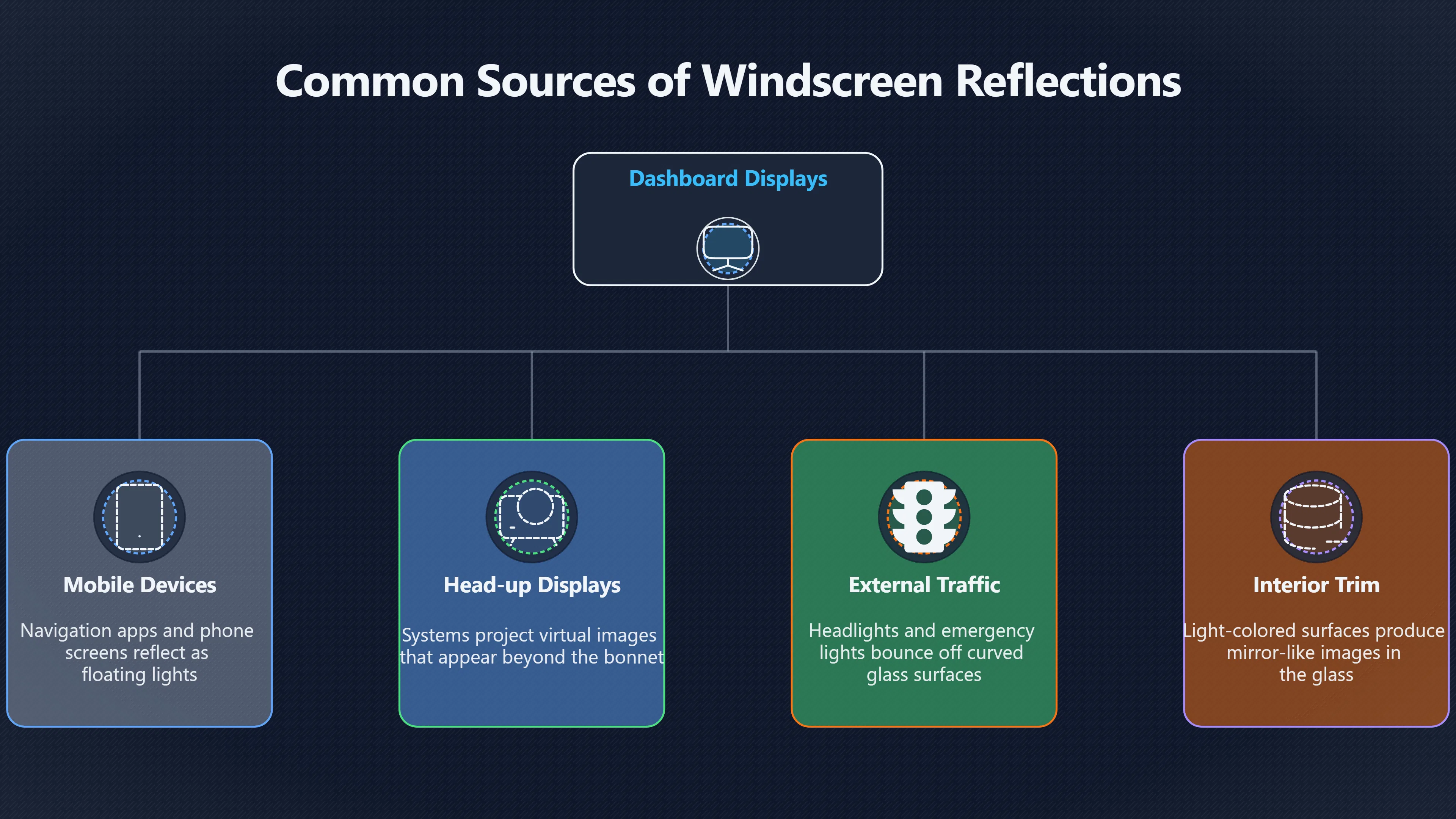

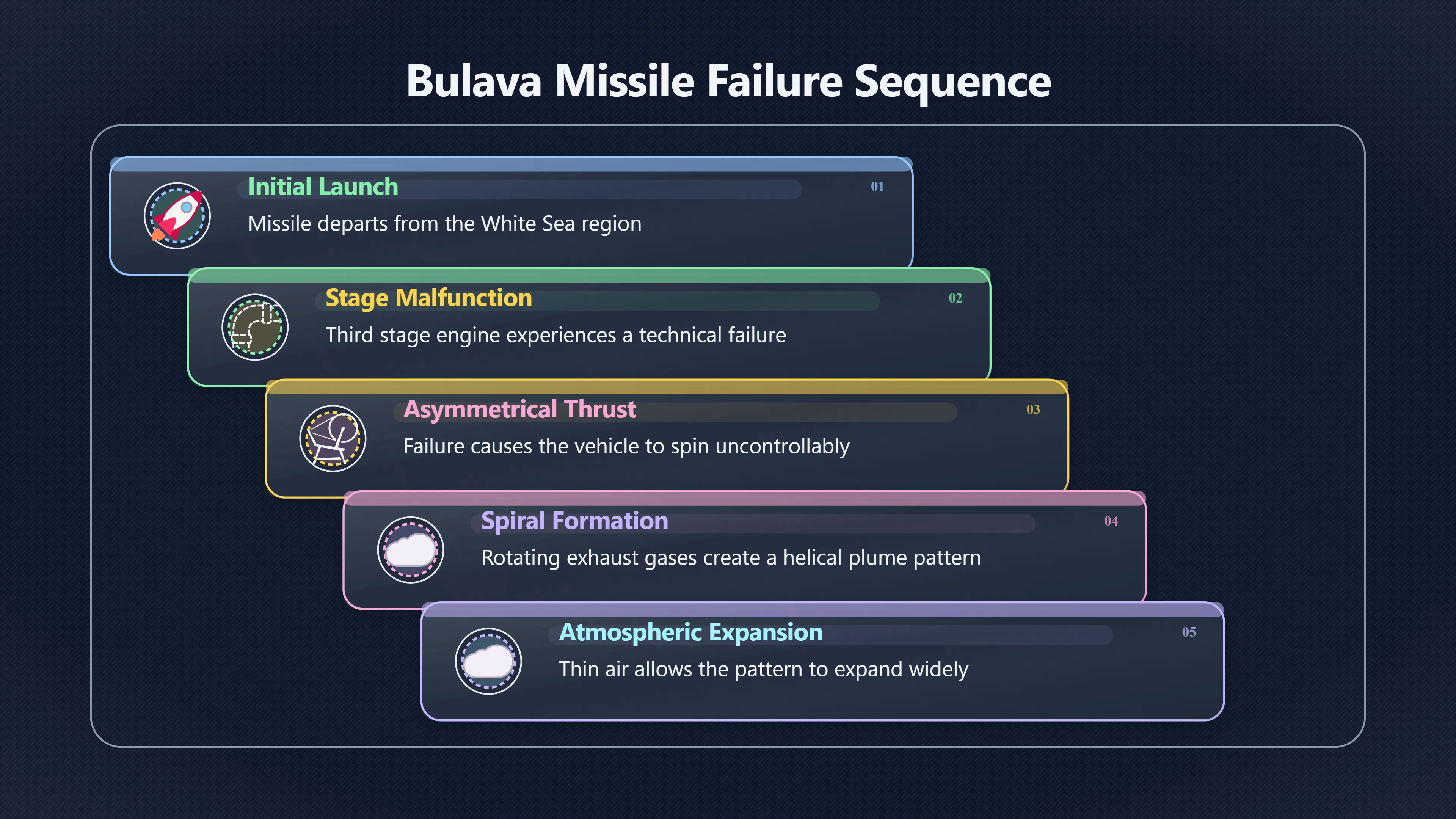
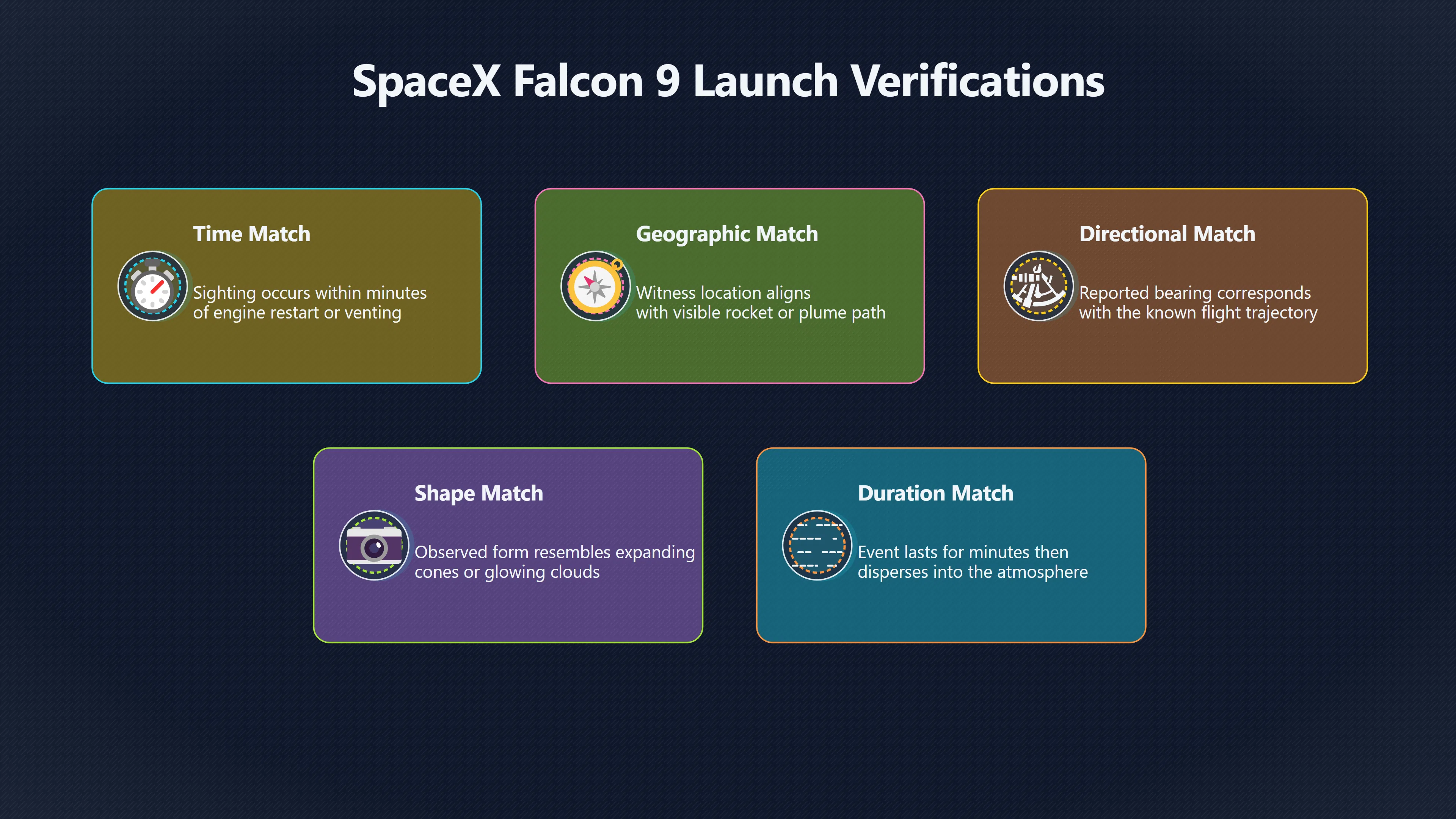
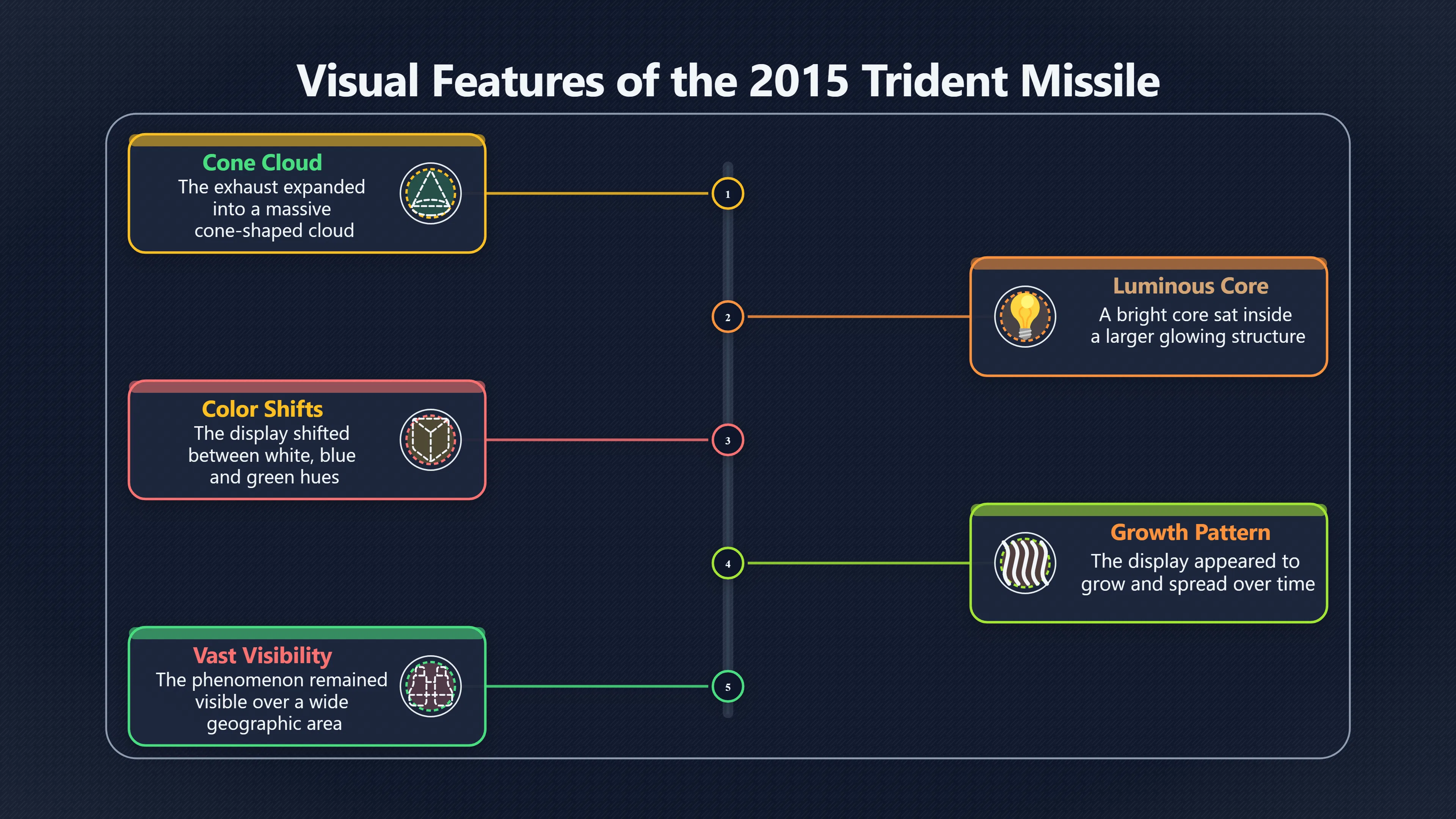
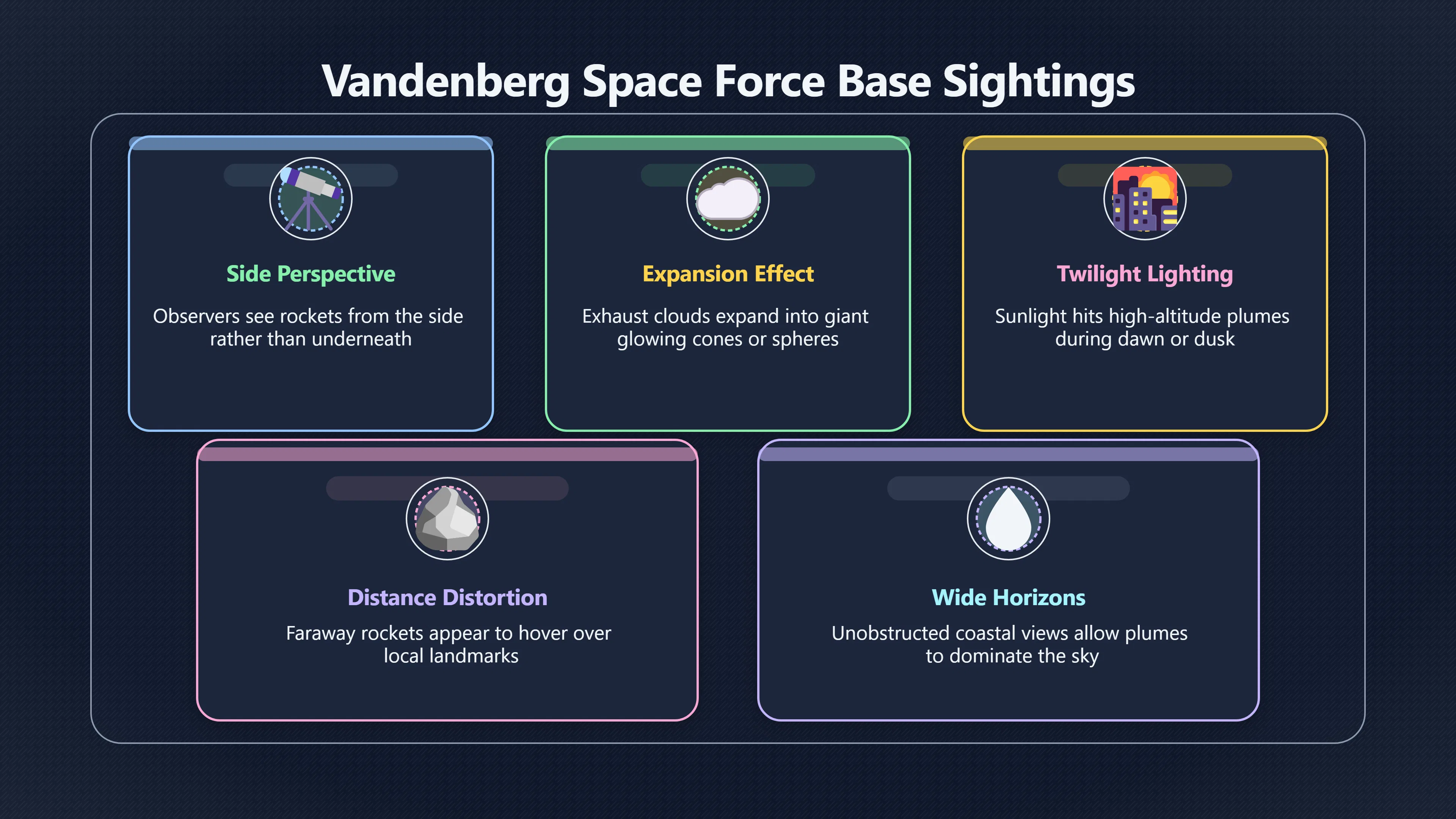
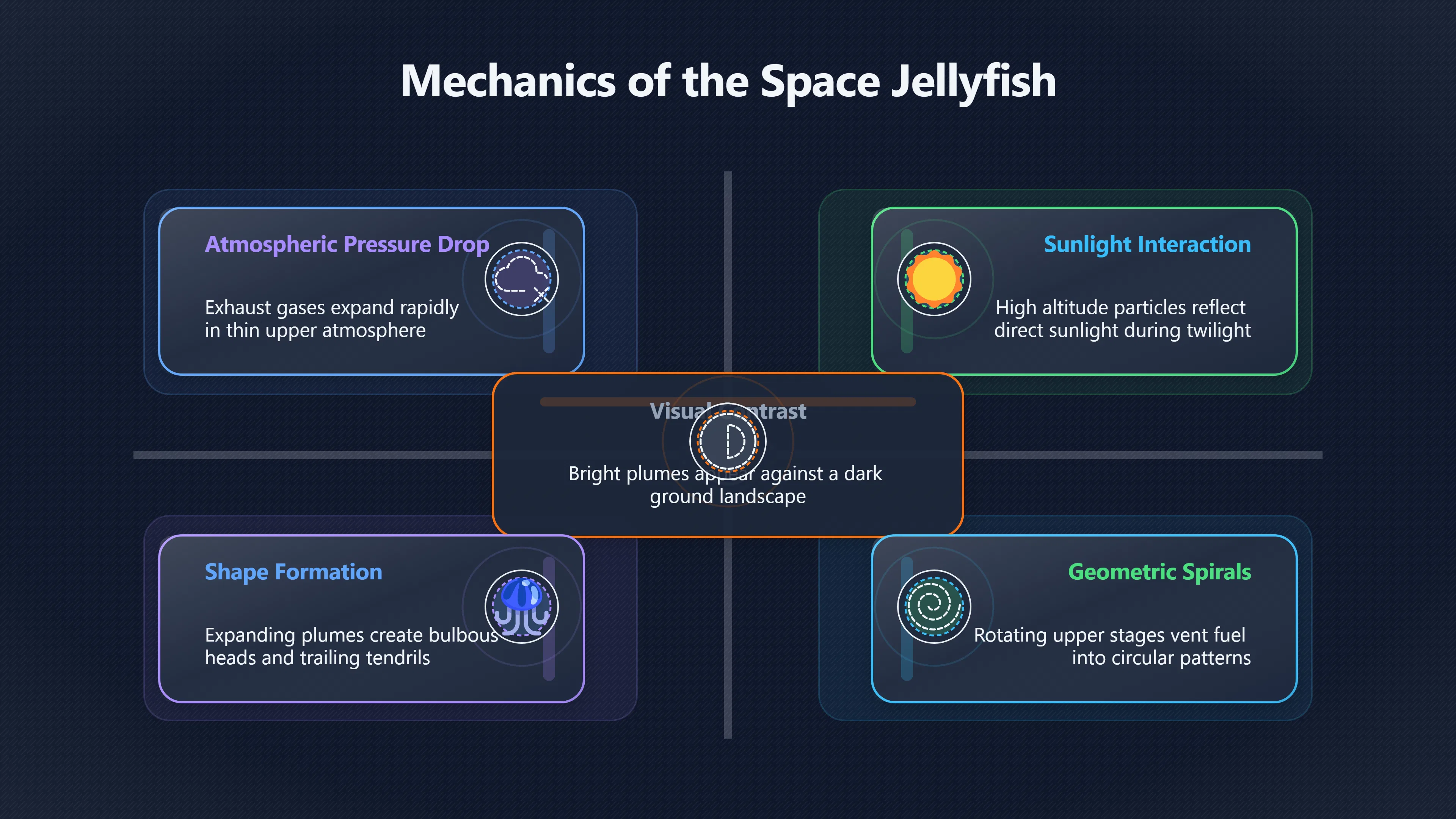
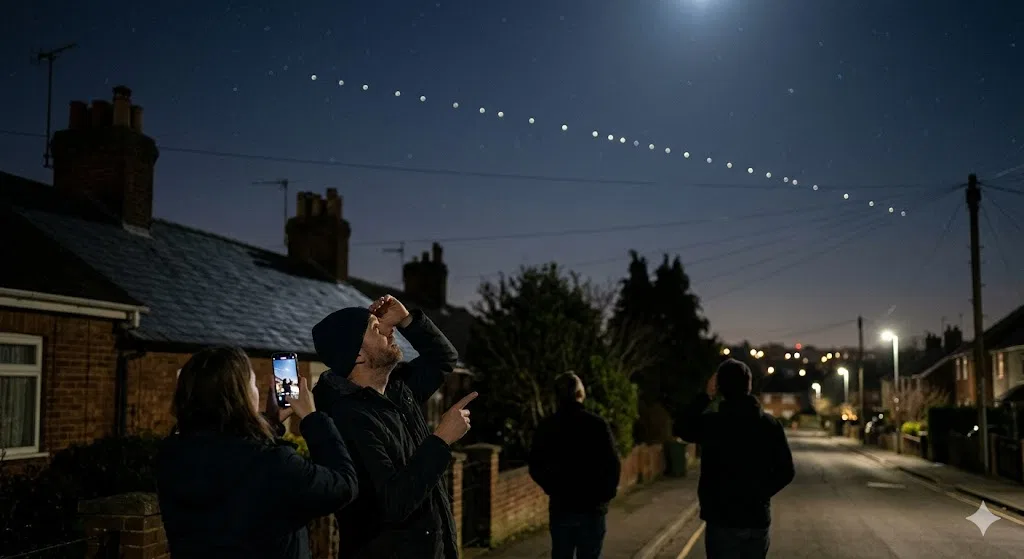

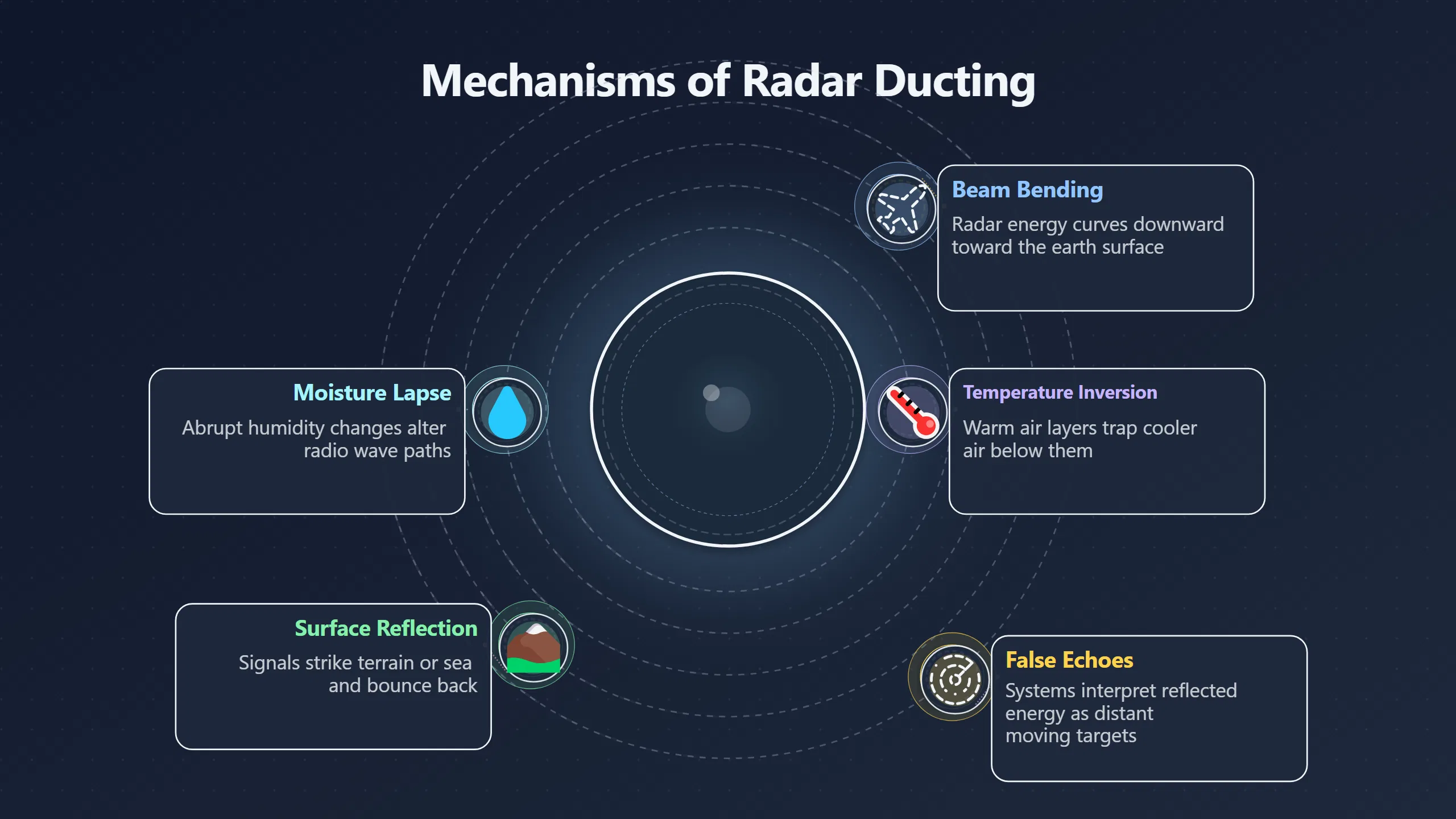
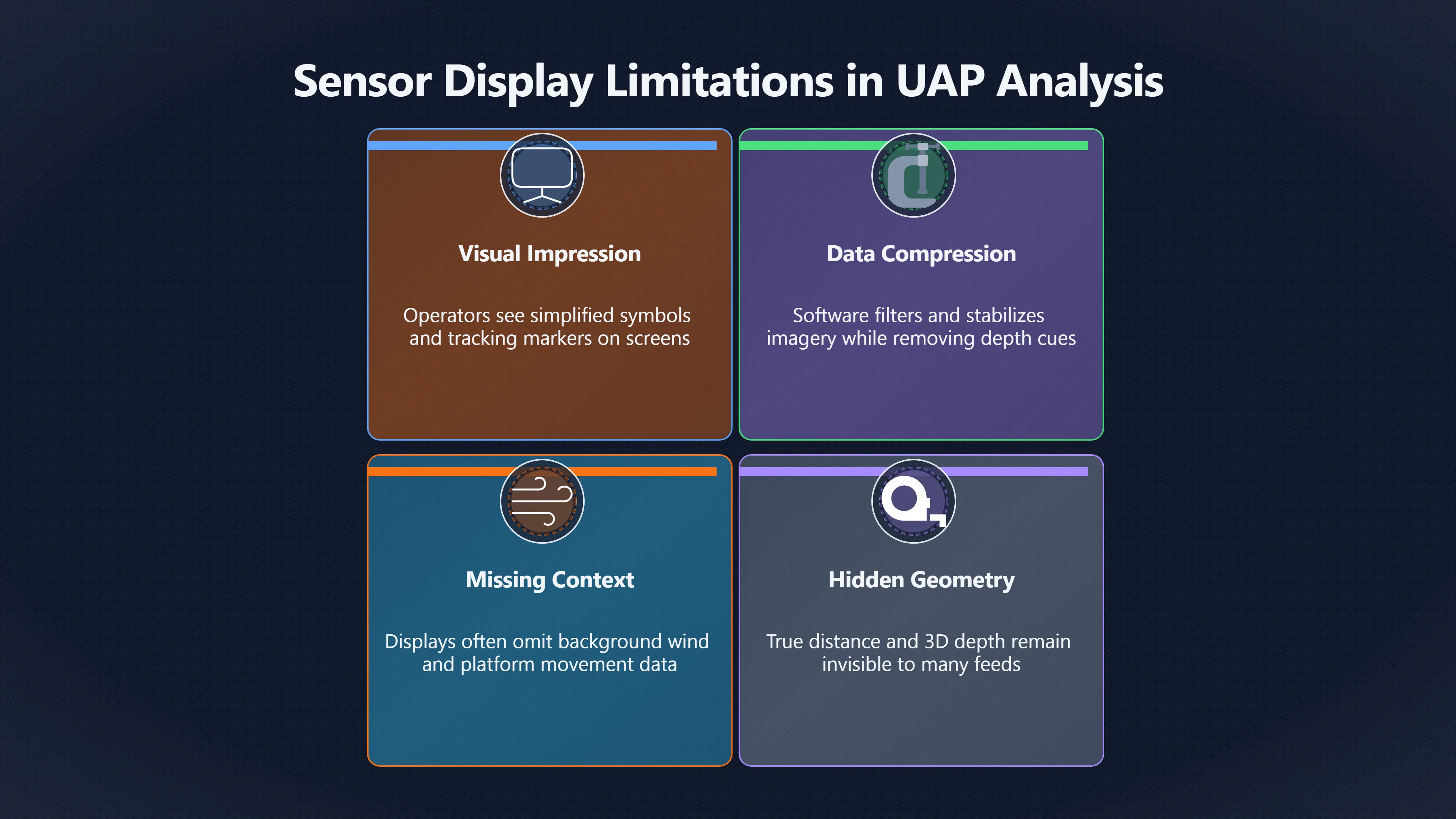
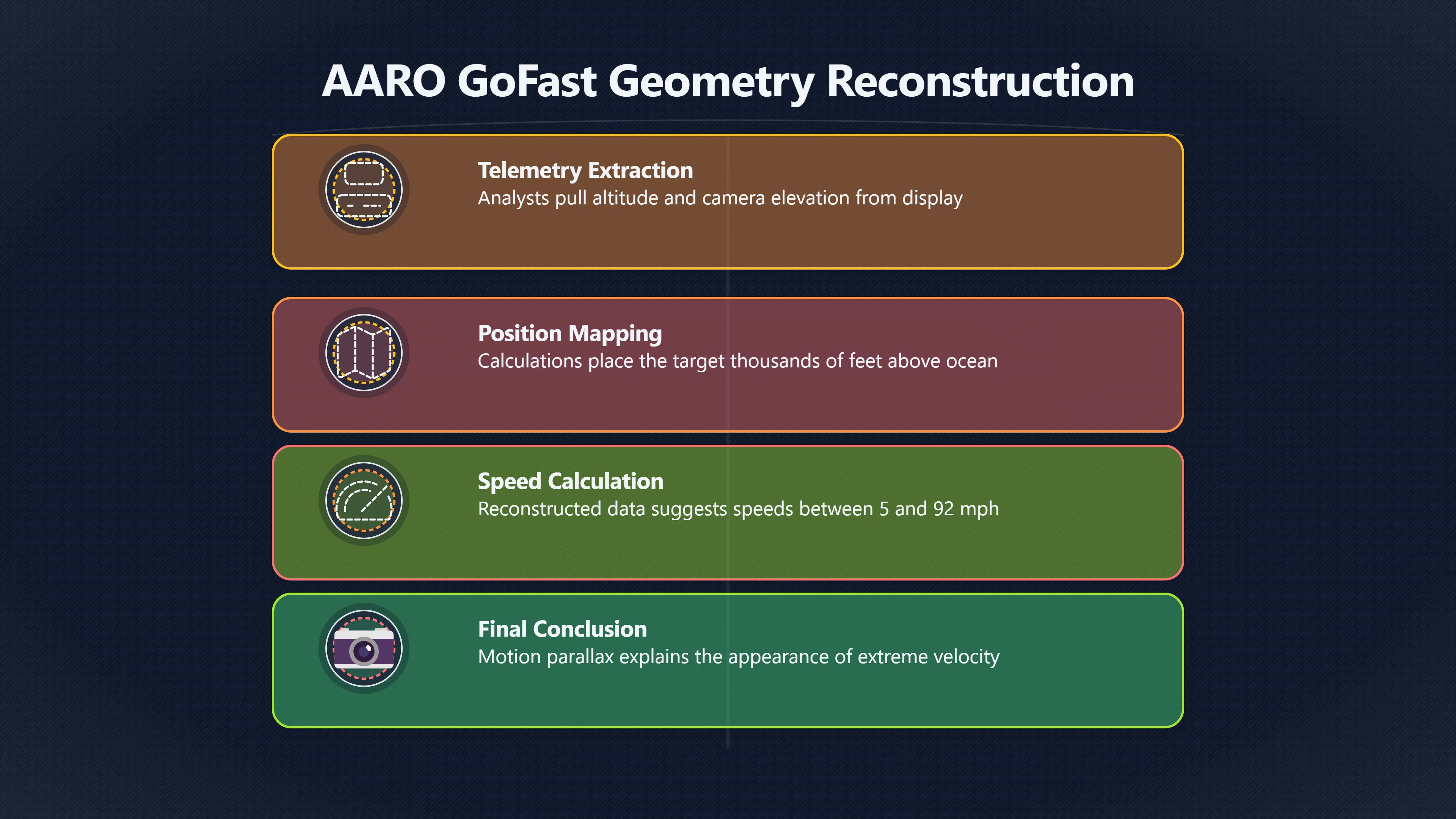
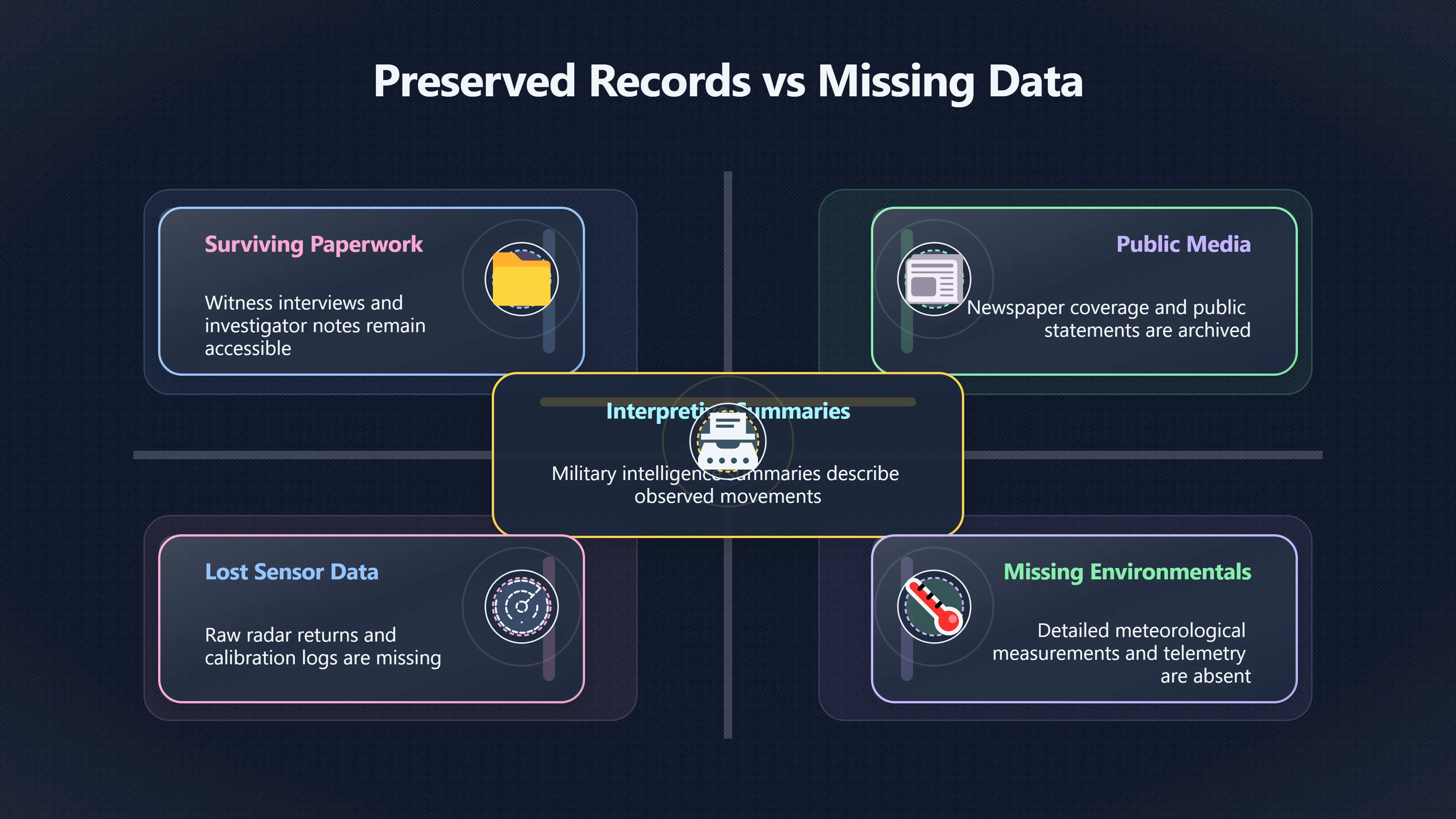
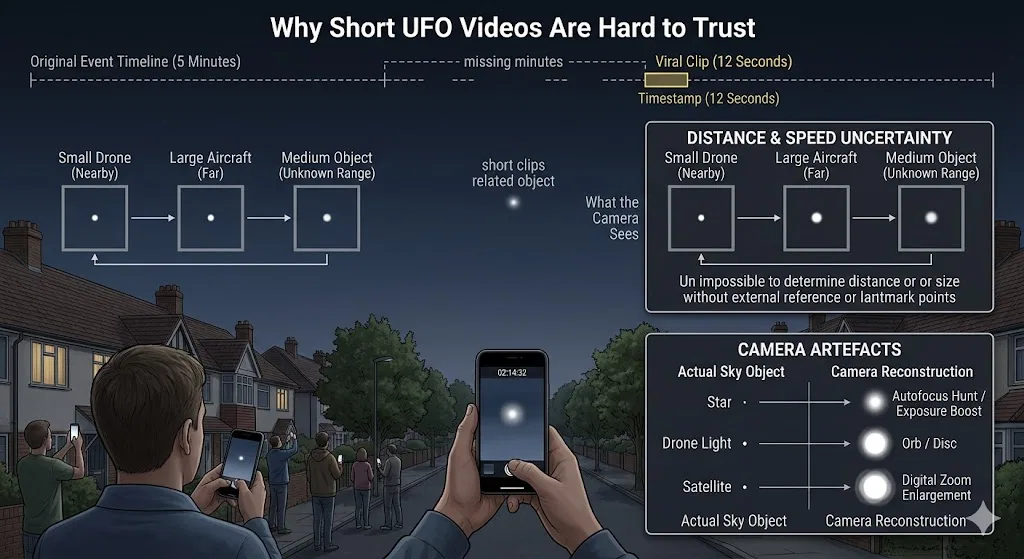
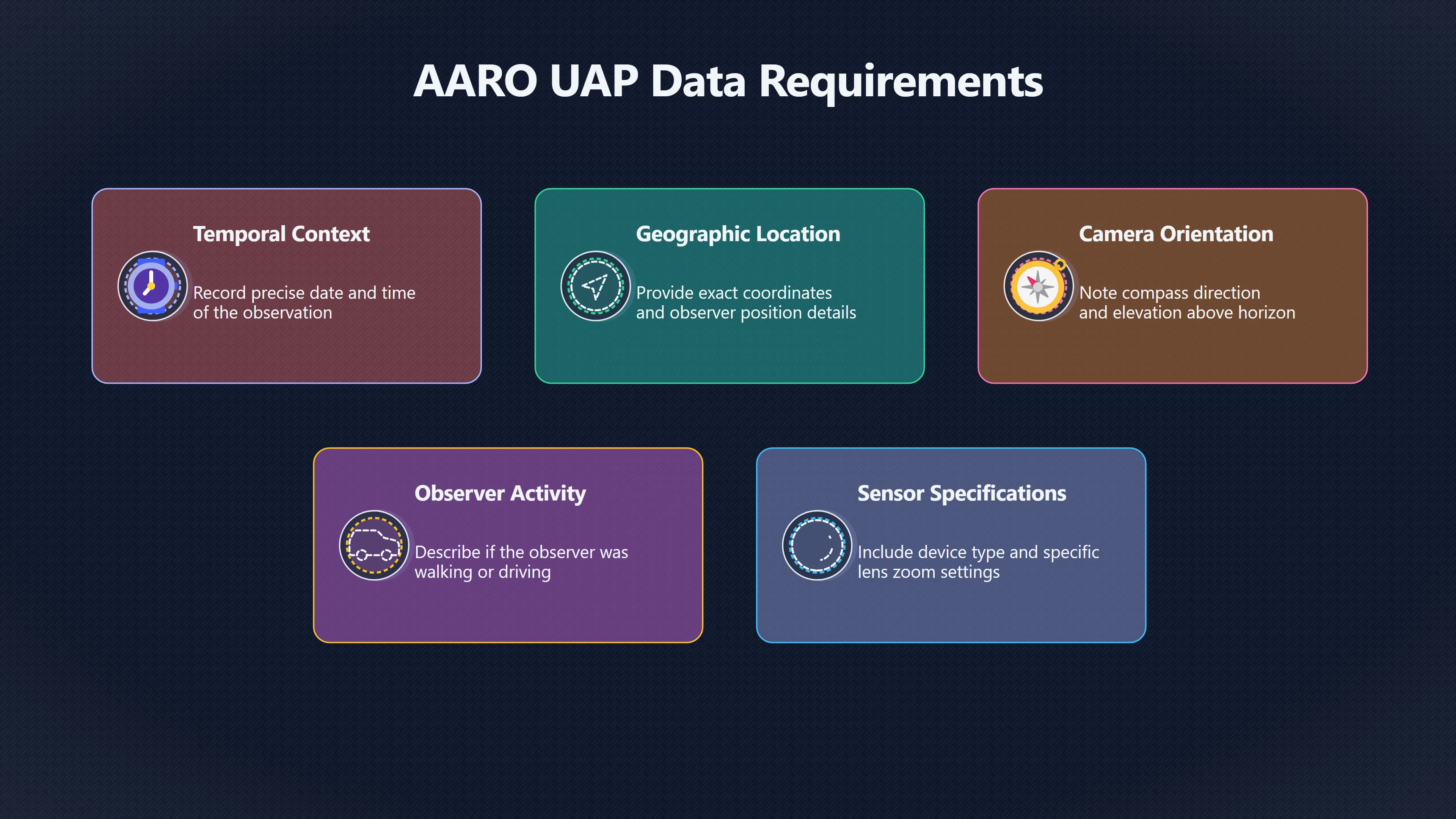
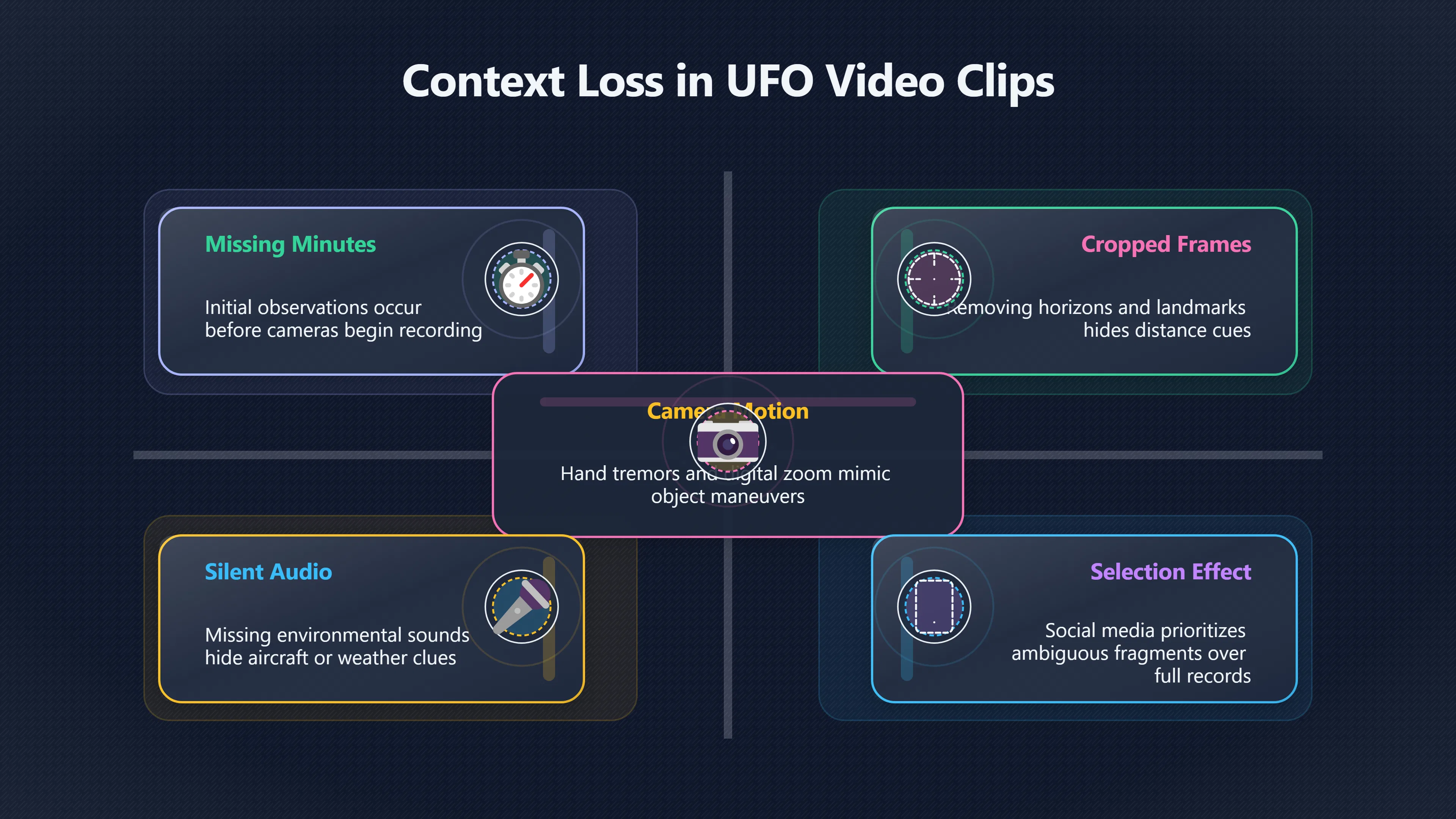
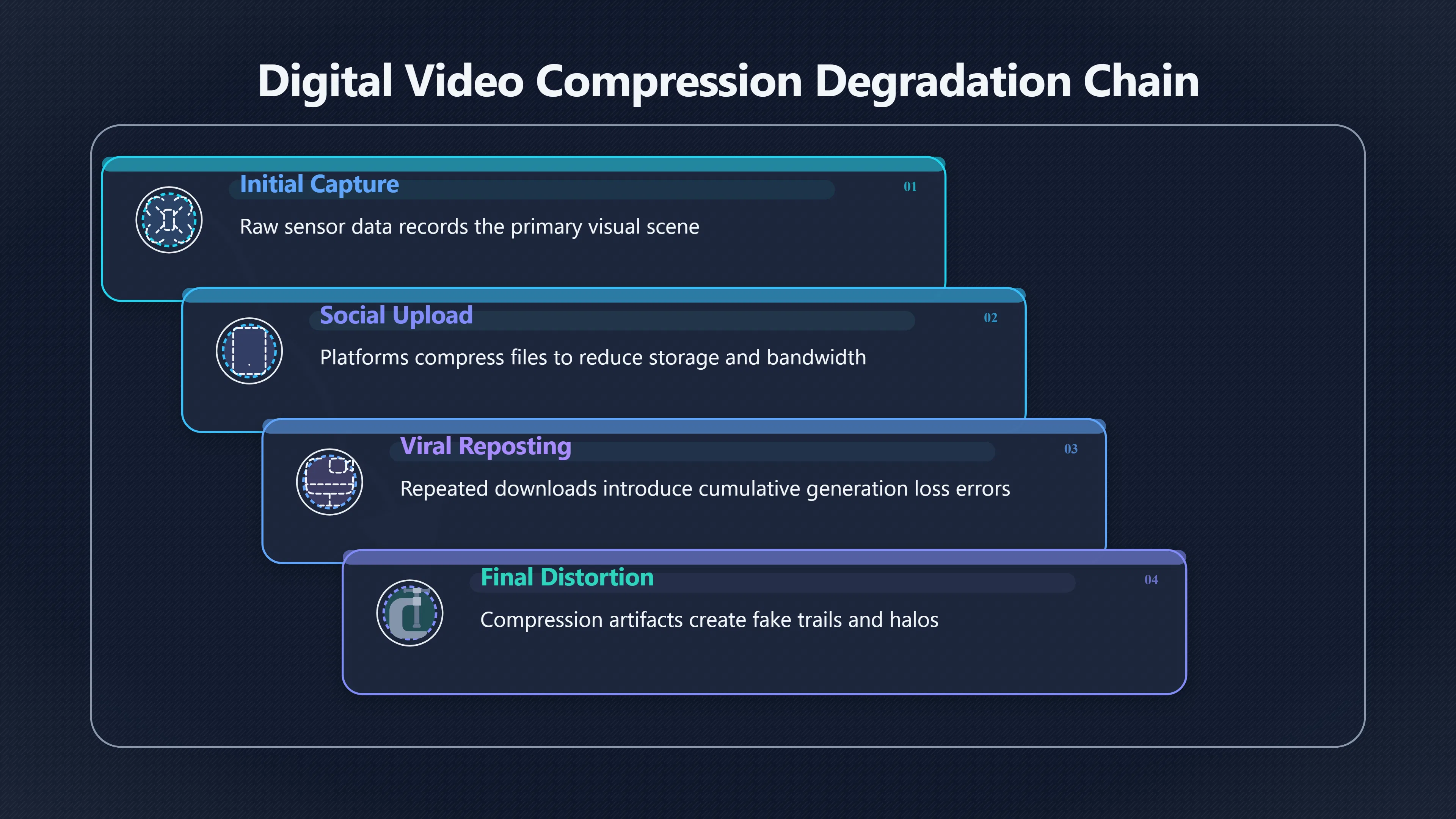
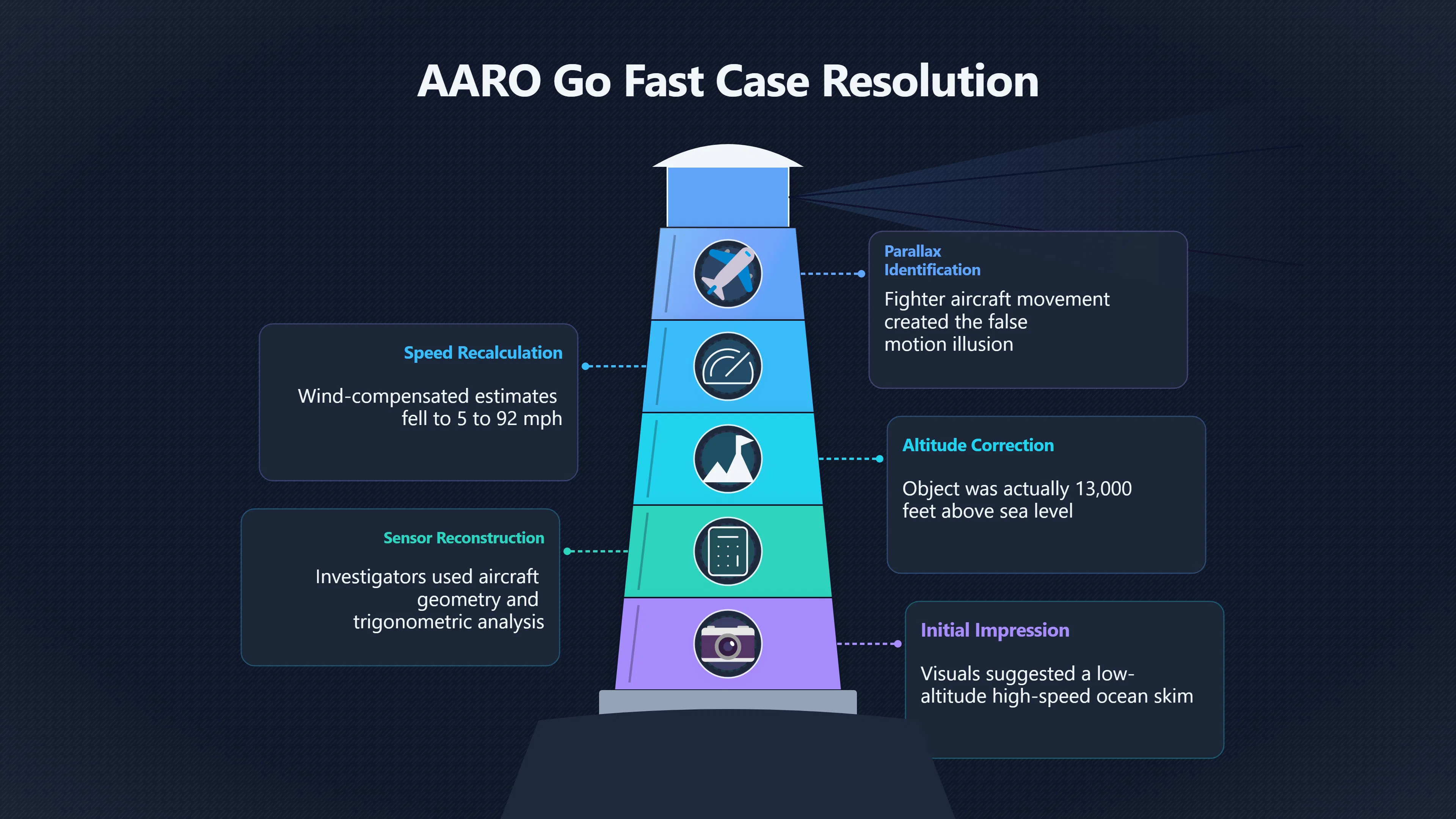
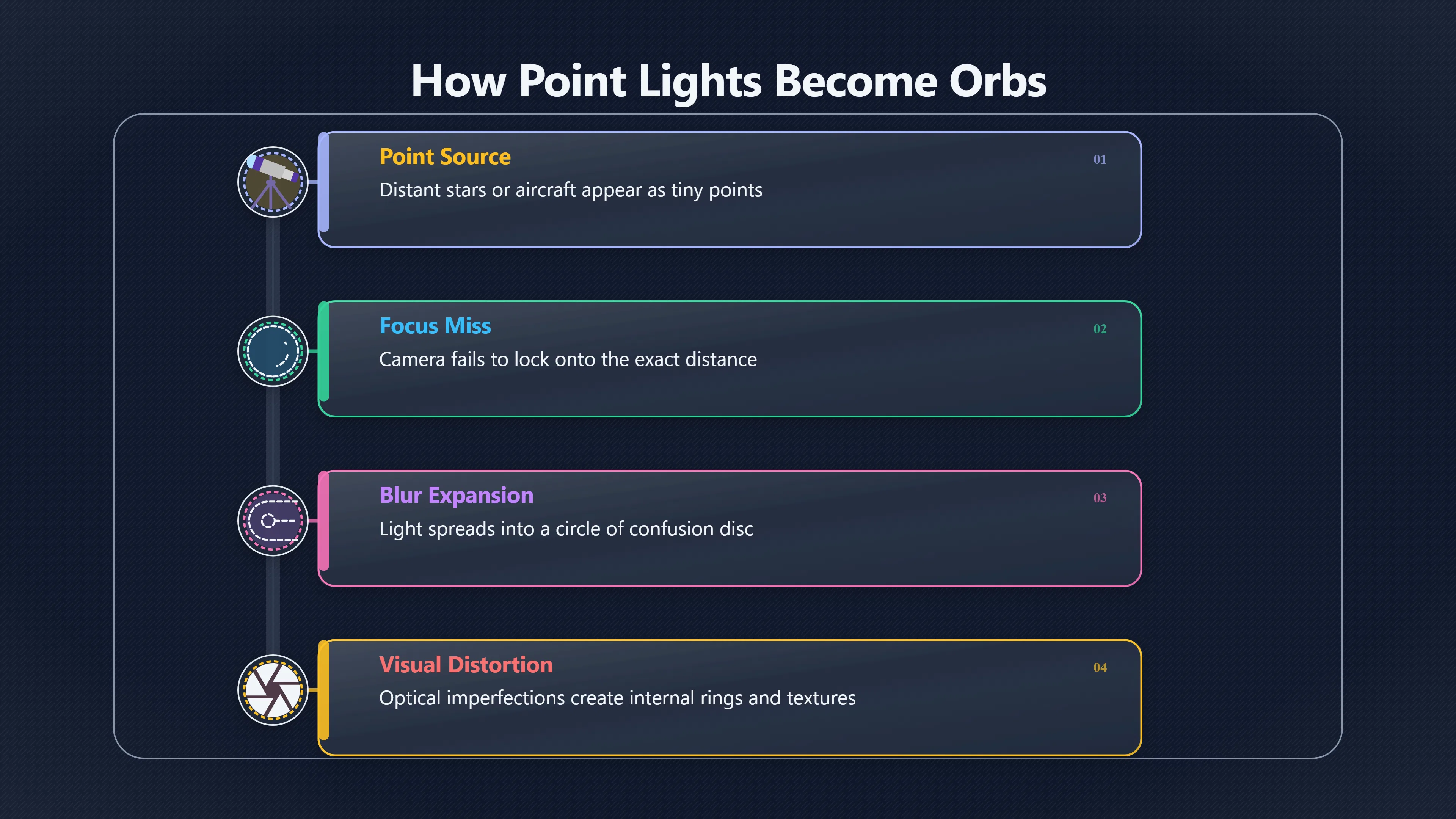

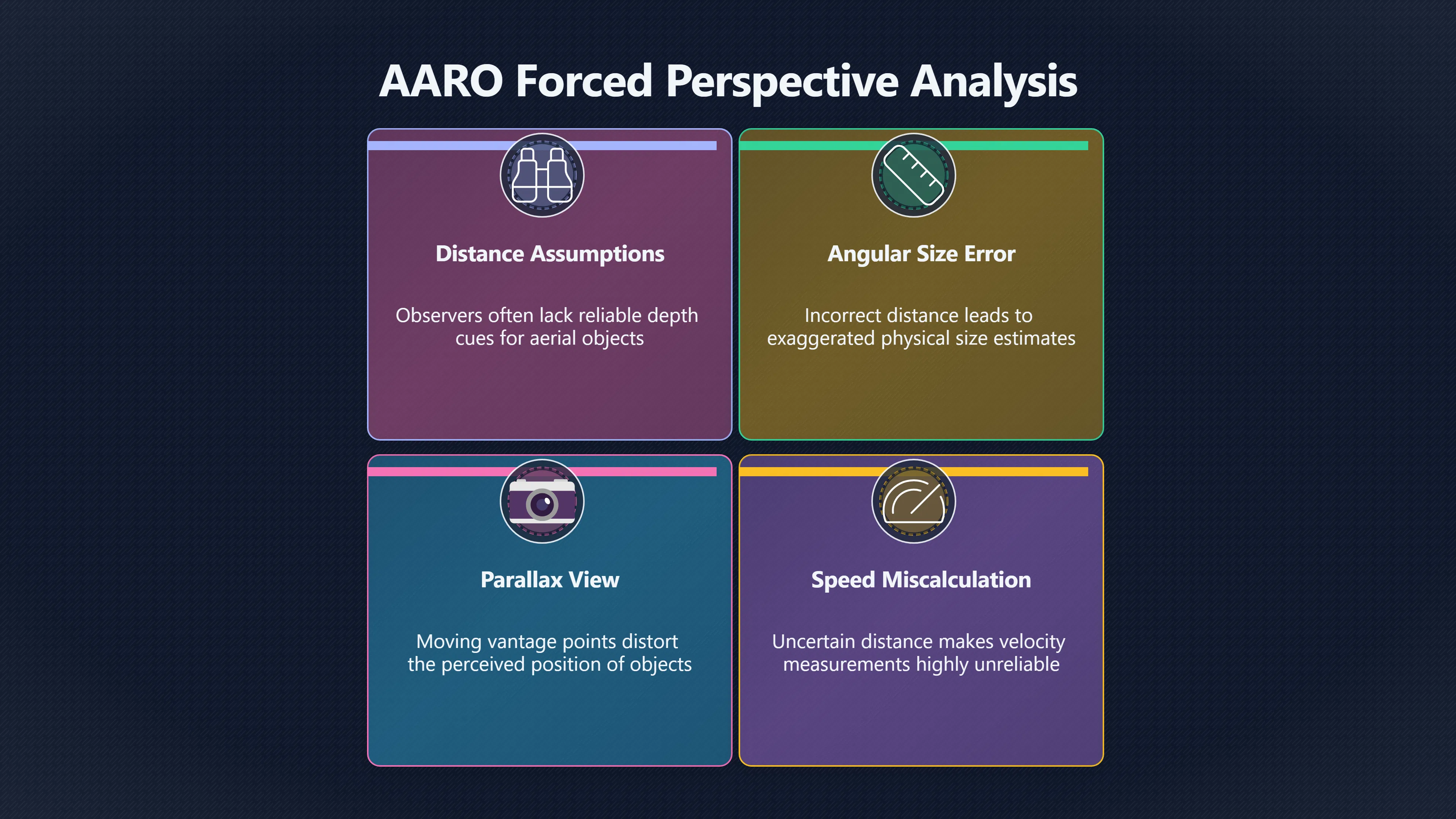
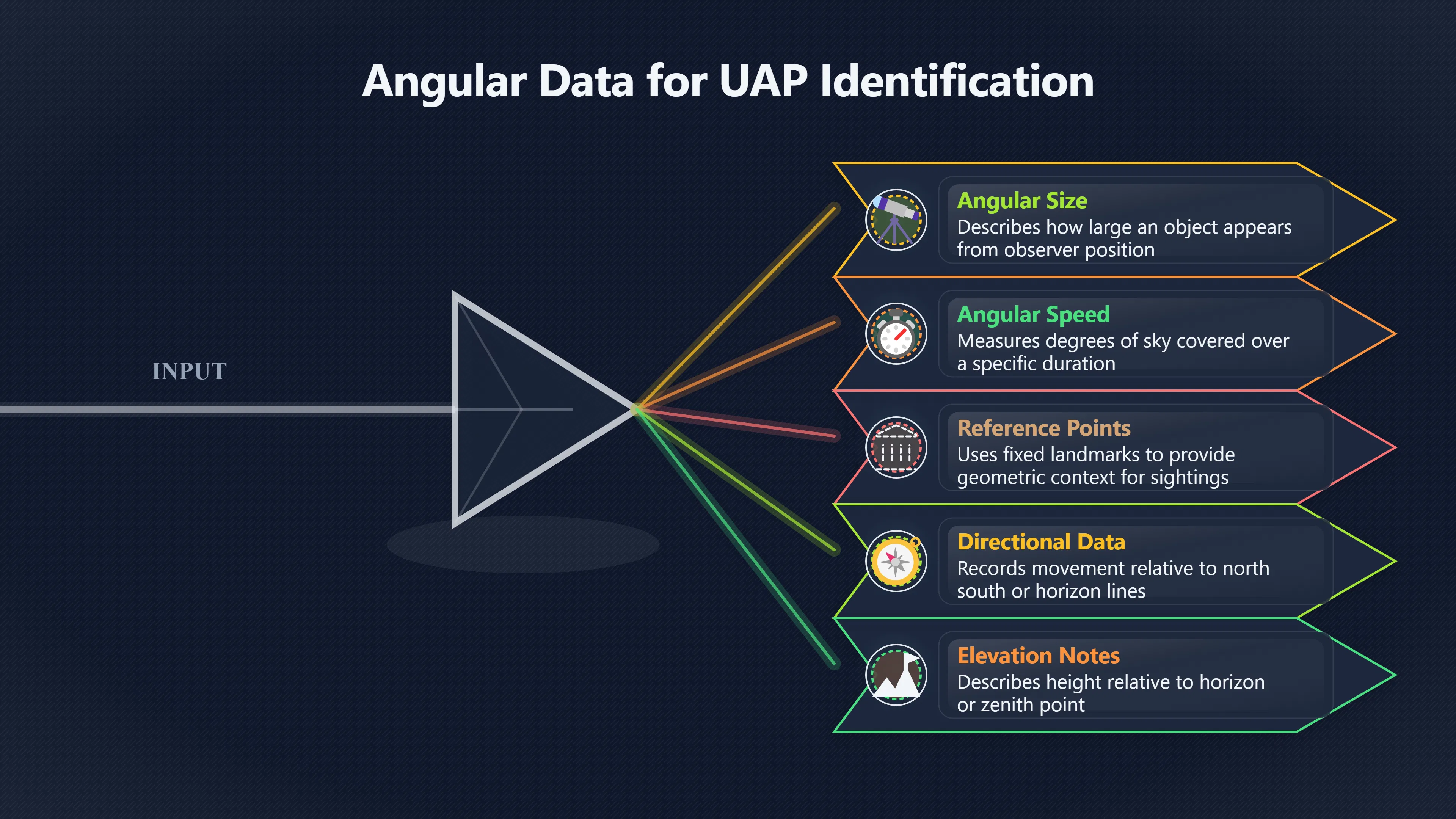
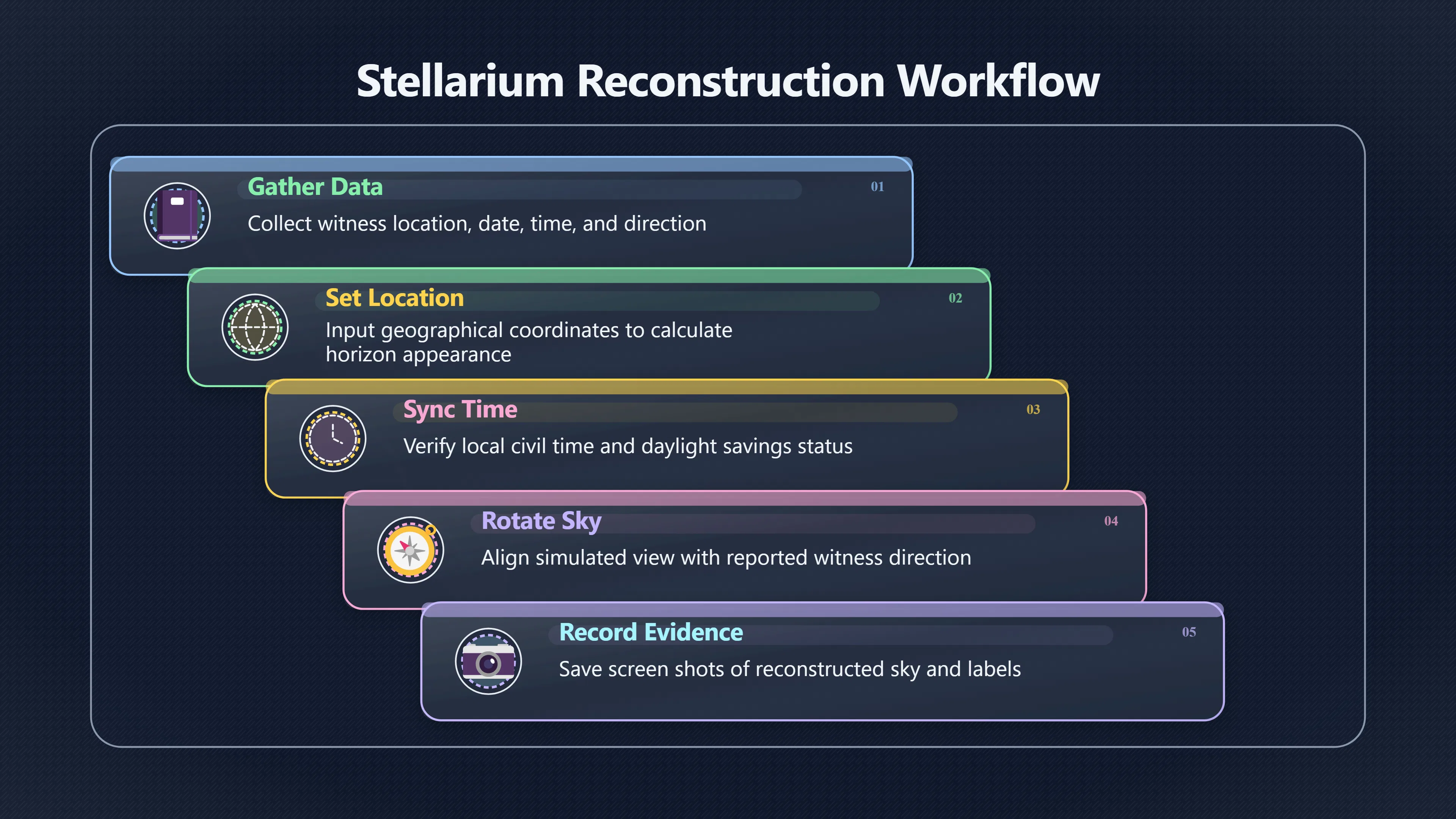
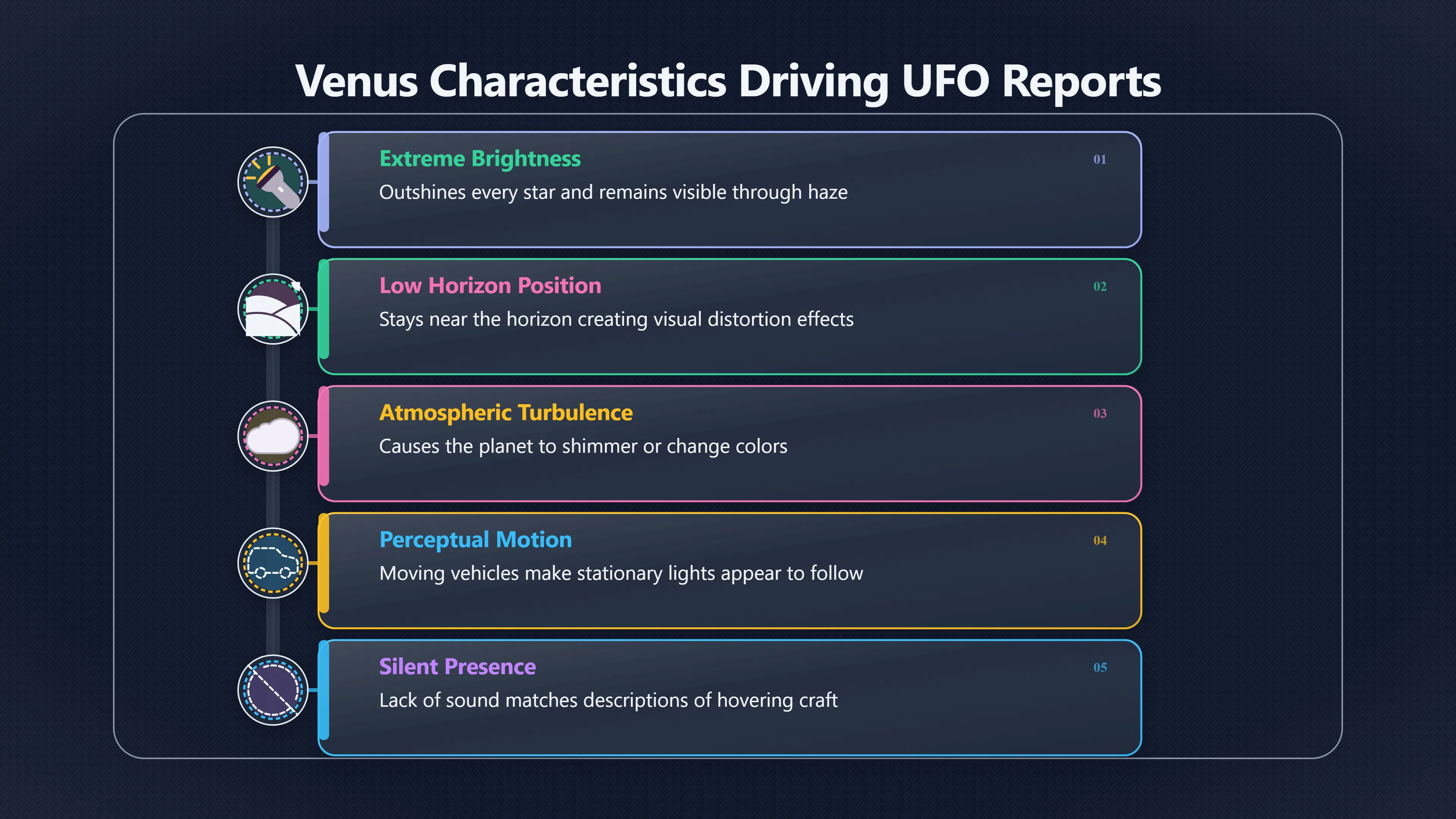
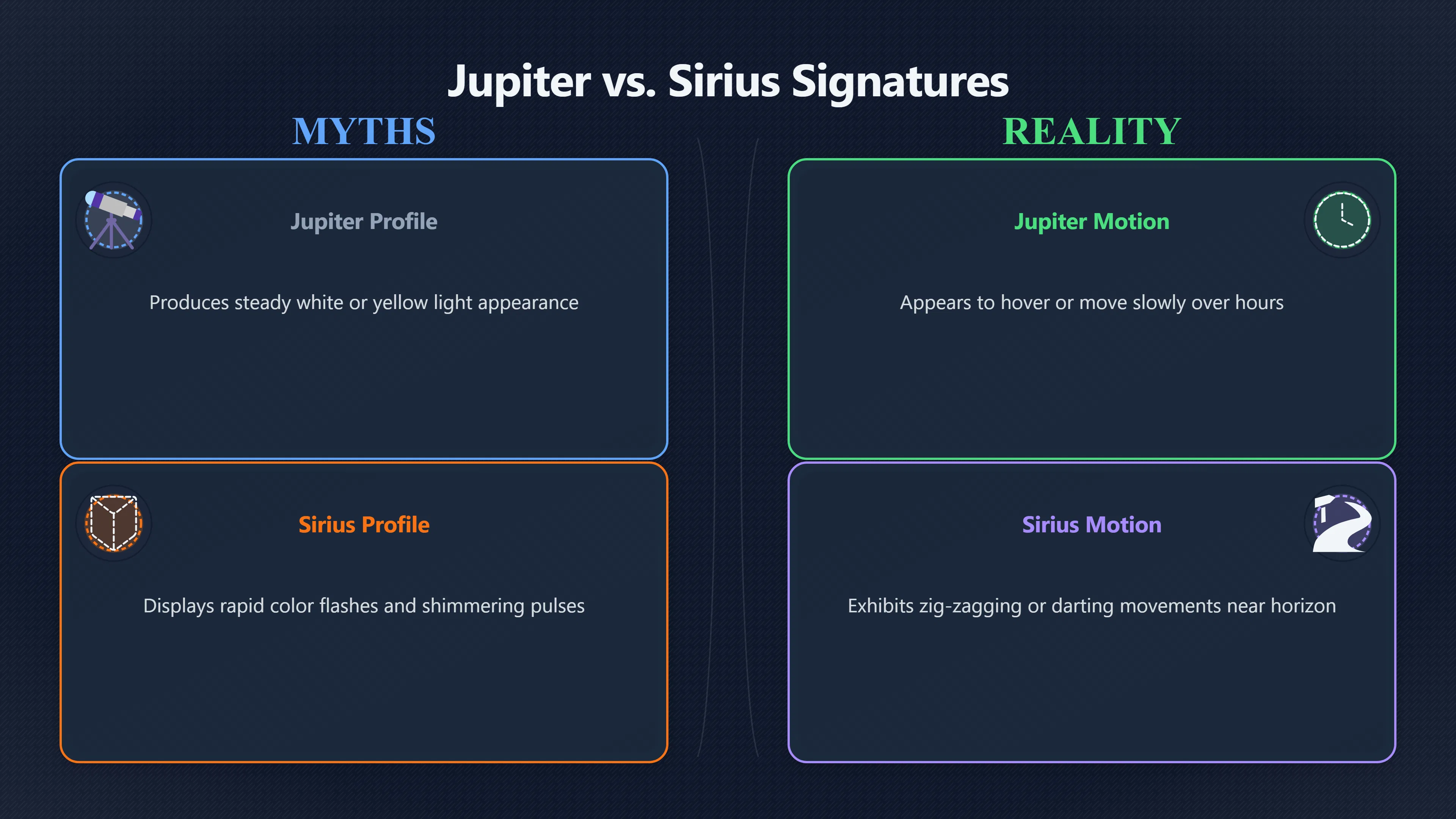
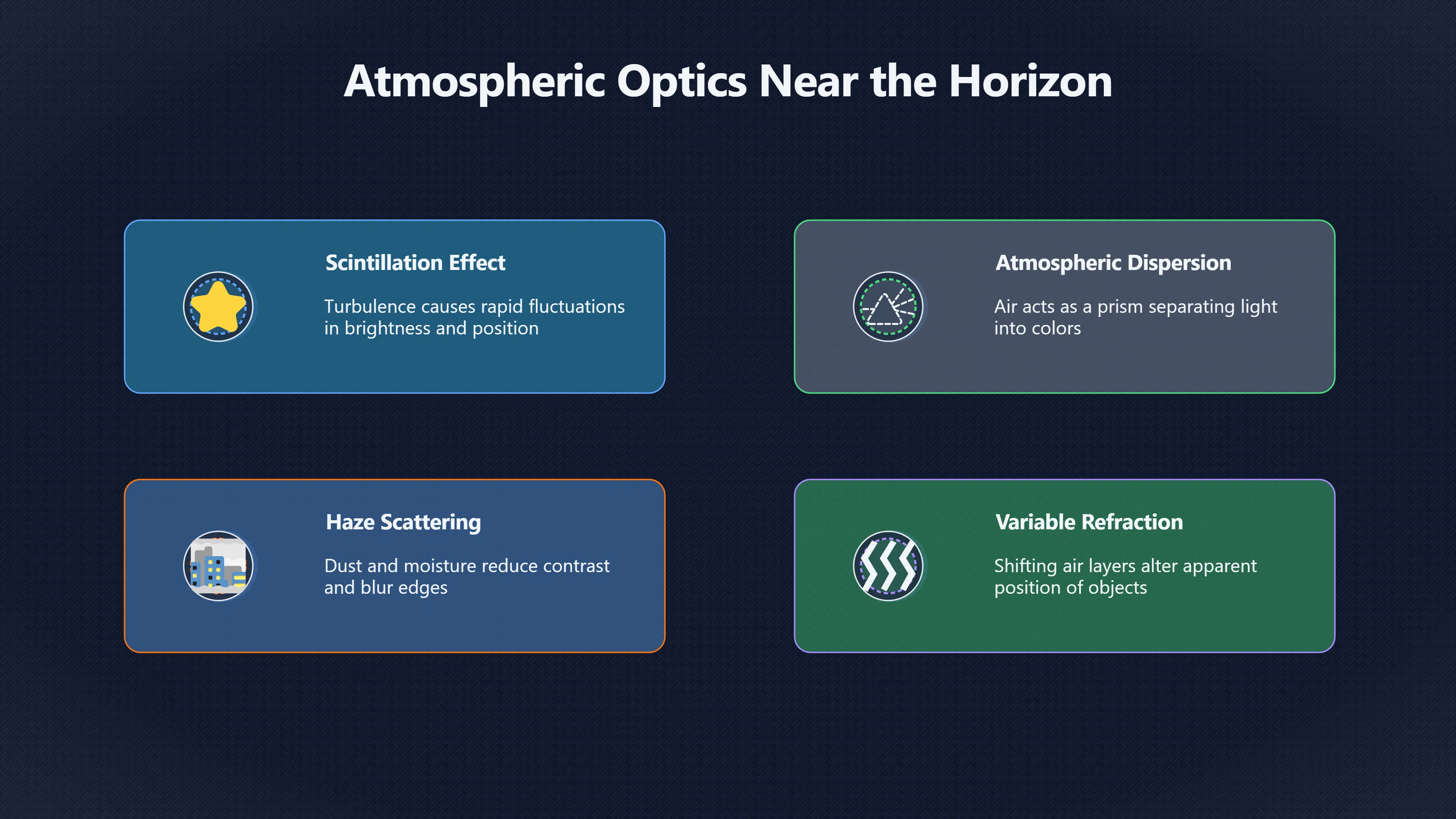

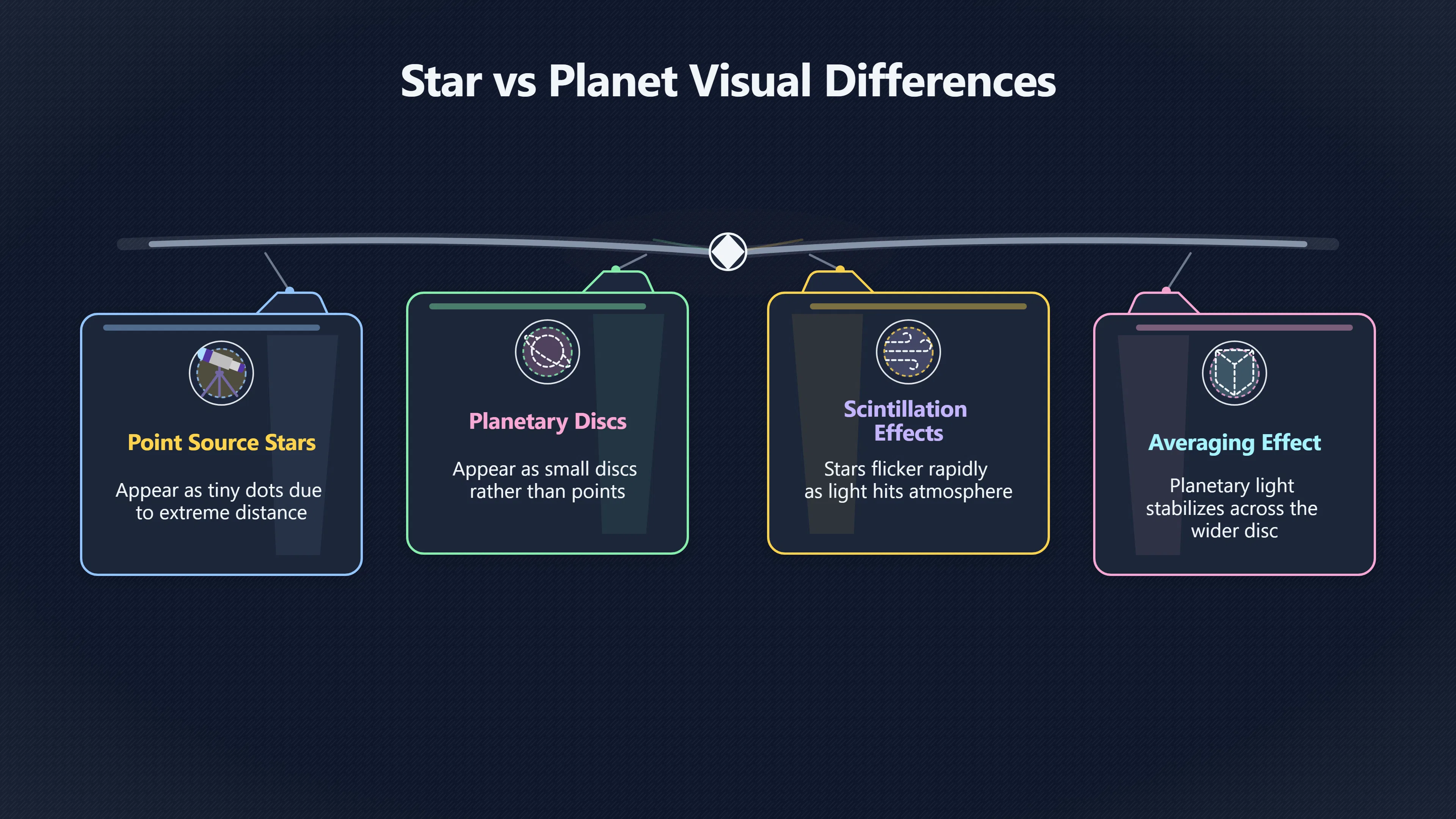
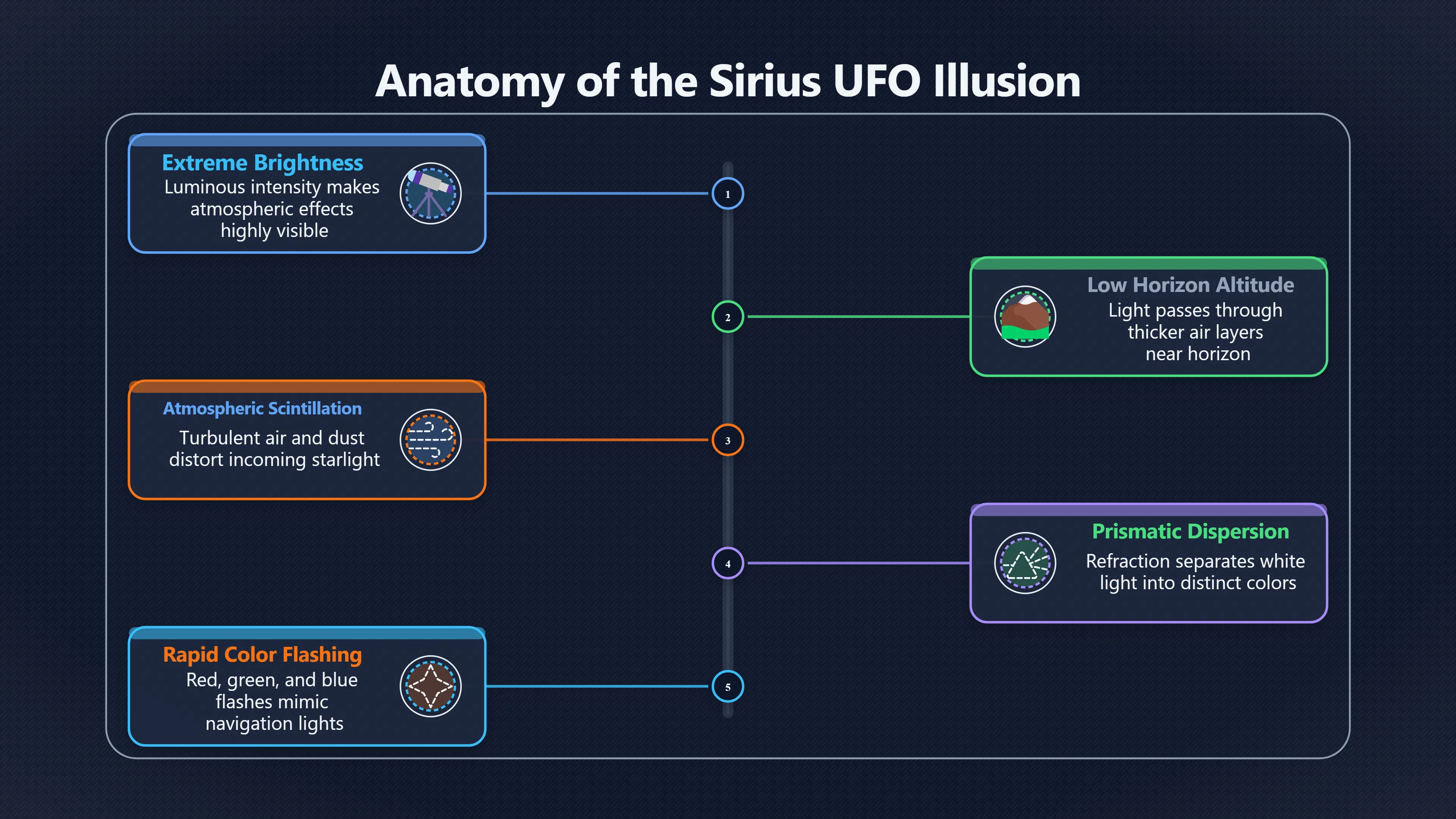

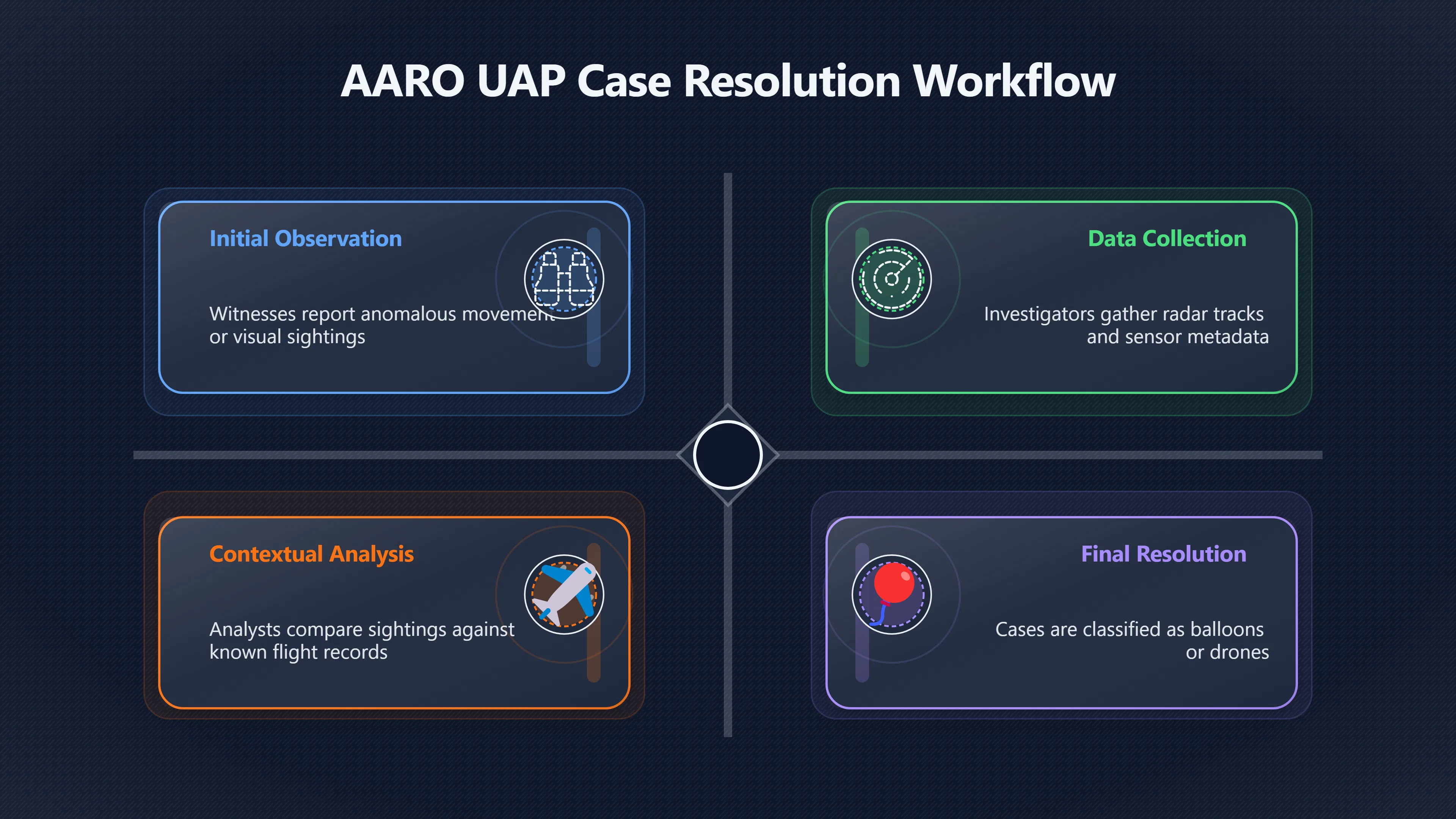
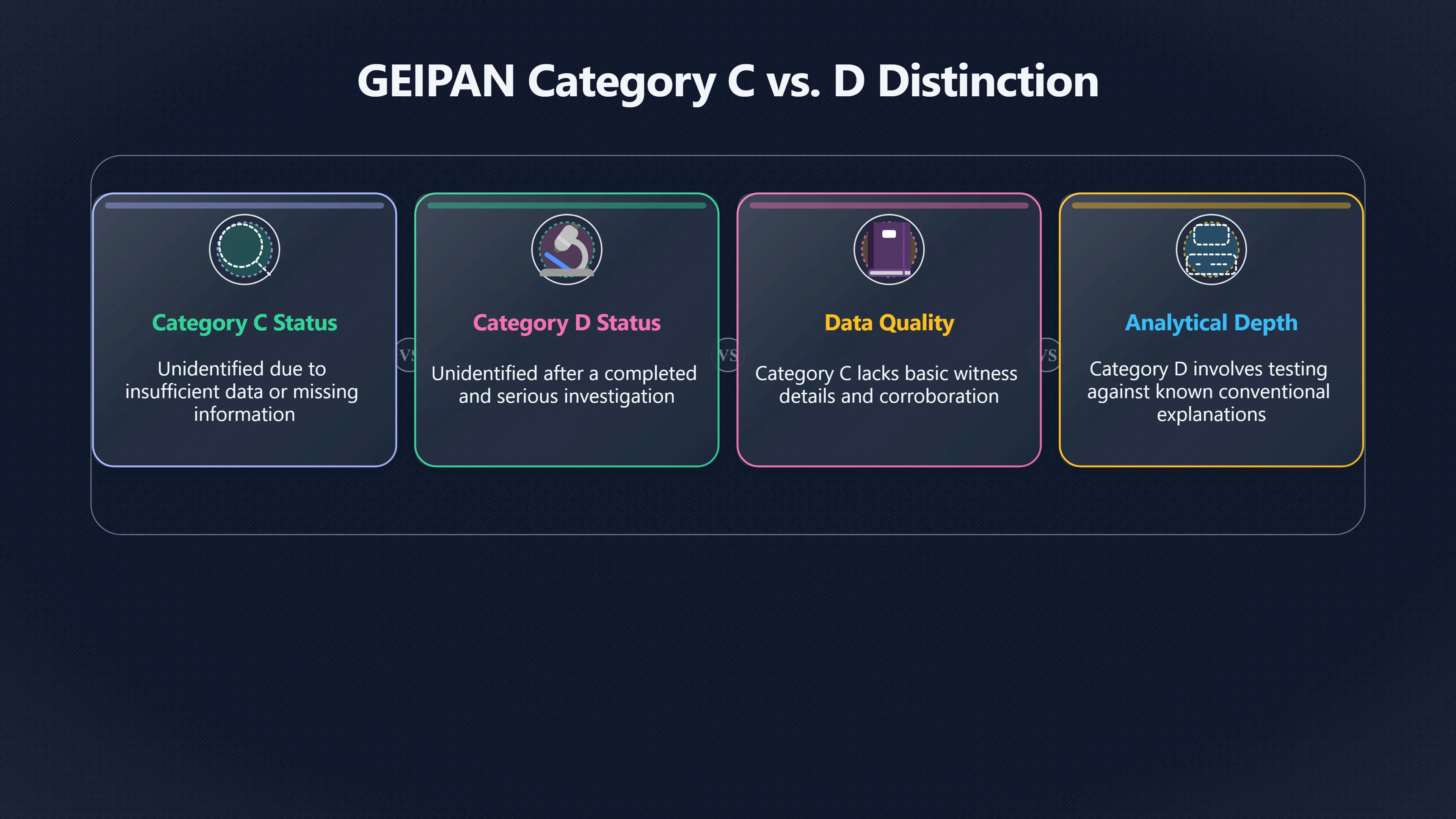
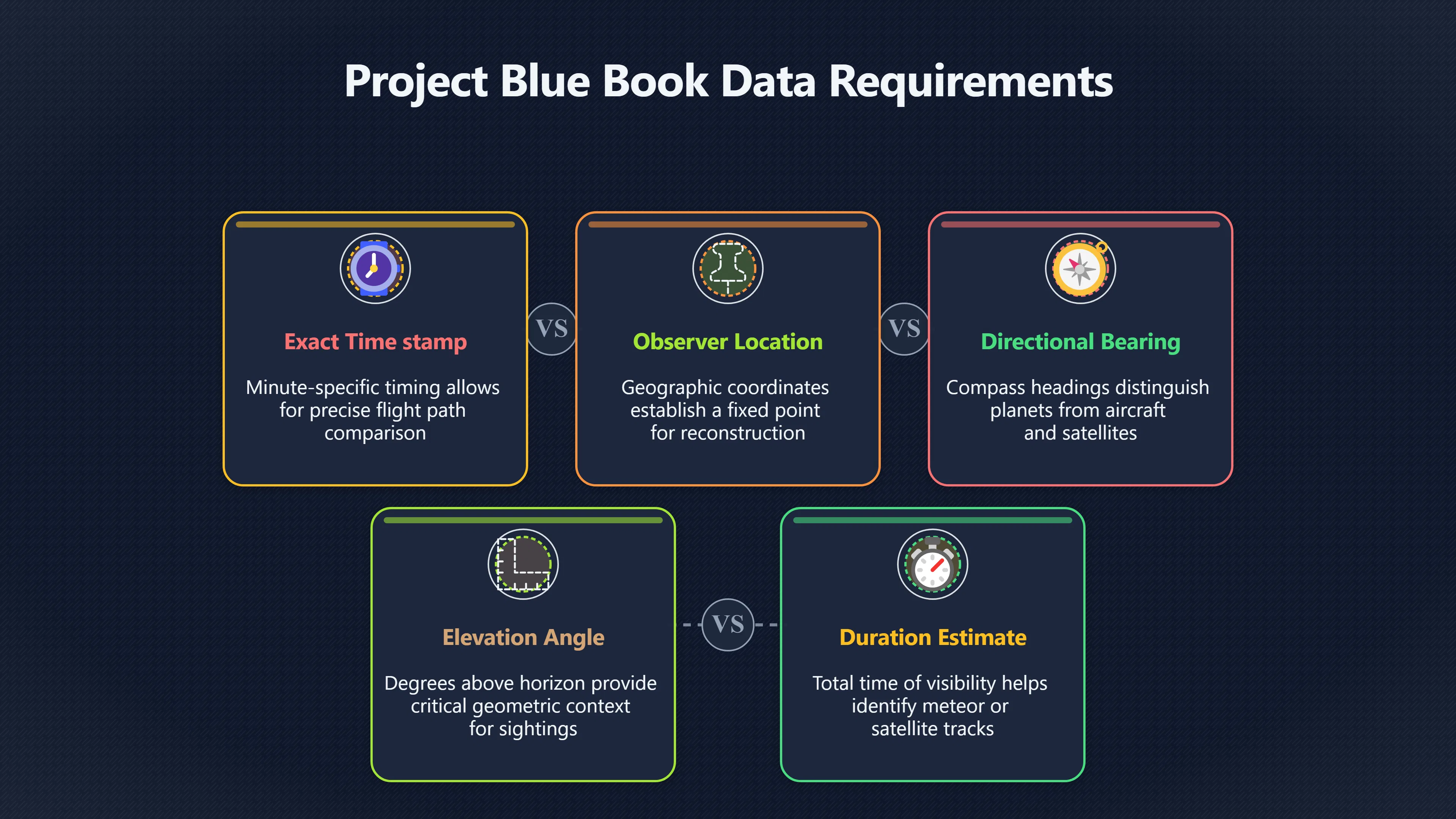
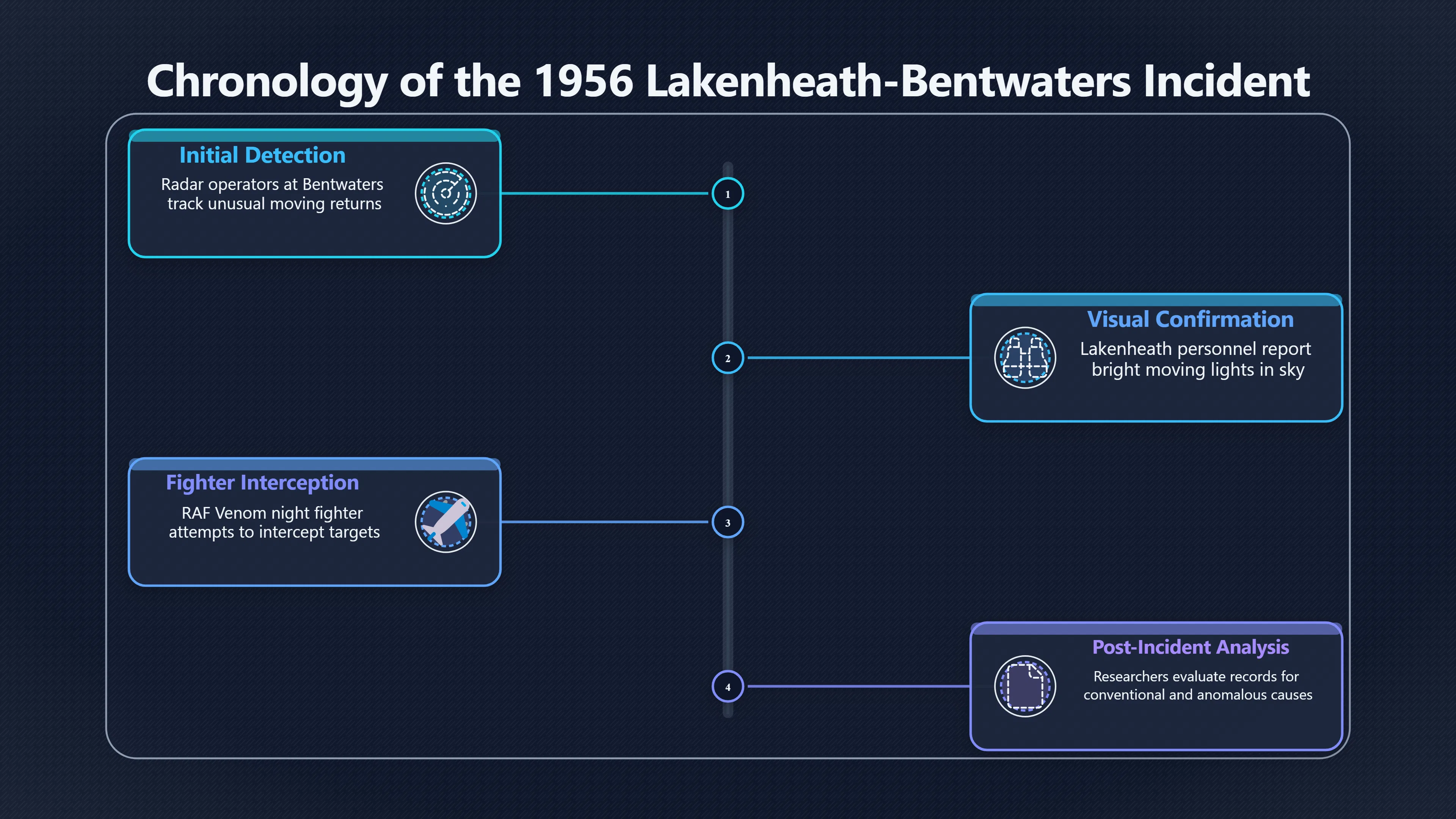
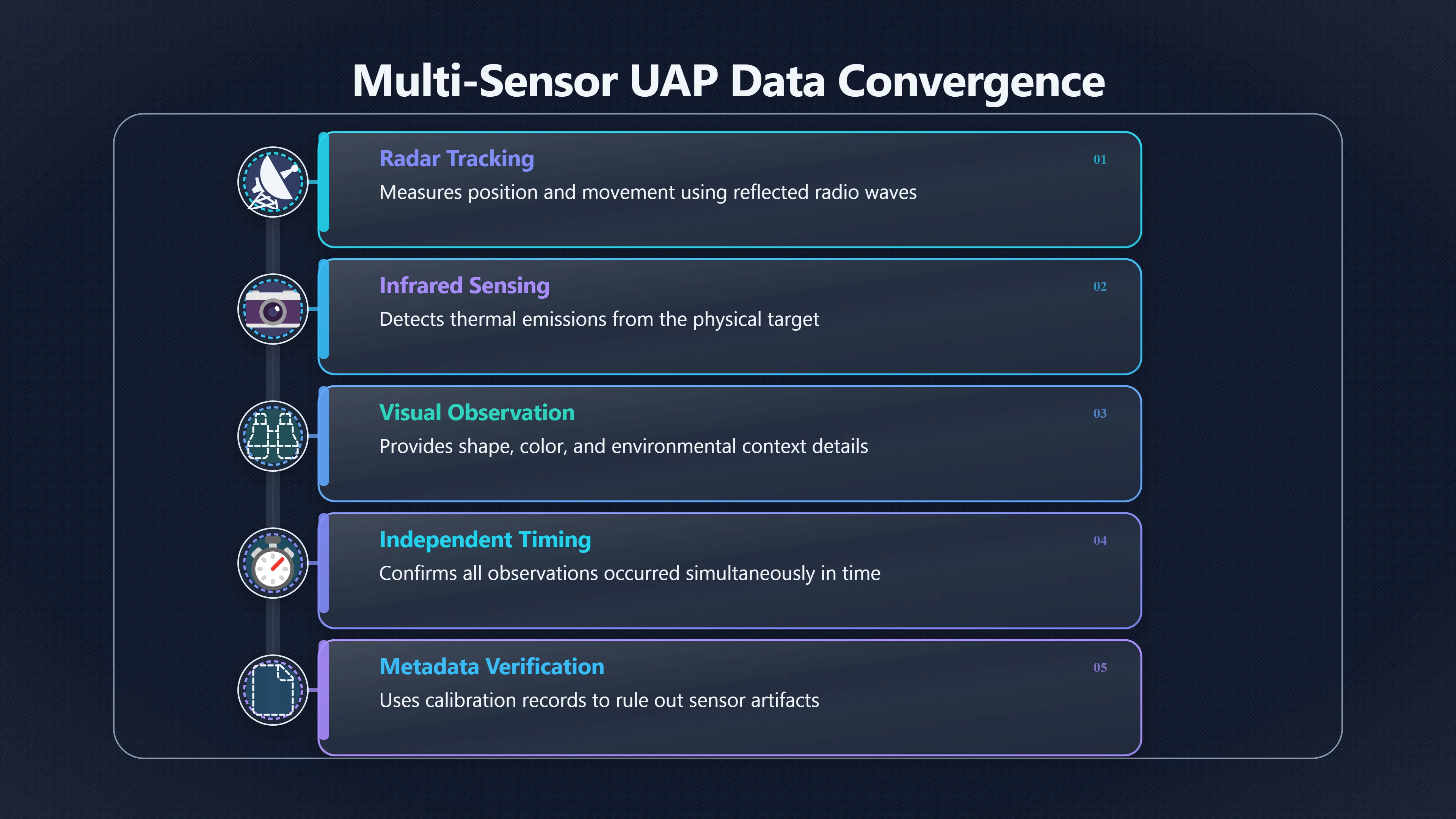

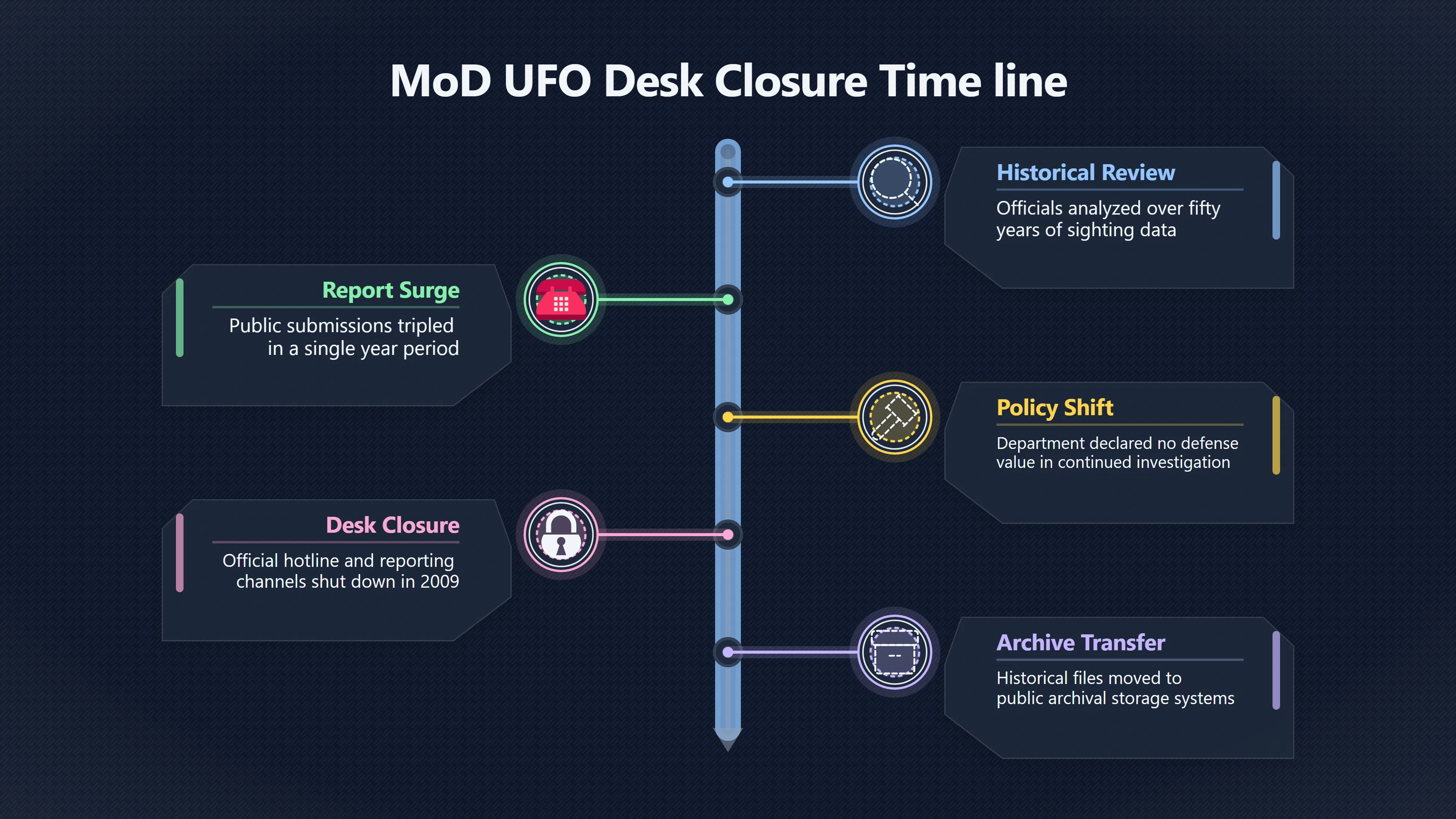
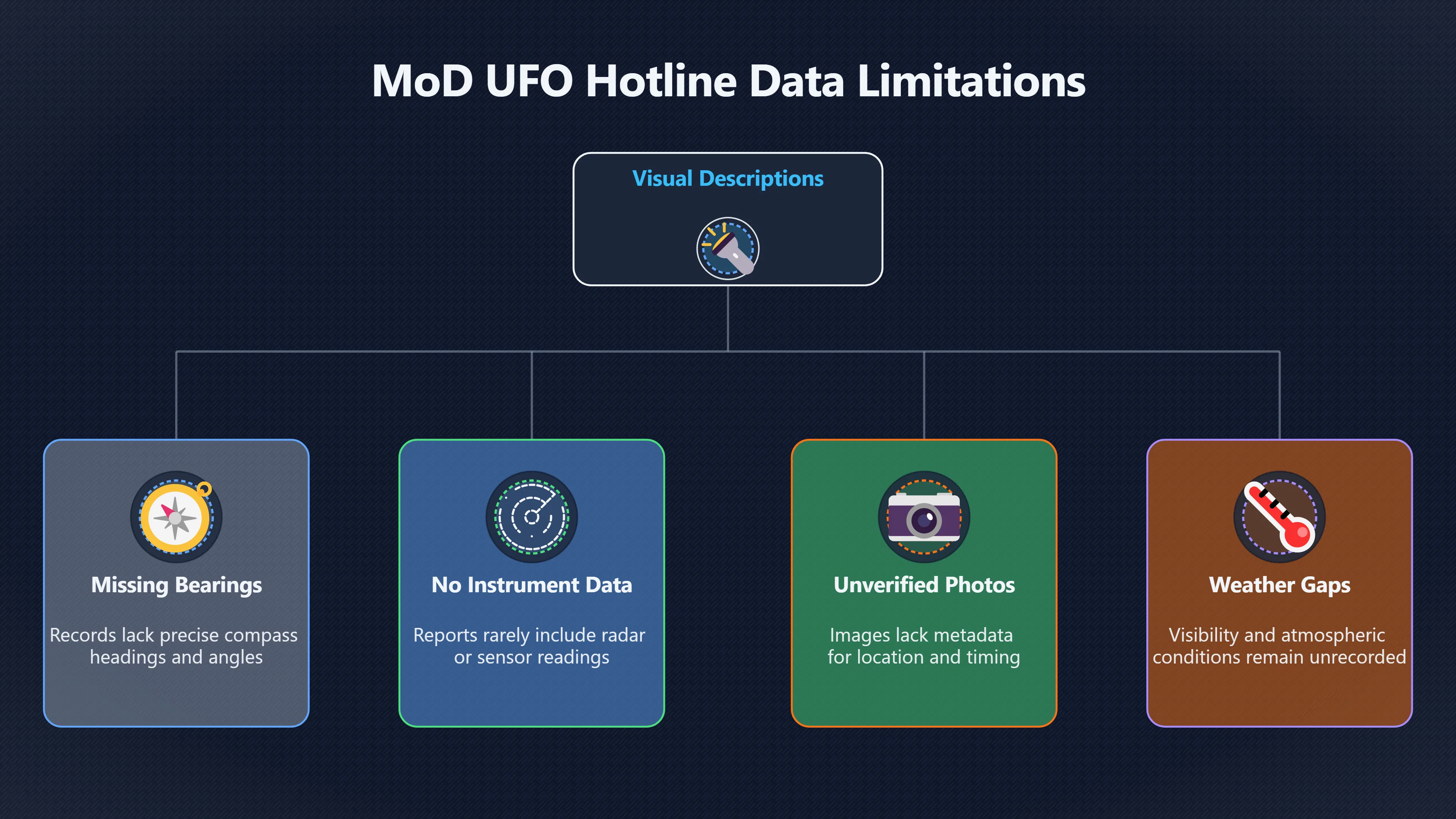
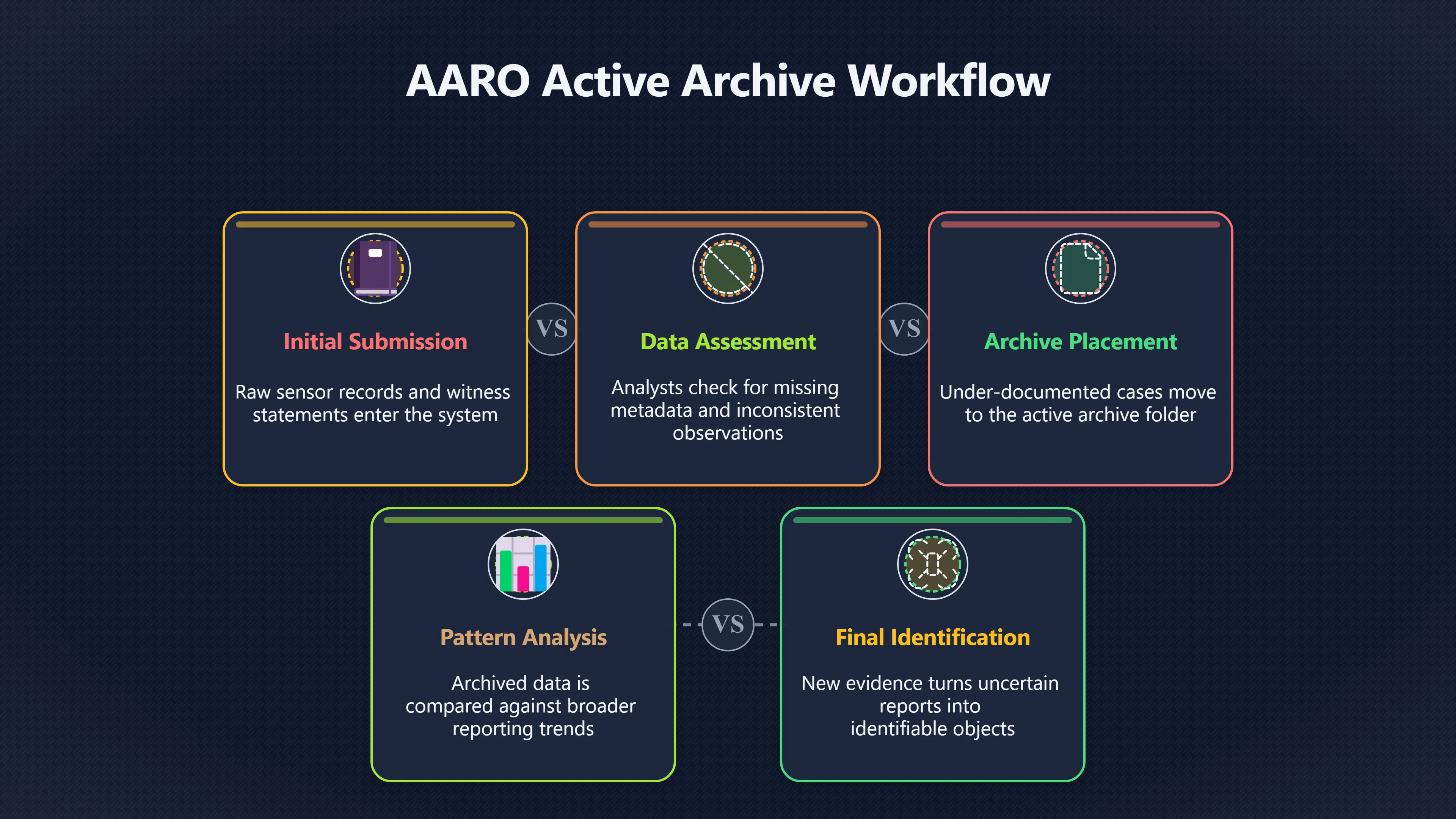
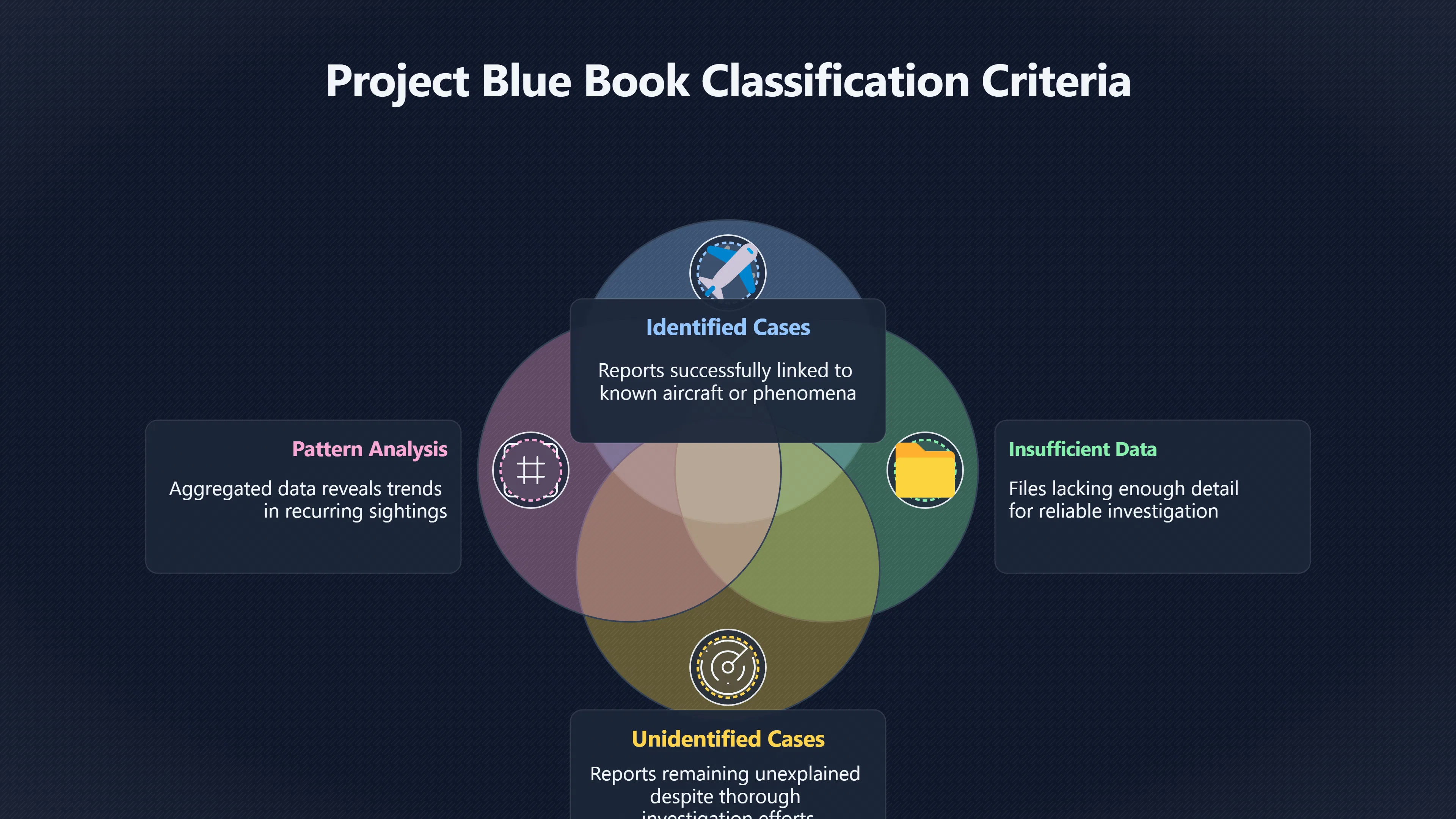
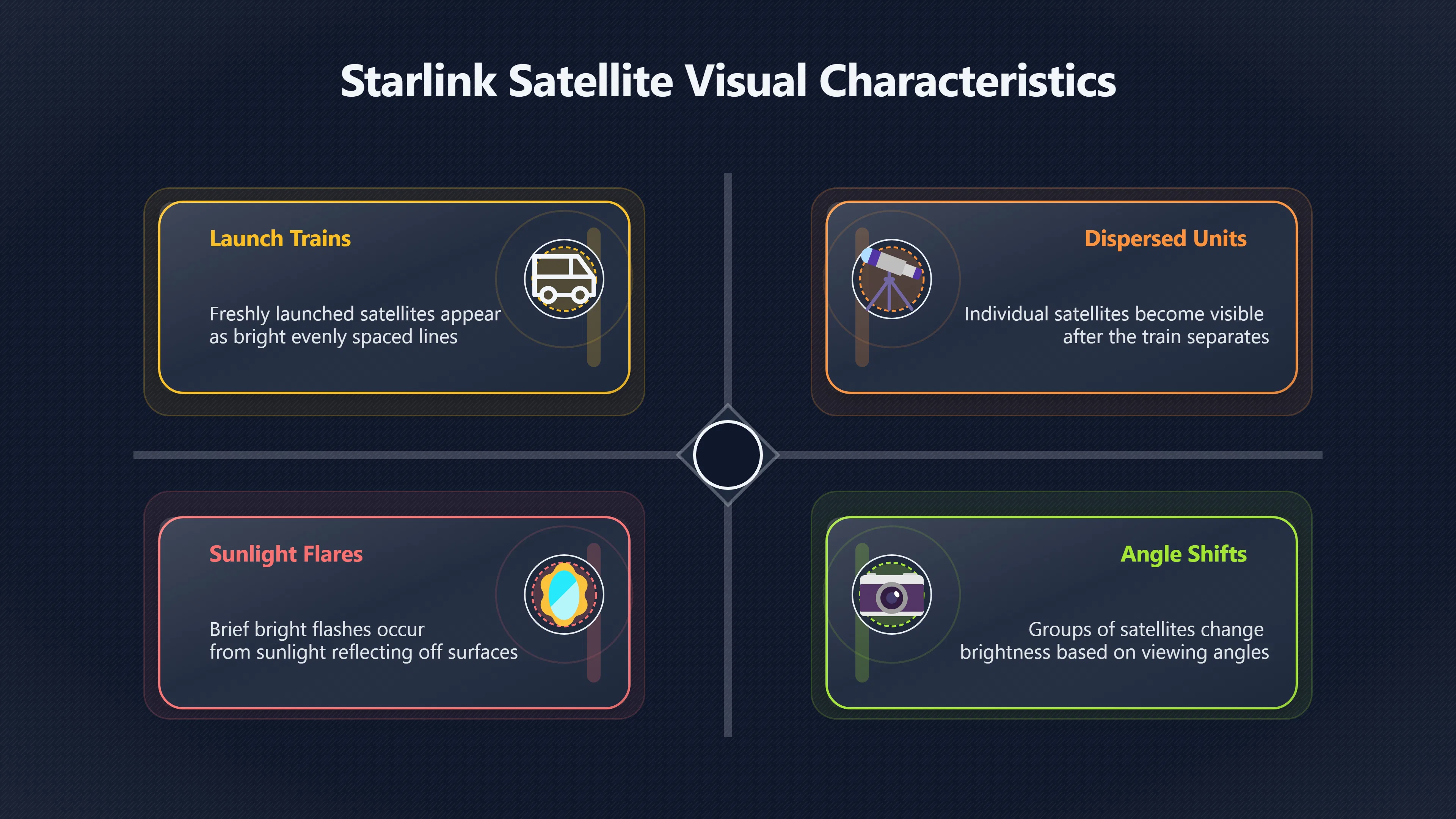
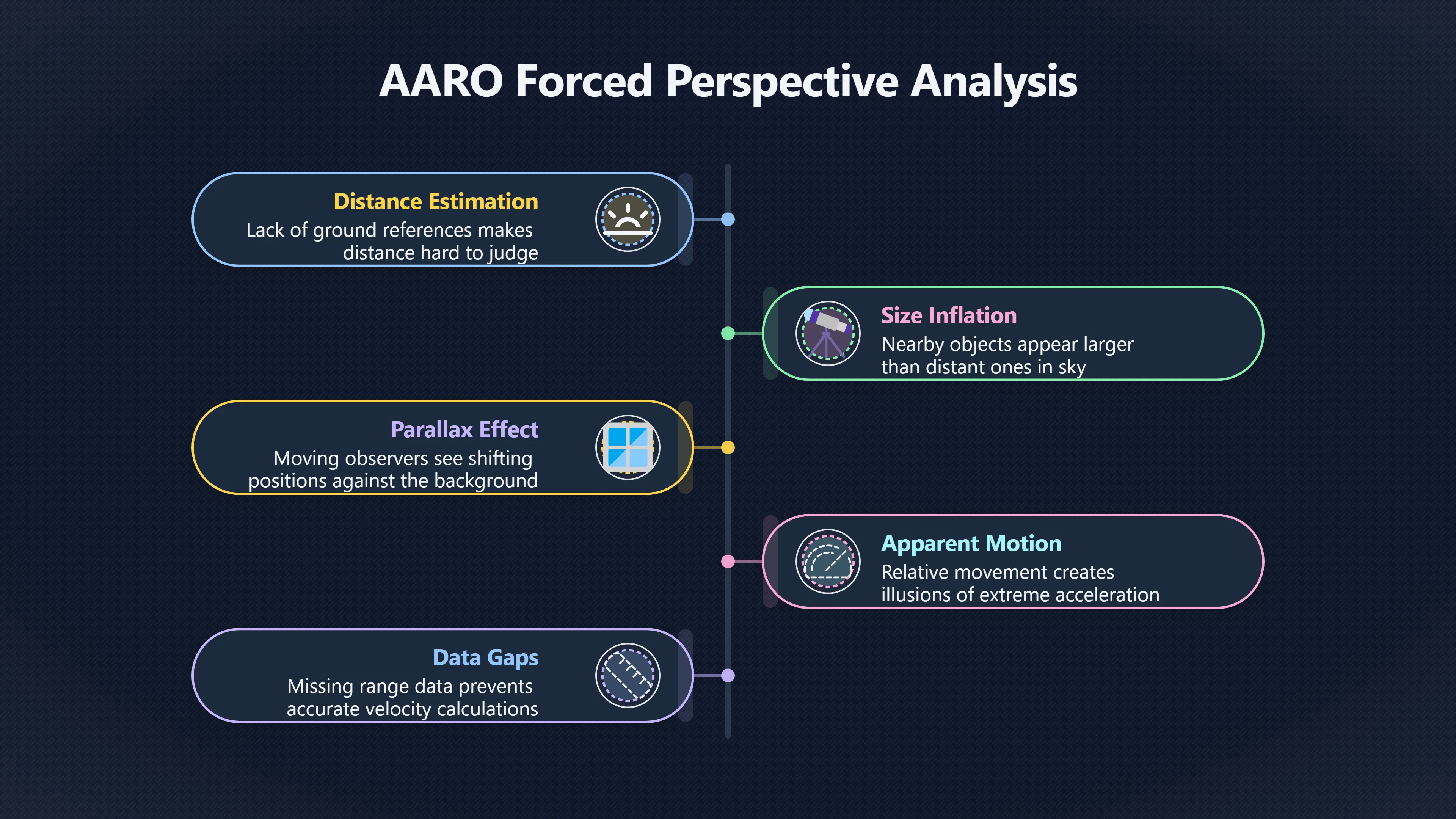
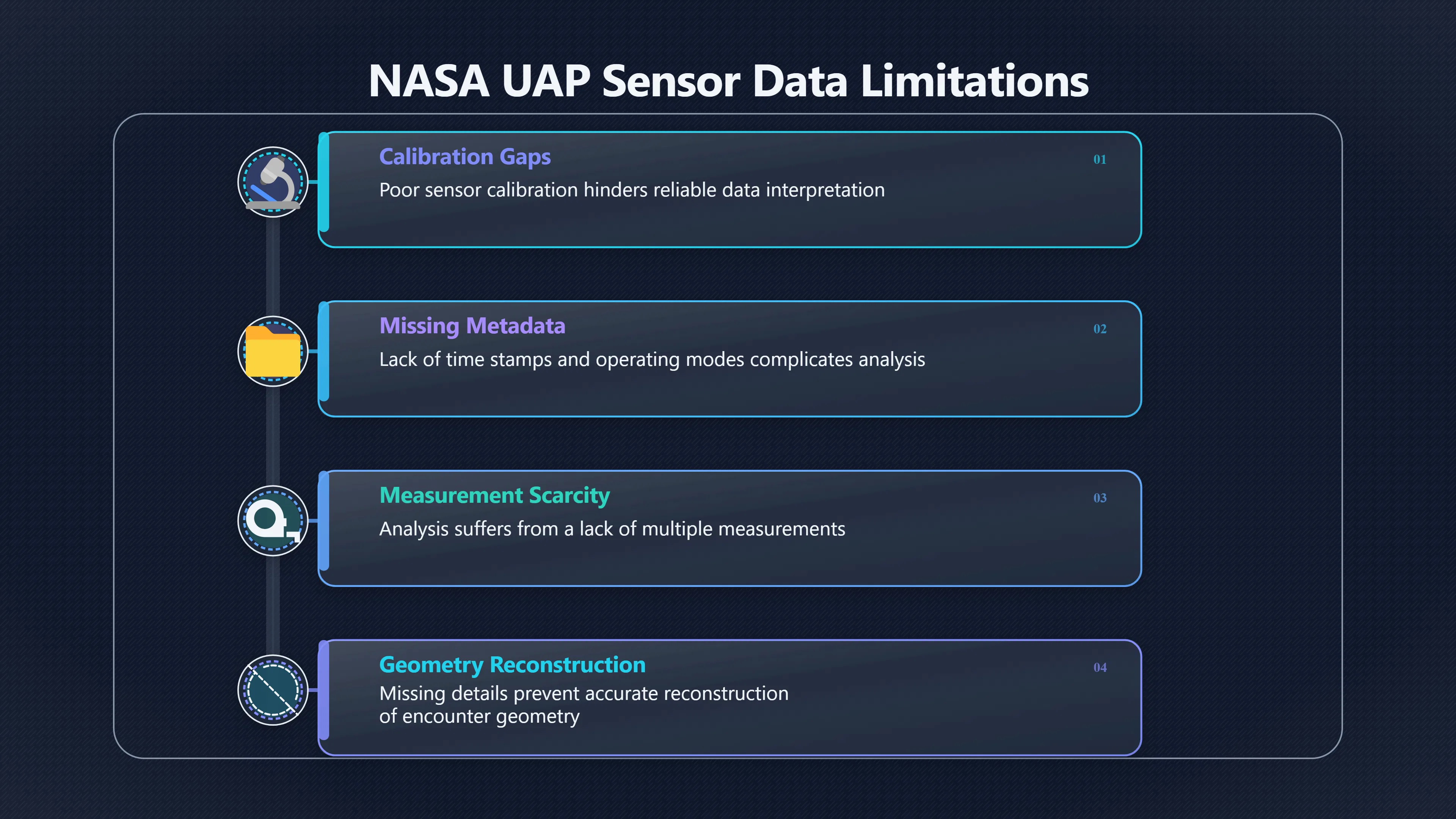
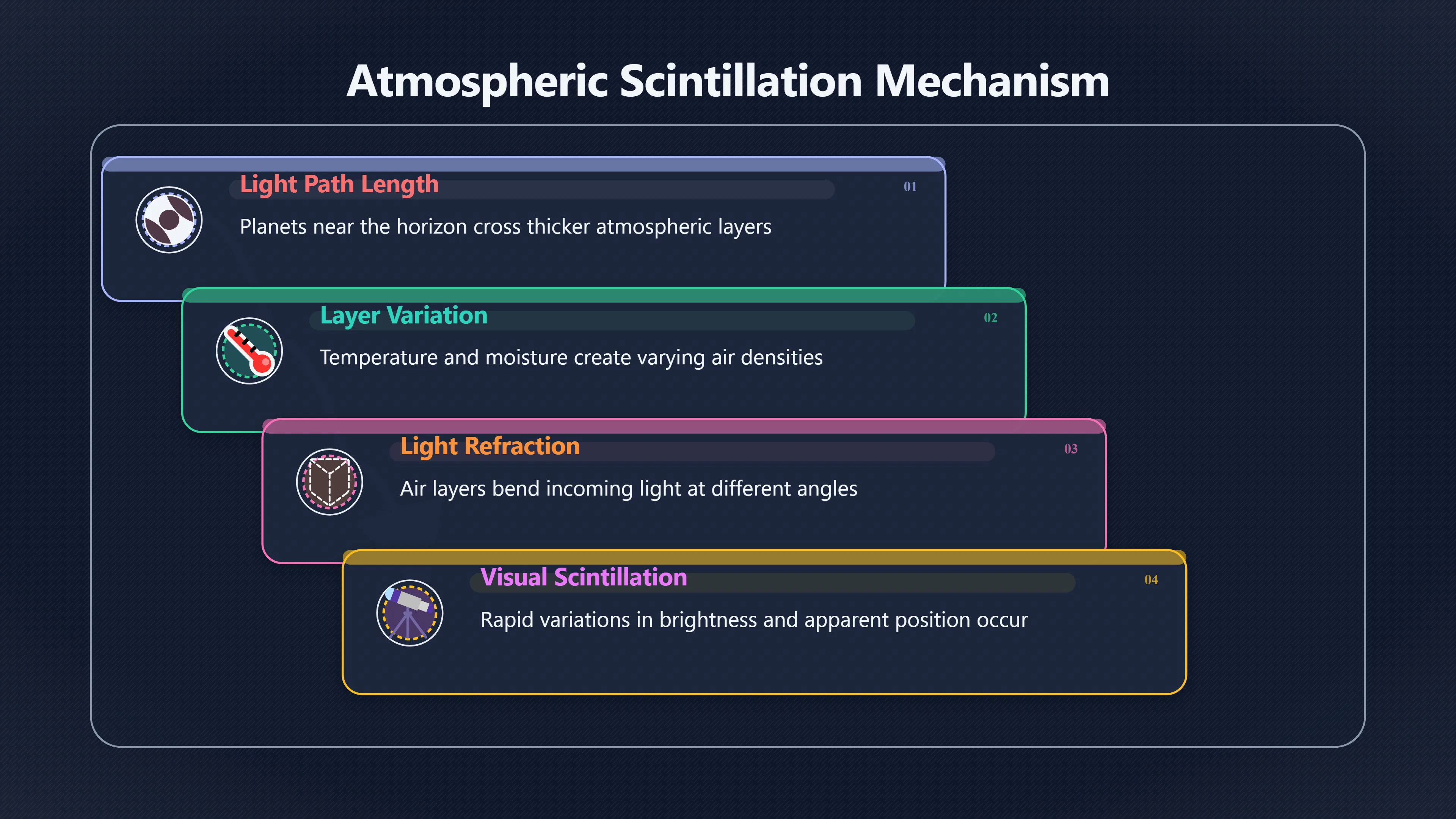
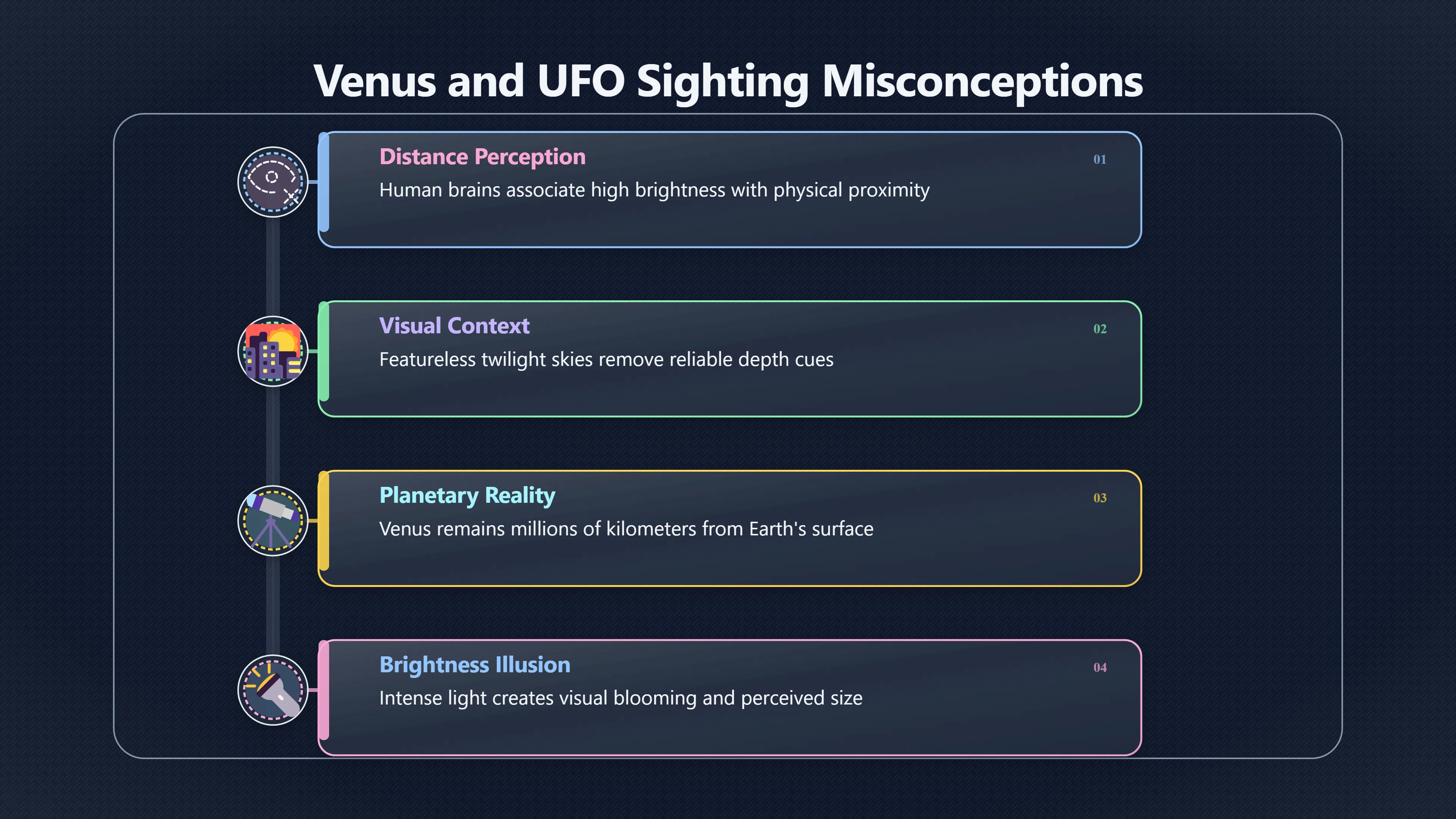
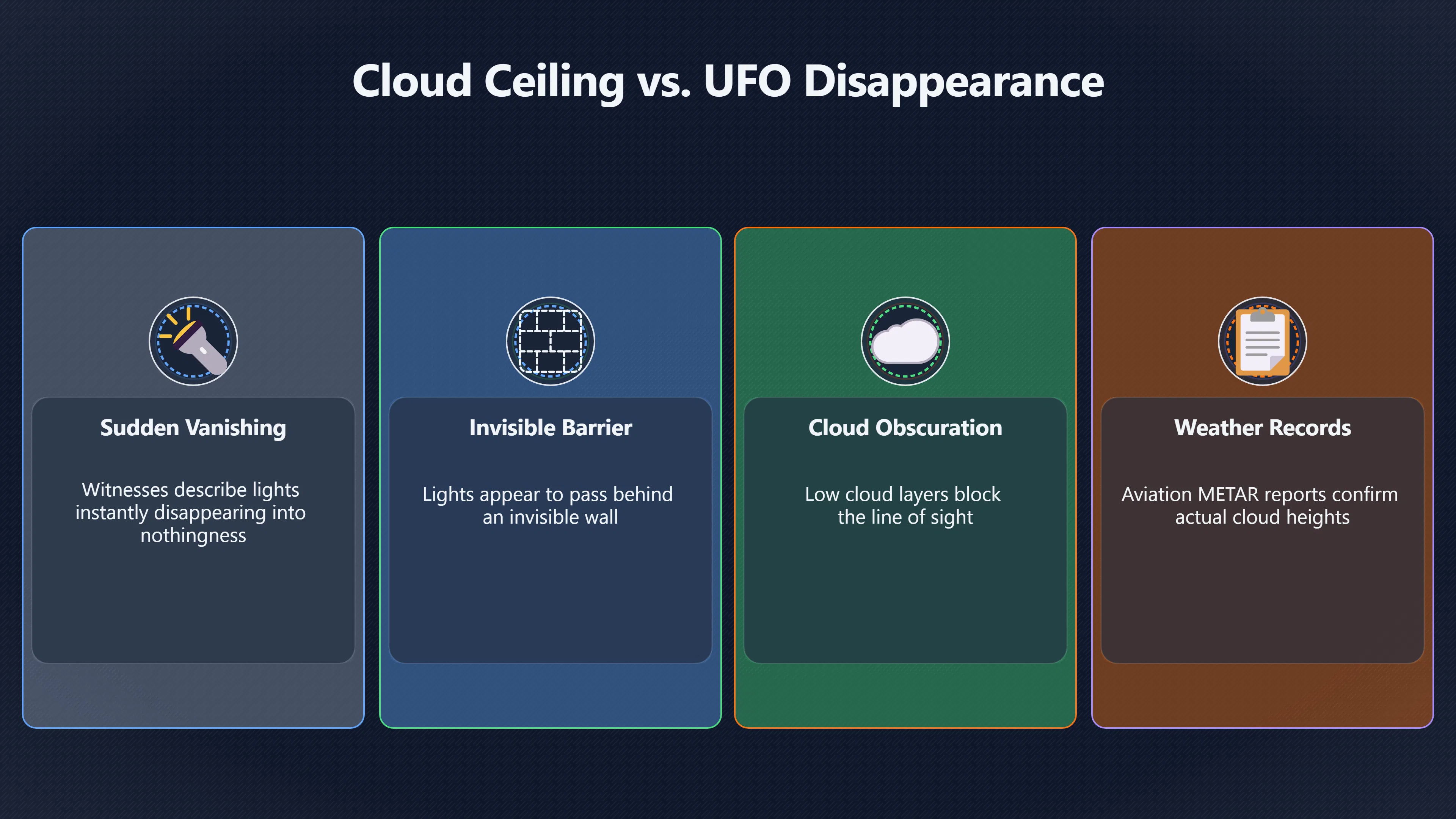
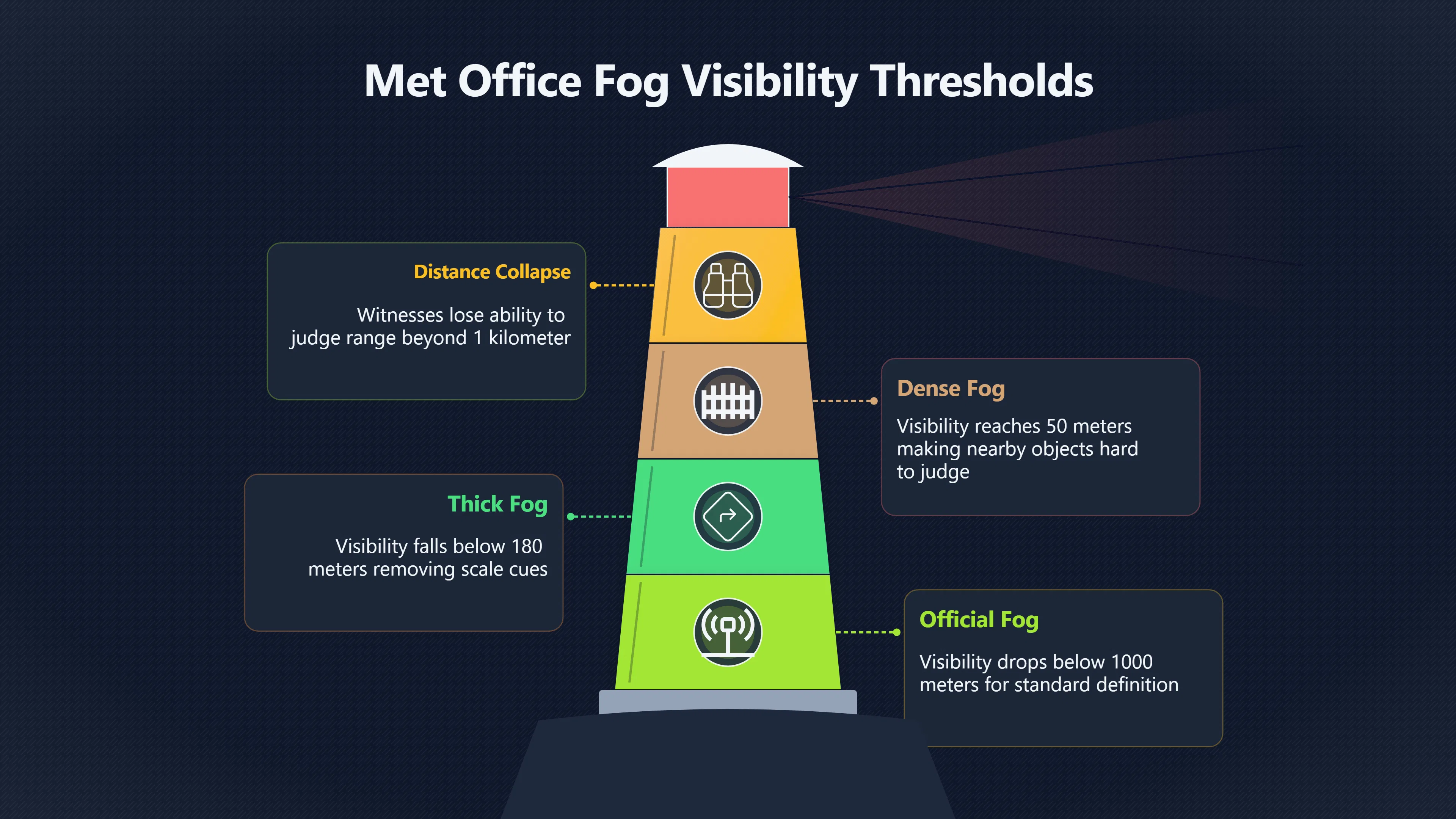
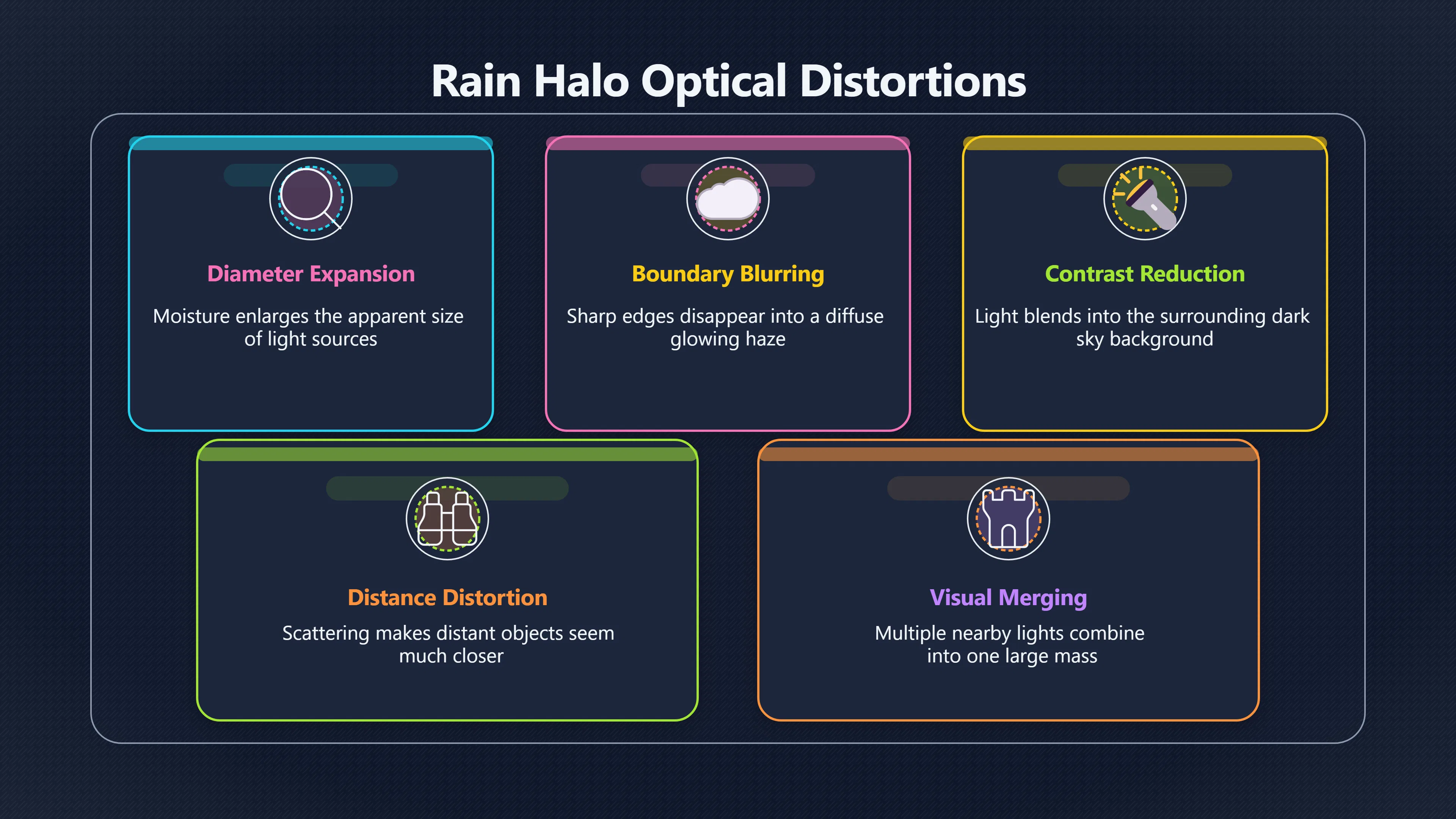

Expand all Collapse all IFOs An IFO is an “identified flying object”: a report that began as a UFO because the witness or sensor operator could not immediately identify it, but which later turns out to have a conventional cause. The most important point is that “UFO” or “UAP” is a status label, not an origin label. 241 pages Read more A Head On Aircraft Can Look Like A Stationary... The Stationary Light That Is Moving An aircraft flying toward an observer can appear fixed in the sky before suddenly changing brightness, direction or identity. 6 pages +Show subtopics Read more Constant bearing The geometry behind the hovering light illusion When an approaching aircraft keeps nearly the same bearing, it can seem stationary even while its range is shrinking. Read more Light reveal When a white orb turns into an aircraft A mysterious white light often becomes identifiable when the viewing angle exposes wingtip, tail, strobe, or anti-collision lights. Read more Approach paths When the same hovering light keeps coming back Repeated lights on the same line often point to an approach path, wind-driven runway changes, or traffic using a local corridor. Read more Landing lights Why landing lights can look like hovering UFOs A straight-in approach can turn bright landing lights into a fixed-looking white object until the aircraft's angle changes. Read more Delayed sound Why the silent UFO later sounds like a plane A head-on aircraft can look silent at first because distance, wind, terrain, traffic, and direction affect when engine sound is heard. Read more AARO What Modern UAP Reviews Resolve AARO's recent casework shows that balloons, birds, drones, satellites and aircraft still explain many current reports. 6 pages +Show subtopics Read more Case Closure How UAP Cases Become Identified Objects AARO turns some UAP into IFOs by matching thin reports against flight tracks, sensor context, satellite paths and other data. Read more Birds When Birds Turn Into Infrared Orbs Birds can become featureless or pulsing objects on infrared video when distance, compression and wing beats distort the image. Read more Reporting Bias Why AARO Reports Cluster Near Sensors AARO's dataset is shaped by where official aircraft, sensors, ranges and aviation reporting channels actually collect reports. Read more Balloons Why Balloons Still Fool Modern Sensors Balloons can look strange when drift, rotation, inflation state and sensor perspective hide their ordinary size and motion. Read more Starlink Why Starlink Can Look Like UAP Recent satellite launches can create structured lights that pilots report as unusual before orbital timing explains them. Read more Aircraft Lights Why Ordinary Aircraft Look So Strange Distant aircraft can seem silent, stationary or impossibly fast when viewed head-on, at dusk or through haze. 6 pages +Show subtopics Read more Sun Glints How Sun Glints Turn Planes Into UFOs Reflected sunlight from aircraft surfaces or contrails can create bright flashes, glowing streaks and sudden disappearances. Read more Blue Book What Blue Book Really Said About Aircraft Project Blue Book records show aircraft were a recurring explanation, but the unresolved residue still requires careful case-by-case analysis. Read more Nav Lights When Aircraft Lights Do Not Look Like Aircraft Red, green, white and flashing aircraft lights can be too faint, hidden or compressed by distance to identify a plane at first glance. Read more Head on Lights Why a Plane Can Look Like It Is Hovering A distant aircraft flying toward a witness can appear fixed in the sky until a turn reveals ordinary motion and lights. Read more Airport Approach Corridors Why Airport Approaches Produce Strange Lights Near airports, descending aircraft can hold nearly the same sky position while powerful lights make them seem closer or stranger than they are. Read more Atmosphere When Weather Makes Shapes in the Sky Cloud edges, haze, mirages and unusual atmospheric layers can distort ordinary lights into unfamiliar shapes. 6 pages +Show subtopics Read more Cloud shapes Can clouds draw a fake spacecraft? Patchy low cloud can hide and reveal parts of a light, making discs, triangles or moving structures appear in the sky. Read more Lenticulars The cloud that really looks like a saucer Lenticular clouds can look like smooth hovering craft because mountain waves hold their lens shape in place. Read more Haze halos When haze makes lights look enormous Haze, fog and humid air can make ordinary lights bloom into large glowing objects with no clear outline or distance cue. Read more Mirage lift When the horizon puts objects in the sky Temperature inversions can bend light so ships, coastlines or lights appear raised, stretched or suspended above the horizon. Read more Twinkling stars Why a star can look alive Low stars and planets can flash colours, wobble and seem active when their light crosses turbulent air near the horizon. Read more Balloons Why Balloons Become Flying Saucers Balloons can look metallic, glowing or saucer-shaped when sunlit, high, slow and hard to judge for distance. 6 pages +Show subtopics Read more Launch Checks How Investigators Check Balloon Sightings Launch schedules, tracks, radiosonde signals, and wind profiles can turn a vague balloon guess into a testable explanation. Read more Science Balloons The Giant Balloons That Do Look Weird Large research balloons can carry heavy gondolas, parachutes, and instruments that create shapes unlike ordinary aircraft. Read more Wind Drift When Wind Drift Looks Like Control A balloon can seem to hover, turn, accelerate, or vanish when changing wind layers and viewing angles hide its real drift. Read more Sky Scale Why Balloons Look Bigger Than They Are High-altitude balloons can look huge, fast, or motionless because viewers have few reliable sky cues for distance and scale. Read more Roswell Why Roswell Made Balloons Controversial Roswell shows why balloon explanations can be both plausible and distrusted when secrecy, debris, and later memories collide. Read more Birds How Birds Become Fast UFOs Birds can appear as bright dots, dark discs or infrared targets when distance, scale and camera angle are unclear. 6 pages +Show subtopics Read more Pelican glints Can Pelicans Look Like Silver Discs? Large white pelicans can flash, vanish and change shape in ways that overlap with classic metallic UFO descriptions. Read more Field checks How Investigators Test a Bird Explanation A bird explanation is strongest when it matches range, season, route, weather, motion and visible behaviour better than alternatives. Read more Flocks When Bird Flocks Become Flying Formations Flocks can look like rows of lights, chevrons or one large object when distance hides the gaps between birds. Read more AARO IR birds When Military Infrared Footage Shows Birds Modern military infrared clips can still show ordinary birds as strange heat sources when wings and scale are unclear. Read more Parallax Why Nearby Birds Can Look Impossibly Fast A nearby bird can seem to race across video when the camera platform is moving faster than the object itself. Read more Blue Book What Blue Book Teaches About IFOs Project Blue Book shows how many reports became ordinary identifications while a smaller residue remained unexplained. 6 pages +Show subtopics Read more IFO Pattern How UFO Reports Became IFOs Most Blue Book sightings were resolved by matching witness reports to ordinary sky objects seen under confusing conditions. Read more Traffic Checks The Hidden Traffic Behind UFO Sightings Blue Book's strongest identifications often came from comparing sightings with flight traffic, balloon plots, and satellite tracking. Read more Three Labels What Did Unidentified Really Mean? Blue Book's three labels separated explained cases, weak reports, and better-documented sightings that still resisted identification. Read more Report 14 What the Big Blue Book Study Really Measured Special Report No. Read more Sky Objects When Planets Looked Like UFOs Planets, meteors, fireballs, comets, and other sky objects often became UFO reports when weather or motion cues distorted perception. Read more Contrails Why Jet Trails Glow Like UFOs Contrails and jet exhaust near sunrise or sunset can glow red, orange or white while the aircraft itself is hard to see. 6 pages +Show subtopics Read more Missile illusion When a Jet Trail Looks Like a Missile A level aircraft flying away can make its contrail seem to rise vertically like a missile plume when viewed nearly end-on. Read more Broken trails When Contrails Look Like Structured UFOs Multiple engines, humidity gaps, shadows, and wind shear can make contrails look like rods, segments, lanes, or several lights. Read more Afterburners When Jet Exhaust Becomes the Bright Object At night or twilight, a military jet's afterburner can make the exhaust plume more visible than the aircraft itself. Read more Fireball trails Why Some Fireballs Are Really Jet Trails Low-angle sunlight can turn a short aircraft contrail into a red-orange streak that looks like a meteor or burning object. Read more Hidden aircraft Why the Plane Vanishes but the Trail Glows The visible UFO may be the sunlit ice cloud, while the aircraft itself is too small, dark, distant, or glare-hidden to notice. Read more Drones When a Drone Becomes a UFO Consumer and commercial drones add new patterns of lights, hovering and manoeuvres to modern sighting reports. 6 pages +Show subtopics Read more Drone Rules Can drone rules help explain UFO sightings? Registration, Remote ID and night-light rules do not solve every case, but they explain why some drones are visible and traceable. Read more New Jersey How the New Jersey drone scare snowballed The late-2024 East Coast sightings show how real drones, aircraft, stars and public attention can merge into one confusing story. Read more Not a Drone When a UFO probably is not a drone Long duration, high altitude, steady sky-crossing motion and no plausible launch area can point away from a small drone explanation. Read more Light Patterns When drone lights look stranger than aircraft Blinking, coloured and anti-collision lights can make ordinary drone flights look stranger than they are from the ground. Read more Hovering Lights Why drone lights can look frozen in place A nearby drone can seem like a silent object parked in the sky when distance, scale, sound and launch point are unclear. Read more First Checks What to Check Before Calling It a UFO A simple checklist can rule out many IFOs before a report is treated as unusually strong. 6 pages +Show subtopics Read more Flight tracks Can a flight tracker explain the sighting? Public flight tracks can identify many strange lights, but gaps in coverage mean a non-match is not proof of anomaly. Read more Weather checks Did the weather make it look strange? Cloud, haze, fog, wind and visibility records can change a UFO report from unexplained to ordinary atmosphere plus ordinary light. Read more Sky maps Was it already in the sky? A fixed bright light or silent moving point often becomes less mysterious when the sky map is rebuilt for the exact time and place. Read more Direction notes Where exactly were they looking? A sighting becomes testable when the witness captures where they stood, where they looked and how high above the horizon the object appeared. Read more Original files Why the original UFO file matters The original file, not a cropped social-media copy, often contains the timing, camera and context needed to test a claim. Read more Flares Why Flares Look Like Hovering Craft Illumination flares can hang, drift, brighten and fade in ways that resemble structured aerial objects at night. 6 pages +Show subtopics Read more Ranges How ranges reveal flare sightings Range locations, firing notices and exercise schedules can turn a vague night-light report into a testable flare hypothesis. Read more Phoenix Lights What flares explain in Phoenix The later Phoenix light display fits a military flare explanation, but the wider 1997 witness record is not one simple event. Read more San Diego When training flares go viral San Diego's repeated offshore flare sightings show how short videos can become UFO stories before official answers catch up. Read more Hovering flares Why falling flares seem to hover A slow-burning parachute flare can seem fixed in the sky when distance, darkness and terrain remove normal motion cues. Read more Fade outs Why flare lights wink out Flares can vanish one by one as they burn out or pass behind terrain, haze or marine clouds, mimicking lights on a craft. Read more Flight Tracking How Flight Data Solves UFO Sightings Flight tracks can turn a mysterious light into a known aircraft when the sighting time, place and direction are recorded well. 6 pages +Show subtopics Read more Appearance Clues Do the lights match the flight track? Lights, glare, infrared shape, contrails and disappearance patterns can make or break a proposed aircraft explanation for a UFO report. Read more Chile IR Case The infrared UFO that matched an airliner The Chilean Navy infrared video shows how flight records, camera motion and contrails can turn a famous unresolved case into a testable aircraft... Read more Sight Lines Was the plane really where they looked? The strongest aircraft identifications test whether a tracked plane was actually in the witness's viewing direction, not just nearby on a map. Read more ADS B Data What flight trackers really know ADS-B and multilateration can identify aircraft positions, speeds and headings, but each data source has limits investigators must understand. Read more Missing Tracks When no flight track appears on the map A blank flight map does not prove an unknown object, because public tracking can miss filtered, delayed, military or poorly covered aircraft. Read more Hoaxes When UFO Reports Are Manufactured Some IFOs begin as deliberate tricks, staged photos or misleading claims, making verification essential even when witnesses seem sincere. 6 pages +Show subtopics Read more MJ 12 Papers Can Leaked UFO Documents Be Trusted? The Majestic 12 papers show why supposed official UFO documents still need provenance, format checks and corroboration. Read more Roswell Slides How Promotion Inflated the Roswell Slides The Roswell Slides episode shows how weak provenance and dramatic promotion can turn a poor claim into a public spectacle. Read more Morris County When a UFO Hoax Creates Real Witnesses The Morris County lights show how a deliberate prank can create real public alarm and honest eyewitness reports. Read more Hoax Tactics Why Convincing UFO Hoaxes Look Imperfect Successful UFO hoaxes often imitate ordinary weak evidence: short clips, ambiguous lights, borrowed authority and urgent framing. Read more Missing Files Why UFO Images Need Original Files A UFO image carries far less weight when the original file, location, time and upload history cannot be checked. Read more Infrared Why Infrared UFO Videos Mislead Infrared contrast, uncertain range and camera motion can make ordinary objects look faster or stranger than they are. 6 pages +Show subtopics Read more Go Fast Did Go Fast really show a fast object? The GoFast video shows why a fast-moving dot on an infrared display can be a slow object seen from a moving aircraft. Read more Puerto Rico Did the Puerto Rico object enter the water? The Aguadilla infrared case shows how drifting objects, sensor geometry and water reflections can create a dramatic transmedium impression. Read more Evidence package What would make infrared UFO footage stronger? A stronger infrared UFO evidence package needs synchronized observations, platform data, calibration and environmental context. Read more Thermal contrast When infrared brightness fools UFO viewers Infrared brightness can reflect sensor settings, emissivity and background contrast rather than an object's true heat or identity. Read more Range Why range makes or breaks UFO speed claims Without reliable range, an infrared UFO clip cannot turn screen motion into trustworthy size, altitude or speed. Read more Insects The Tiny Things Cameras Make Huge Insects, dust and nearby objects can cross lenses so close and fast that they seem like distant high-speed craft. 6 pages +Show subtopics Read more Flying Rods Are Flying Rods Really Camera Bugs? Flying rods and skyfish videos often come from insects or birds stretched into strange shapes by exposure and frame timing. Read more Denver Case The Denver UFOs That Looked Like Bugs The Denver UFO video shows how a mystery can shrink when the same motion is tested as small insects close to the camera. Read more Range Checks What Evidence Rules Out Camera Bugs? The strongest UFO videos reduce near-lens doubt with independent range clues, longer footage and preserved metadata. Read more False Speed Why Bugs Can Look Impossibly Fast A tiny insect close to a camera can look like a distant craft making impossible moves when its range is only assumed. Read more Glowing Orbs Why Night Cameras Create UFO Orbs Night cameras can light up insects, dust and droplets near the lens until ordinary particles look like self-lit UFO orbs. Read more Lanterns The Orange Lights That Start UFO Reports Sky lanterns and similar drifting lights can create clustered, silent reports that feel stranger than their simple cause. 6 pages +Show subtopics Read more Mo D surge The lantern craze that flooded UFO reports British UFO files from 2008-09 show how the Chinese lantern craze helped turn orange light clusters into a reporting wave. Read more Formations When drifting lanterns look like a formation Groups of lanterns released together can hold loose spacing long enough to look like triangles, fleets or a single silent craft. Read more Flare confusion Why lanterns can look like distress flares The same orange lanterns that create UFO reports can also trigger emergency calls when they resemble flares over water or coastlines. Read more Wind drift Why lanterns seem to move under control A lantern can seem to hover, turn or move against the wind when upper-level air currents differ from the breeze on the ground. Read more Colour clues Why orange UFO lights often flicker and fade Warm orange colour, flame flicker and uneven fading are often the strongest clues that a mysterious night light was a sky lantern. Read more Lens Flare When Cameras Invent Extra Lights Lens flare and internal reflections can create moving or repeating lights that track the camera rather than the sky. 6 pages +Show subtopics Read more Motion tests The camera moves that expose lens flare Small camera movements can reveal whether a strange light is fixed in the world or sliding with the lens system. Read more Gimbal glare Was Gimbal rotation a camera effect? The Gimbal debate shows how an infrared-bright shape can look like a rotating craft when glare and camera geometry are contested. Read more Data gaps Why better UAP data matters for flare claims NASA's UAP study highlights why poor calibration, missing metadata and few simultaneous measurements make flare explanations harder to prove or... Read more Night videos Why night UFO videos fool the eye Dark skies and tiny bright lights push phone cameras into glare, focus hunting, compression and misleading apparent motion. Read more Green orbs Why phone photos make green UFO orbs Green orbs near the Sun or bright lamps often move like internal reflections, not objects in the sky. Read more Mass Sightings Why Groups Can Share One Mistake Multiple witnesses can strengthen a case, but shared viewing conditions and social cues can also spread the same misinterpretation. 6 pages +Show subtopics Read more Independent Records What makes many UFO witnesses useful? Mass sightings become more useful when witness accounts are separated and matched to photos, radar, flight data, weather and sky positions. Read more Belgian Wave What the Belgian UFO wave really shows The Belgian wave shows how mass sightings can combine sincere reports, official attention, weak memories and later hoax material. Read more Rocket Spirals When rocket spirals become UFO scares Rocket exhaust and fuel vents can form glowing spirals or plumes that look exotic because they expand, twist and drift overhead. Read more Crowd Memory Why crowds remember UFO sightings together Crowds can witness the same real stimulus while also borrowing details from each other as the event unfolds. Read more Starlink Trains Why Starlink trains look like UFO formations Newly launched satellite trains can produce dramatic lines of lights that generate sincere reports across many towns or flights. Read more Meteors When Fireballs Become UFOs Fast streaks, fragmenting debris and glowing trails can produce dramatic reports that last only seconds or minutes. 6 pages +Show subtopics Read more Report checks How witness reports become a sky map Meteor networks, public reports, camera records and sensor data can turn one witness's unknown object into a mapped atmospheric event. Read more Duration clues Was that flash too fast to be a craft? A few seconds of brilliant motion can separate a natural fireball from slower aircraft, drones, satellites or re-entering debris. Read more Debris fleets When one falling object looks like a fleet A breaking rocket body or satellite can create a slow chain of glowing fragments that looks like coordinated objects flying together. Read more Delayed booms Why the boom came after the flash A fireball can flash silently and then produce booms or shaking minutes later because sound reaches witnesses long after the light. Read more Winchcombe Fireball The Winchcombe fireball of 28 February 2021 is one of the strongest modern examples of how an apparently mysterious aerial phenomenon can be... Read more Missing Data Unsolved Does Not Always Mean Strange Many reports stay unresolved because essential facts are missing, not because investigators found exotic evidence. 6 pages +Show subtopics Read more Blue Book data Blue Book's overlooked UFO data category Blue Book separated weak open reports from stronger unidentified cases, a distinction still useful for reading UFO files. Read more True unknowns What makes a UFO truly unidentified The strongest unresolved cases are not the strangest stories, but the ones with enough facts to test normal explanations. Read more Range errors When distance makes UFOs look impossible Without distance, a nearby insect, drone, balloon, or aircraft can seem impossibly large, fast, or strange. Read more Phone clips Why clear UFO videos can still fail A sharp-looking clip can still be weak evidence if it lacks location, direction, range, camera settings, or corroboration. Read more Timestamps Why UFO reports need an exact time An exact time can decide whether a strange light matches an aircraft, satellite, meteor, launch, or planet. Read more NASA Study Why Better UFO Data Matters NASA's UAP study frames the problem as evidence quality: better sensors, metadata and reporting are needed before firm claims can be made. 6 pages +Show subtopics Read more Phone networks Could phones make UFO reports scientific? Networked phone observations could turn isolated blurry clips into time-stamped, location-aware evidence from multiple viewpoints. Read more Civilian reports What makes a UFO report useful? A useful civilian report needs more than a story, because time-stamped location, direction, camera settings, and environmental context make... Read more Baseline library What normal skies look like to UAP sensors A baseline library of normal balloons, birds, satellites, glints, and drones helps investigators see when a report is unusual and when it only looks... Read more Sensor artefacts When the UFO is inside the camera NASA's data-first approach shows why glare, tracking errors, compression, and sensor limits must be checked before a recorded feature becomes a sky... Read more Missing metadata Why missing metadata creates false UFO mysteries Many sightings stay unidentified because the original report lacks the time, location, direction, sensor details, or weather needed to test ordinary... Read more Parallax The Speed Illusion in UFO Footage Parallax can make a slow or ordinary object appear to race across the scene when the observer or camera is moving. 6 pages +Show subtopics Read more GOFAST Did GOFAST Really Show Extreme Speed? The GOFAST footage shows how range assumptions can turn ordinary angular motion into a dramatic-looking UFO speed claim. Read more Video Checks How to Check a UFO Speed Claim Simple geometry checks can reveal whether apparent speed comes from the object, the observer, or the camera system. Read more Moving Camera When the Camera Creates the UFO Motion A balloon, bird, or distant aircraft can seem to dart across the scene when the camera platform is doing most of the moving. Read more Distance Cues Why Empty Backgrounds Fool UFO Viewers Open sky, haze, clouds, and ocean horizons often remove the visual references needed to judge an object's true range and speed. Read more Zoom Errors Why Zoom Makes UFOs Look Faster Zoom, tracking, cropping, and stabilization can hide camera movement while magnifying tiny angle changes into dramatic screen motion. Read more Pilots Why Pilots Can Misidentify UFOs Pilots bring useful expertise, but speed, workload, unfamiliar lighting and limited context can still lead to mistaken identifications. 6 pages +Show subtopics Read more Safety Reports What Pilot UFO Reports Actually Prove Pilot reports are strongest when they document a possible hazard, not when they try to identify a distant object from brief viewing. Read more Eglin Case What the Eglin UAP Case Tested The Eglin case shows how investigators can respect a pilot's hazard report while checking geometry, imagery, radar and sun angle. Read more Sensor Limits When Better Sensors Still Leave Doubt Radar, infrared and electro-optical data can strengthen a report, but sensor limits and missing metadata can still block identification. Read more Night Lights Why Night Lights Fool Trained Pilots Darkness strips lights of context, making aircraft, stars, satellites and ground lights look stranger than they are. Read more Speed Errors Why UFOs Look Faster Than They Are A pilot can see an object honestly and still overestimate its speed when distance, wind and observer motion are unknown. Read more Radar When Radar Sees a UFO That Isnt There Radar can produce false or ambiguous returns from clutter, weather, equipment limits or unusual propagation conditions. 6 pages +Show subtopics Read more Bio Clutter Can Birds and Bugs Look Like UFOs on Radar? Birds, insects, rain, and ice can all create real radar returns that are easy to mistake for aircraft when context is missing. Read more Blips vs Tracks Is One Radar Blip Really a UFO? A single blip, a short plot sequence, and a multi-sensor track are not equally strong evidence for an unusual object. Read more Radar Ducting When the Atmosphere Makes Radar See Objects Atmospheric refraction can bend radar beams toward the ground, turning ordinary terrain or clutter into convincing UFO-like blips. Read more Missing Data Why Radar UFO Evidence Often Needs Metadata Without calibration records, weather context, sensor settings, and timing data, a radar anomaly may remain unresolved for ordinary reasons. Read more Wind Turbines Why Wind Farms Can Confuse Airport Radar Rotating turbine blades can generate clutter, false tracks, masking, and track seduction on some primary surveillance radars. Read more Reflections The UFO Inside the Glass Window, windscreen and cockpit reflections can place a real-looking light in the sky where no outside object exists. 6 pages +Show subtopics Read more Cockpits Can Pilots Be Fooled by Cockpit Glass? Cockpit instruments, cabin lighting and layered windscreens can create outside-looking lights even for trained observers. Read more Photo Checks How to Test a UFO Reflection A few practical checks can reveal whether a photographed light belongs outside the glass or inside the reflection path. Read more Cabin Videos The UFO Hidden in the Plane Window Phone videos through aircraft windows can capture cabin lights, screens, scratches and moisture as if they were objects outside. Read more Night Lamps When a Room Light Becomes a UFO Bright indoor lights can look like crisp objects in the night sky when a window overlays the room onto the view outside. Read more Windscreens Why Dashboard Lights Can Look Alive Dashboard lights and phone screens can appear to slide, hover or pace a car because the observer and glass are moving together. Read more Rocket Plumes The Strange Clouds Rockets Leave Behind Rocket launches and missile tests can create expanding luminous plumes that look unlike ordinary aircraft or weather. 6 pages +Show subtopics Read more Norway Spiral How a Failed Rocket Made a Sky Spiral The Norway spiral remains a powerful example of how a failed or spinning rocket stage can create a regular, unnatural-looking sky pattern. Read more Launch Checks How to Check a UFO Against a Launch Launch-related sightings are unusually testable when the witness time, direction and location can be compared with launch records and sky conditions. Read more Trident Test The Missile Test That Looked Like a UFO The 2015 Trident missile test shows how a real military launch can become a fast-moving UFO story when advance context is limited. Read more So Cal Launches Why Southern California Keeps Seeing Rocket UFOs Southern California is a recurring launch-plume hotspot because Vandenberg and Pacific missile tests are visible to millions of unaware observers. Read more Twilight Plumes Why Twilight Rocket Plumes Look So Strange Twilight launches can turn ordinary rocket exhaust into huge glowing cones, fans and jellyfish shapes seen far from the launch site. Read more Satellites Why Satellites Surprise Night Watchers Satellites, especially trains of bright moving points, can look coordinated and unfamiliar to people who rarely watch the night sky. 6 pages +Show subtopics Read more Tracker checks How to check a UFO against satellites A useful satellite check depends on exact time, location, direction, elevation and enough detail to compare the report with predicted passes. Read more Satellite clues Was that silent light a satellite? A smooth silent light can look strange, but timing, steady motion, fading and lack of navigation lights often point to a satellite. Read more Flares When satellite glints look like manoeuvres Sunlight glints from satellite surfaces can make lights brighten, vanish, reappear or seem to form odd shapes in one patch of sky. Read more Starlink trains Why do Starlink trains look planned? Fresh Starlink deployments can appear as a disciplined row of bright lights before the satellites spread into less obvious orbits. Read more Gallup case Why pilots can misread satellite flares A 2022 pilot report near Gallup shows how trained observers can still be surprised when satellite flare geometry lines up from an aircraft. Read more Searchlights How Searchlights Paint UFOs in Clouds Searchlights can create moving patches on clouds that appear to dart, circle or form patterns in the sky. 6 pages +Show subtopics Read more Beam rules Can airspace records solve beam sightings? Airspace rules, event notices and safety complaints can help identify whether dramatic sky beams came from a regulated display. Read more Blue Book How official UFO records handled searchlights Official UFO files treated searchlights on scattered clouds as one ordinary cause of disc-like moving lights. Read more Event beams Was the UFO really an event searchlight? A distant promotion or night-time event can make cloud lights look local, silent and unexplained to witnesses miles away. Read more Looping lights When repeated loops look like intelligent control Programmed arcs, loops and crossing beams can look like controlled formations when only the illuminated cloud patches are visible. Read more Cloud screens Why clouds make searchlights look solid Low or broken cloud can act like a projection screen, making a simple beam appear as a disc, oval or cluster of moving objects. Read more Sensor Operators When Sensors Need Human Context Sensor operators may record real anomalies while still needing calibration, range data and cross-checks before identifying an object. 6 pages +Show subtopics Read more Real but unknown Real object does not mean solved object A sensor clip can show a physical object while still lacking enough range, detail or comparison data to say what the object was. Read more Radar ducting When weather bends radar into UFOs Temperature inversions and anomalous propagation can put convincing radar blips on a screen without proving an exotic object was present. Read more Display cues Why expert screens can still mislead Skilled operators may notice unusual tracks quickly, but screens can compress distance, angle and motion in ways that invite wrong first impressions. Read more Go Fast Why Go Fast looked faster than it was The GoFast case shows how a real sensor track can look extraordinarily fast until range, aircraft motion and viewing geometry are rebuilt. Read more Old records Why old radar cases stay mysterious Older radar-visual UFO cases can stay unresolved because later reviewers inherit summaries instead of raw tracks, weather data and equipment logs. Read more Short Clips Why Short UFO Videos Are Hard to Trust Short clips often omit the context needed to judge distance, direction, camera movement and ordinary explanations. 6 pages +Show subtopics Read more Useful Clips What Makes a UFO Clip Useful The strongest UFO clips are not the most dramatic ones, but the ones tied to time, place, direction, metadata, and outside records. Read more Missing Context What the Missing Minutes Can Reveal A genuine UFO clip can still be misleading when the horizon, before-and-after footage, sound, and camera direction are missing. Read more Compression When the Trail Is in the Video Video compression can add false smears, halos, wakes, or trails around ordinary objects in low-detail footage. Read more Parallax Why Fast UFOs May Not Be Fast A dot that seems to race across the screen may be slow, distant, nearby, or stationary once camera motion and range are considered. Read more UFO Orbs Why Night Lights Become Orbs Autofocus, digital zoom, exposure changes, and stabilization can turn stars, aircraft lights, or reflections into pulsing orbs. Read more Size Errors Why Honest Witnesses Misjudge UFOs Without reliable distance cues, sincere observers can badly misjudge an object's size, altitude and speed. 6 pages +Show subtopics Read more Silent Objects Does Silence Mean A UFO Was Huge? Silence can make an object seem stranger, but it does not prove that a light or shape is enormous or far away. Read more Angular Clues The Better Way To Describe A UFO Reports are stronger when witnesses describe angles, timing, direction, and reference points before estimating size or speed. Read more Balloons When A Balloon Becomes A Giant Craft Reflective balloons can appear like large controlled objects until binoculars or distance context reveal their true scale. Read more Fireballs Why Fireballs Look Closer Than They Are Bright meteors can feel close to the ground even when they are tens or hundreds of miles away. Read more Point Lights Why One Light Can Look Like a Craft A single bright light in the sky can look solid, close, huge, or fast even when it has no reliable scale cues. Read more Sky Charts How to Check a UFO Against the Sky Sky charts and planet positions can quickly test whether a bright light matches Venus, Jupiter, Mars or a star. 6 pages +Show subtopics Read more Stellarium Use How to Rebuild a UFO Sky A planetarium app can recreate the sky for a witness location, time and direction, turning vague reports into testable comparisons. Read more When Investigators Compare A UFO Report With An... Was the UFO Really Venus? Venus can look like a hovering UFO when it shines low in twilight, especially if a chart places it exactly where witnesses looked. Read more Bright Objects When Jupiter or Sirius Looks Unidentified Jupiter, Sirius and other bright objects can mimic unusual lights unless their chart positions, brightness and duration are checked together. Read more Horizon Haze Why Low Planets Seem to Move Objects near the horizon can shimmer, change colour or appear to drift, making a fixed planet seem like a moving craft. Read more Missing Details Why Some UFO Charts Cannot Decide Without exact time, direction and elevation, even accurate sky charts may be unable to confirm or reject a planet explanation. Read more Stars Why Stars Flash Like Machines Low stars can flash red, green and white as atmospheric turbulence bends their light across the horizon. 6 pages +Show subtopics Read more Sky Checks How to Check a Flashing Light Against the Sky A sky map using the exact date, time, place and direction can often test whether a flashing light was a known star or planet. Read more Vanishing When a Star Suddenly Switches Off A star that fades or switches off behind thin cloud can feel like an object cloaking, retreating or accelerating away. Read more Low Horizon Why Low Stars Seem to Hover and Jerk A low star can seem to hover, jerk or pulse because its light crosses a long turbulent path through the atmosphere. Read more Stars vs Planets Why Planets Usually Twinkle Less Than Stars Planets usually look steadier than stars, but bright low planets can still flash and confuse witnesses. Read more Sirius Why Sirius So Often Looks Like a UFO Sirius can look like a pulsing red, green and white object when it sits low in turbulent air. Read more Status Labels UFO Does Not Mean Alien UFO and UAP are status labels for unresolved identification, not proof of extraterrestrial craft or unknown physics. 6 pages +Show subtopics Read more AARO Claims What AARO Says Evidence Still Has Not Shown AARO separates unresolved reports from verified origin claims, keeping prosaic explanations and extraordinary claims on different evidence standards. Read more Label Changes When Does a UFO Stop Being a UFO? A sighting can move from unidentified to identified when new timing, location, sensor, or comparison data support a prosaic match. Read more NASA Data Why NASA Focused on Better UAP Data NASA's UAP study shifted attention from speculation to the need for standardized, reproducible observation data. Read more Stigma Why UFO Wording Changes What People Report Loaded UFO language can discourage serious reporting, while clearer UAP wording can help aviation and defense systems collect better data. Read more Unresolved Cases Why Unresolved Does Not Mean Alien Unresolved UAP cases may reflect missing records or weak data rather than evidence of extraterrestrial craft. Read more Strong Cases What Makes a UFO Report Harder to Explain A report becomes more interesting when common explanations are tested against specific data and still fail to fit. 6 pages +Show subtopics Read more GEIPAN Not All Unidentified UFO Cases Are Equal GEIPAN's split between missing-data cases and investigated unknowns offers a clearer way to avoid treating every unexplained UFO report as equal. Read more Time checks The Details That Make UFO Reports Testable A precise time, location, direction, elevation, and duration can turn a strange story into a testable case against flights, satellites, planets, and... Read more Lakenheath The Radar Visual Case That Would Not Settle The Lakenheath-Bentwaters incident shows why radar-visual UFO cases can be unusually interesting while still vulnerable to propagation and... Read more Multi sensor When Do Multiple UFO Records Really Agree? Multi-sensor cases become stronger only when radar, infrared, visual, and witness records converge without sharing the same failure mode. Read more Nimitz Why the Nimitz Tic Tac Still Matters The Nimitz case remains debated because pilot testimony, military context, radar claims, and infrared video create a structured but incomplete... Read more UK Files What the UK UFO Files Reveal The UK MoD files show the practical limits of public sighting collection and why a hotline can gather many weak reports. 6 pages +Show subtopics Read more Lantern surge Did lanterns fuel the Mo D UFO surge? A rise in orange-light reports showed how lantern releases, media attention and easy reporting could inflate UFO sighting numbers. Read more Light reports How ordinary lights became Mo D UFO reports The MoD sighting lists show how distance, speed and formation can be misread when a witness sees only lights in the sky. Read more Condign What Project Condign really asked Project Condign tested whether decades of UAP reports justified intelligence interest, not whether every sighting could be solved. Read more Desk closure Why Britain shut its UFO desk The UFO desk closed because decades of reports had not shown a defence threat, while the workload kept growing. Read more Hotline data Why easy UFO reporting made weak evidence The MoD hotline made sightings easy to report, but most entries lacked the measurements needed to identify what witnesses saw. Read more Unresolved Cases Why Some UFO Cases Stay Open Some cases remain open because evidence is incomplete, conflicting or too ambiguous for a confident ordinary identification. 6 pages +Show subtopics Read more Active Archives Can Old UFO Reports Become Useful Later? An unresolved case may become useful later when analysts compare it with clusters, patterns and newly available records. Read more Weak Files When Is Unresolved the Honest Answer? A weak UFO file can be more honest as unresolved than as a forced identification with evidence it does not actually support. Read more Starlink Gaps Why Satellite Lights Still Leave Open Cases Even common satellite lights can remain unresolved when reports lack altitude, direction, imagery or reliable timing. Read more Witness Limits Why Sky Witnesses Disagree So Often Distance, speed, size and silence can all be misjudged in open sky, turning ordinary objects into unresolved reports. Read more Sensor Context Why UFO Videos Need More Than Footage Military or aviation sensor footage can preserve useful evidence, but without range, calibration and platform motion it may still mislead. Read more Venus Is That UFO Really Venus? Venus, Jupiter and Mars can appear to pulse, change colour or hover when viewed low through haze or moving cloud. 6 pages +Show subtopics Read more Sky Checks How to Test the Planet Explanation A planet explanation becomes stronger only when the reported time, direction, elevation, duration, and motion match the sky. Read more Formations When Planets Look Like a Formation Venus, Jupiter, Mercury, Mars, and the Moon can line up in twilight and look like an arranged formation of strange lights. Read more Following Lights Why a Planet Seems to Follow You A fixed planet can seem to follow a car or drift against buildings when foreground objects move across the line of sight. Read more Color Shifts Why Low Planets Seem to Change Colour Low planets can pulse, redden, or flash colours when their light passes through turbulent air, haze, and thin cloud. Read more Bright Venus Why Venus Can Look Too Close Venus can look unnaturally close because its brightness overwhelms the weak distance cues available in twilight skies. Read more Weather Records Weather Clues That Explain Strange Lights Haze, fog, cloud layers and visibility records often decide whether an ordinary object would look distorted or hidden. 6 pages +Show subtopics Read more Cloud vanish Did the UFO vanish into cloud? Low or broken cloud can make a steady light seem to blink out, vanish upward or pass behind an invisible barrier. Read more Blue Book The weather questions Blue Book needed answered Project Blue Book treated missing weather details as a reason a UFO report could remain impossible to evaluate. Read more Fog limits When fog makes UFO distances fall apart Fog can make a nearby ordinary light look distant, large or suddenly appearing when visibility drops below familiar judging range. Read more Rain halos When rain turns lights into UFOs Rain, mist and wet air can put halos around ordinary lights and make aircraft, beacons or runway lights seem larger and stranger. Read more Haze planets Why a low planet can look alive A bright planet near the horizon can redden, blur, shimmer or seem to move when thin haze sits along the line of sight. Read more Wind Data Following a UFO With the Wind Wind direction and altitude data can show whether a slow object was likely a balloon, lantern or other drifting source. 6 pages +Show subtopics Read more Wind Direction Are you reading the wind backwards? Wind direction labels say where air comes from, not where a balloon goes, so a simple reversal can spoil a drift test. Read more Trajectories Can a model trace the UFO's drift? Trajectory runs can test whether a plausible balloon release point and altitude match a reported path, while still showing uncertainty. Read more Lanterns Do orange lights move like lanterns? Clusters of warm orange lights that rise, spread, drift downwind and fade can match the short-lived behaviour of sky lanterns. Read more Surface Wind When ground wind tells the wrong story A ground weather reading can help a UFO check, but it can also point the wrong way when the object is higher than the mast. Read more Soundings Why balloons can change course overhead Radiosonde profiles can show why a balloon seems to curve, slow or change direction as it climbs through different wind layers. Read more Search pages Search topic, branch, or keyword... Scope 241 pages Search pages Clear